🐱 NEW!

Introducing the Cat Food Advisor!

Independent, unbiased reviews without influence from pet food companies

Search Results for 'supple'

Viewing 50 results - 1,851 through 1,900 (of 4,398 total)
  • Author
    Search Results
  • #77136

    In reply to: Help with food

    C4D
    Member

    Hi Kevin,
    THROW THE GREENIES AWAY! They are loaded in wheat! If you must do a chew like that, pick one that has no grains and minimal potato. These are difficult to find. You might try something like a bully stick or venison ear. Here’s the ingredient list:

    Wheat flour, wheat protein isolate, glycerin, gelatin, oat fiber, water, lecithin, natural poultry flavor, minerals (dicalcium phosphate, calcium carbonate, potassium chloride, magnesium amino acid chelate, zinc amino acid chelate, iron amino acid chelate, copper amino acid chelate, manganese amino acid chelate, potassium iodide), choline chloride, dried apple pomace, fruit juice color, vitamins ( dl-alpha tocopherol acetate [source of vitamin E], vitamin B12 supplement, d-calcium pantothenate [vitamin B5], niacin supplement, vitamin A supplement, riboflavin supplement [vitamin B2], vitamin D3 supplement, biotin, pyridoxine hydrochloride [vitamin B6], thiamine mononitrate [vitamin B1], folic acid), turmeric color.

    Link:
    GREENIES Pet Products for Dogs

    Many dogs react to grains of any type. My own dog did, even though they were the “good grains”. This alone helped for many years until she developed a specific allergy to only 1 protein.

    Red, I realize that you are all about skeptvet. HOWEVER, I really am not happy with how he dismisses alternative treatments.

    I treated an older demodex mange dog (confirmed by my vet) with feeding her echinacea in her food daily for 7 days and shampooing her every 10 days (3 times) with a natural mineral based shampoo that included neem oil. My vet was aware of what I wanted to try before using the “traditional methods”. It worked completely. I also changed her from a fish based diet, (which I confirmed was the cause of allergy through my own trials) to a limited ingredient diet. She was completely cured. She is now able to eat all but fish in her diet. The fish was the cause of all of the allergy issues which in turn triggered the demodex. I treated a dog with high liver enzymes (vet diagnosed) with milk thistle and sam-e. Within 6 months, I brought the ALT down from over 300 to under 65. I had another dog with a bacterial skin infection that my vet thought was environmental. I switched the protein and we have not had an issue since. I did experiment and found that in fact the specific protein was the cause. I truly believe there must be a melding of both western traditional methods with some alternative holistic methods. That’s my $.02 worth! I will forever choose a combination of the 2.

    P.S. I don’t use topicals either. I pull any occaisonal ticks that are on my dogs and have never had fleas, but have found that many of the natural methods repel fleas and ticks do help. I wouldn’t treat my children with flea and tick topicals even though we have had ticks on them over the years of primitive camping. I’ve kept all various worms/parasites at bay (even with fosters that are infected) with Diatomaceous Earth. It’s worked for me.

    • This reply was modified 10 years, 4 months ago by C4D.
    • This reply was modified 10 years, 4 months ago by C4D.
    Anonymous
    Member

    Please check the search engine here: /forums/search/allergies/
    Lots of information that you may find helpful, come back if you have more questions.

    This is from one of the SkeptVet’s blogs, an excerpt from a response to a comment about allergies. Hope this helps.

    “In general, diet trial involve picking a new primary protein source and strictly eliminating all others for 2-3 months before any change is likely to be seen. And there are many sources of allergies besides food proteins, so diet change may not dramatically improve symptoms, in which case other causes have to be investigated. I would strongly suggest working closely with your regular veterinarian or, if it is possible for you, with a board-certified veterinary dermatologist. Allergies require lifelong management tailored to the individual needs of the particular patient, and there is no simple or quick solution”.

    NuVet Supplement=Same Old Snake Oil

    Anther site: http://www.allergydogcentral.com/category/symptoms/

    Integrating Myths and Nonsense with Standard Advice for Allergic Pets


    excerpt is from above link (click for full blog and comments)
    “There is no research to suggest that the saliva testing is useful for identifying food allergies. It is sold based on questionable theory and anecdotes, which have little evidentiary value. And as far as uncontrolled testing, at least one dermatologist has run the test in dogs with confirmed food allergies responsive to diet change, and the test results were highly inaccurate”.
    Other blogs that you might find helpful: http://skeptvet.com/Blog/2015/07/no-vet-for-my-pet-veterinary-nurses-can-sell-woo-too/

    Canine Nutrigenomics by Dr. Jean Dodds: Science as Windowdressing

    #77086
    Kevin R
    Member

    Hi all, I just wanted to reach out as I’m looking for a good food for my 9 year old Westie. She is a very allergic dog, but I’m not certain what all to. I believe its mostly environmental and dust, but maybe some foods. We had blood allergy tests done a few years back, but I’m not sure how accurate it was. In the past, she has been on steroids a few times and then ultimately Atopica. Also, I usually bathe her about once a week with Malaseb, but sometimes I may wait a little longer if she doesn’t appear to need a bath. Anyways, I’m trying to get her off of the Atopica completely if possible. Currently, her skin is somewhat “yeasty” and she may have a vaginal infection which I’m taking her to the vet for. Currently she is eating the Royal Canin prescription food “Venison and Potato.” I recently started giving her some supplements found in this Westie diet here – http://www.westierescueca.com/diet.htm, but I’m not certain if their ingredients would be aggravating any yeast issues she’s having. I had been giving her Greenies treats as well, but I’m looking to eliminate this as well if needed. I recently got some Orijen freeze dried duck treats since its just duck in the ingredients. I guess my question is what be a good food to try if I change her diet completely and should I look for a low glycemic food? Should I add any supplements? Thanks in advance for your help.

    #76962
    crazy4cats
    Participant

    I have never heard of this supplement before. Wow! It has a lot of ingredients. Maybe too many? If you are feeding a aafco approved food, your pup most likely doesn’t need all of the extra vitamins and minerals. I would stick to just a joint formula. Hopefully some others will chime in with some good ideas for you.

    Does your pup have a torn ligament? What’s going on with the knee?

    #76930

    In reply to: Where Do I Start?

    Anonymous
    Member

    @Melisssa S.
    This is from one of the SkeptVet’s blogs, an excerpt from a response to a comment about allergies, I think it encapsulates what I was trying to say. Hope this helps.

    “In general, diet trial involve picking a new primary protein source and strictly eliminating all others for 2-3 months before any change is likely to be seen. And there are many sources of allergies besides food proteins, so diet change may not dramatically improve symptoms, in which case other causes have to be investigated. I would strongly suggest working closely with your regular veterinarian or, if it is possible for you, with a board-certified veterinary dermatologist. Allergies require lifelong management tailored to the individual needs of the particular patient, and there is no simple or quick solution”.

    NuVet Supplement=Same Old Snake Oil

    #76914

    In reply to: DinoVite

    Kimberly W
    Member

    Hi all,

    I have a puppy-mill Boston Terrier female named Lexie. I got her at 1 year old and she was in bad shape – demodex mange being one of the issues. We got rid of the mange, but she itches almost constantly still ….. especially mid-back and butt. Her tail has a spot where she’s rubbed all the hair off and now it’s like a callous there. I’ve tried all different proteins (even ground raw venison!) and grain-free foods, allergic injections, prednisone ….. even trying an immuno-therapy serum for common Florida allergens. She’s currently on Apoquel at $2 per DAY ….. it does help, but she still itches. I liked the idea of the Dinovite supplement + the raw diet they promote and switched her over VERY slowly. My first box of Dinovite lasted over 60 days. Lexie has a very touchy tummy and I didn’t want her to get sick. She seemed to do okay with the supplement and the diet, but we noticed that only the Apoquel made her scratch less. And by no means did the scratching stop ….. :/

    So, into the 2nd box of Dinovite, Lexie started spitting up after eating. This had happened all along, but just once in awhile – now she was doing it after almost every meal. And it wasn’t RIGHT AFTER she ate, it was hours afterwards. Like we were sleeping at 3am and she’d vomit in the bed with us. And it was always GREEN. Like she was just spitting up just the Dinovite. We weaned her back onto the white fish based kibble she’d been on (that we were sure didn’t make her sick) and just put the Dinovite in that – thinking we’d eliminate the chance that it was the raw food. She STILL would vomit only green stuff.

    I’m at my wits end here. I hate thinking she’s miserable. We have really tried a ton of stuff, but I think something in the Dinovite is making her sick. I’m wondering if all the time she was on the raw diet, it was moving the toxins from the crappy food she was fed (before I got her) OUT of her body and then, the grain (sorghum) in the Dinovite finally made her sick????

    I wish I could post a picture – she looks SO good – hair is all grown in from where the demodex had her bald, so glossy she shines in the sun ….. everyone comments on how beautiful she is ….. but she itches. Almost all the time. Doesn’t lick her paws and her skin doesn’t smell at all, her ears are pretty pink inside ….. no yeast that I can see manifesting itself on her body anywhere. When I scratch her back where you can obviously tell it itches the MOST, there is some dandruff that comes out. She has no fleas and I’ve washed her with DermaBenss shampoo – as suggested by my vet – for the flaking skin ….. but when that didn’t work, I used a soap-free emu oil shampoo that’s FOR DRY SKIN and that didn’t help either.

    This is what a meal looks like for Lexie:

    1/2 cup of white fish based kibble – NO GRAINS (no corn, wheat or soy)
    3 pumps of Yummy Chummies salmon oil
    baked sweet potato or canned pumpkin
    2 capsules of food enzymes (opened and sprinkled on the food)
    Drs. Foster and Smith adult vitamin
    vitamin E capsule – 400IU
    ***Also, before bed, I’m giving Lexie 2 capsules of bifidophilus, to help repopulate the good bacteria in her intestines.***
    ***We only use one kind of treats – Yummy Chummies Grain Free treats made with 95% salmon + potato and pea flour.***

    The food we are using scores a 3.5 star on the food advisory list and I’m willing to buy her a 5 star food, but am not sure that food is her only issue. Does anyone have ANY suggestions for me? I’d be very grateful for any ideas that I haven’t already explored. Another supplement? A different shampoo? Anything I haven’t thought of or don’t know how to look for? I’ve even wondered if the itching is just a HABIT and maybe she doesn’t know how to stop ….. :/

    Thanks for any thoughts!!!!

    • This reply was modified 10 years, 4 months ago by Kimberly W.
    #76887

    In reply to: Where Do I Start?

    Melissa S
    Member

    Thanks everyone. I appreciate the information. I’m going to see what I can do about the food situation. I’ll be getting special shampoo and ear stuff to bathe and clean her with. My other dog is just fine outside. She does seem to only have the skin problems in the summer.

    Just to let you know, both of our dogs have plenty of shade, two houses (with heaters in the winter), two large kiddie pools that we refill every day, a mist system, water bowls, and we usually wet down the yard for them. There is grass, dirt, cement, or carpet (or they can lie down in their house). so they have plenty to choose from. It’s not my ideal environment, but our living situation will most likely change soon (this is my parents house and they’ll be renting it to us within the next few months). So, we’ll be able to bring the dogs into the house.

    I didn’t know there were dermatologists for dogs. I wonder if I can just go see one instead of a vet? They might know more than a vet would maybe?

    We feed both wet and dry food, so I’ll be switching to a better kibble and wet food for now (or just supplement the dry with a homemade recipe of wet). Once my partner and I are making better money, we can look into much better food options. This site is pretty overwhelming and I’m terrified of screwing anything up if I go and try to make my own food.

    ps. How should I talk to my fiance? I tried talking to him yesterday about it and he has this thing – He respects his uncle and looks up to him a lot and Purina Dog Chow is the only thing his uncle has ever fed his dogs. His dogs never had any problems on the stuff (as far as I know) and neither has my fiance’s dog. But, I’ve always known it was low quality food. I guess since I buy the food, I’ll just buy what I want! lol. 🙂

    • This reply was modified 10 years, 4 months ago by Melissa S.
    #76876

    In reply to: Where Do I Start?

    Anonymous
    Member

    Supplements, avoidance, and food are not medication or treatment.

    A mild case is one thing…but to advise people not to seek professional help when an animal is clearly suffering is mind boggling to me.

    PS: How does attacking someone’s comments help the OP?

    #76869
    InkedMarie
    Member

    Senior dogs need higher protein, not low which is what most senior foods are. Orijen has a very good senior foods. I’d keep away from grains & potato for the arthritic one as they can be inflammatory. Add your own joint supplement. The amount in the food isn’t worth bothering with. Basically, any grain/potato/chicken grainfree food with protein over 28% at the minimum

    #76843
    Anonymous
    Member

    Please check with a veterinarian before adding supplements, or over the counter medication intended for humans.
    Remember, only a veterinarian that has examined your pet can make a diagnosis (animals).

    #76841
    Wifsie G
    Member

    This is super helpful, Susan, thank you so much!
    When we adopted our dog, she would not drink for the first few days so we got into the habit of giving her kibble in water and now I’m wondering if that my be causing the problem. I didn’t know water raised the acidity of dogs’ stomachs. I’ve ordered a new kibble. as well as 2 library books on cooking for your dog. I’m also trying an herb based supplement for sensitive stomachs.
    I’m not a huge fan of canned food as they all have various gums added to them. I’m hoping for good results soon. Thanks again!

    Jenn D
    Member

    My dog has come up with a staph infection a few months after TPLO surgery. He had lameness and inflammation in his elbow which clued us in. We’ve tried to determine if it was indeed in his knee surgery site first, but lab lost his FNA. So next step for now is to get to the end of 3week/3x per day antibiotic treatment and then they will do X-rays again and maybe FNA of his knee again to see if we still have an issue. Might have to remove the TPLO plate and screw. Would love to avoid as we’re thousands into this already. I was wondering if there were any supplements I could give him to help support/enhance the antibiotic treatment? He is a 8.5 year old yellow lab, 80 pounds. Maybe probiotics? Human ones?
    Also, suggestions on glucosamine and condroitin? We’ve had him on dasaquin msm. Just wondering if there is a good, cheaper alternative. Human stuff?

    #76802
    Anonymous
    Member

    I like Wysong senior, or Nutrisca salmon and chickpea. I add a glucosamine supplement for dogs by GNC. But, I believe it’s not a good idea to add glucosamine if your dog is prone to bladder stones…so check with your vet first.

    I soak the kibble in water overnight.

    PS: I believe the Nutrisca salmon and chickpea has no chicken. Wysong has a variety of foods, some have no chicken. Check chewy.com for prices and delivery and compare.

    #76757
    Anonymous
    Member

    I hope Nemo is feeling better. It could be anything, I recently took my 3 year old terrier to the vet because he vomited 3X in 24 hours. Lab work was normal, negative for pancreatitis. The vet said he had a GI virus, he responded to prn Cerenia (the Pepcid did nothing). He got some sq fluids too. Whatever it was, it passed.

    In my experience, dogs are more vulnerable after the age of 10. It sounds like you are giving him very good care. Try not to worry, sometimes less is better. Anything you give him has to go through the liver to get broken down and might make him more nauseous, that includes supplements.

    #76756
    Dixie W
    Member

    I have been reading a lot of good comments on Onijen dog food. My Boston Terrier has Cushing’s and I have been trying to find a food that will give him the protein he needs for his legs strength but low in carbs. He is a senior dog( 12 years) and not a puppy but you can check out Chewy.com and maybe get helpful info. I also got great information from the U of TN vet school on food and supplements. I have 3 other boston’s so they will never get any more “junk” dog food either! I’m making home cooked meals now and using supplements for the proper vitamins etc that they need. I grind up everything in the food processor to make it easier for him to chew. Good luck with you r new baby.

    #76747
    Beverly O
    Member

    Has anyone used this for their pets? I well come any first hand information about this
    supplement. I’m thinking of using it to help my 3yr old Cane Corso recover from a Cruciate
    ligament issue.

    Thanks in advance,
    Pmcp

    #76723
    Anonymous
    Inactive

    Hi Brianna-

    So Sorry! I re-read your original post and I now realize that you were hoping someone would have good information on homemade raw diets, and not necessarily looking for suggestions about pancreatic issues. It is probably true that unless your dog also has SIBO or low B12 he may not need antibiotics or B12 supplementation, but it’s worth asking your vet as these things could be reducing his appetite.

    When my dog was having major digestive issues (which turned out to be IBD) I came across an informative website: epi4dogs.com. If you haven’t seen it, I recommend it.

    Hopefully someone with more information on raw diets will respond. I do know that if not feeding bone, you must supplement calcium.

    Again, so sorry for misunderstanding. Hope your vet gets back to you soon and your pup starts eating!

    #76705
    DogFoodie
    Member

    The Glacier Peaks Sensitivity Assessment that Susan mentioned isn’t a traditional salvia test. It uses biofeedback energy from the DNA samples that you provide from both your dog’s saliva and hair.

    I’ve done the test and was very surprised by my results. I believe my attempt at what I refer to as a modified elimination diet (only because it wasn’t a true and properly conducted elimination diet), weren’t reliable. Two friends who have conducted true elimination diets said their GP test results were spot on. And, as Susan mentioned, the test covers tons of foods and environmental triggers. I liked that it also have recommendations for supplementation.

    #76644
    Anonymous
    Inactive

    Hi Jack- I’m sorry about your Mojo. IBD is no fun. What’s next? That depends on a lot of things, but with the right care there is hope for a good quality of life.

    My boy was diagnosed with lymphoplasmacytic IBD of his small intestine and colon via endoscopy with biopsy almost a year and a half ago. He was only a year and a half old and his symptoms started when he was 4-5 months old.

    One thing our internal medicine specialist stressed to us from the beginning is that IBD is a lifelong autoimmune disease and while it can be managed, it cannot (yet) be cured. Even if you get Mojo into remission, he may continue to be very sensitive and flares may happen. So be prepared for a few ups and downs.

    At this point, I would do as your specialist recommends with regard to diet and supplements. The use of probiotics in this disease is common and can be beneficial, but again, ask your specialist for a recommendation. The best diet is the diet on which your dog has the fewest symptoms, maintains good body condition and energy, and needs the least amount of medication. Sometimes it takes a few tries to find the right combination of everything. It takes patience and time and everyone in your dog’s life needs to strictly follow the plan.

    With regard to Mojo’s weight, some dogs can take a month or more to regain after starting prednisone.

    There is a yahoo group called ibdogs which is especially for people with dogs with confirmed IBD. There are a lot of caring people with lots of experience in the group and its worth a look if only to get a real sense of what this disease entails. You have to apply for membership by completing a short questionnaire.

    Take care and good luck.

    Madelon H
    Member

    Susan – thank you soooooo much! This is all so overwhelming and confusing. I don’t mind the EPI but I’m sick of the darn SIBO! SO – when Doc was on RC GSD Puppy his ears always had black gunk in them but it didn’t seem to bother him so I left them alone – I didn’t write down when it all started BUT I know he wasn’t itchy in the gastro – I really noticed the itchy when on TOTW Pacific Stream – his ears were so bad he woke me up scratching and they were bleeding – so I started cleaning them at first with malicidic acid from the vet and then I switched to vinegar and water solution – I also noticed him licking the bottom of paws – thought it was an allergy so I switched him to TOTW Sierra Mountain (lamb only) – his ears have remained good no paw licking but now he’s itchy all over his body – problem is he’s had tapeworms for a while so I don’t if it’s the worms (haven’t found much about them causing itching), if it’s shedding his old coat (I’ve heard this can happen as he’s now absorbing nutrients), if it’s an allergy or if it’s from increasing enzymes – uggggghhhhhh. Doc is on his SECOND round of Droncit for the tapeworms the first two doses didn’t get rid of them all – he gets his last dose for this round Friday – I’m calling the vet today because I’m concerned about how entrenched these things are – I haven’t been able to find anything about having to be on Droncit so long. Thanks for the info on the foods to stay away from. I did more researching yesterday and am wondering if I need to be giving supplements to help his gut – do you give supplements? What food are you feeding Patch? I was staying away from rice because of the whole grain thing but then read yesterday white rice is easily digestible. You mentioned the soluble/insoluble fiber percent – what should that percentage be? OMG I cannot thank you enough for your help.

    #76539

    In reply to: Struvite Crystals

    Nate D
    Member

    Red that is not true.
    Yes ph levels do fluctuate especially after dogs eat which is normal.
    That is why one needs to check the first catch of the day or at least 5/6 hours after the dog has had any meal or treats and has gone to the bathroom a few times.
    When a dog eats the food naturally rises urine ph levels.
    I recently switched vets and the vet has a nutritionist phd. Won’t even sell the prescription foods unless absolutely necessary.
    It does not take 3-4 months. You can most certainly see a a difference in ph in just a day of being 100% on a new food. I sure did.
    Now if you’re giving supplements on top of it then urine needs to be checked on a regular basis just to make sure things are not going in the wrong direction. Waiting 3-4 months is to long. 3-4 months is good for checking for actual crystals if a dog comes back negative. ph checking should start right away and if a dog is prone to crystals it should never stop. I check mine weekly as long as the levels are staying steady.
    So the key is to check the first catch of the day prior to feeding which will be accurate.

    For those looking for ph strips amazon is the best place to get them as they are affordable for a lot of them.
    Wysong also sells them.

    pugmomsandy
    Participant

    I like to give probiotics and a green superfood supplement.

    #76474
    Jack B
    Member

    OK, so our terrier mix (Mojo) was diagnosed with IBD (the most common type) a couple of weeks ago, after getting the endoscope. Dr. put him on Prednisone 2X a say first week and almost immediately his poop got better…firm stools, no more blood or loose stools and now he just poops a normal amount of times per day. On week 2, he told us to move down to just one Prednisone per day. And we are nearing the end of week 2.

    He is still VERY thin….how long does it take to put weight back on and should i increase his food intake or supplement it with something to help him gain weight?

    What will happen next? Will he have to stay on Prednisone for a while? Thanks in advance.

    olive1015
    Member

    thank you…thank you for the great feedback. I know the Purina One isn’t so great but my neighbor gave me some when I 1st got Olive and I tried to get her to just go for the Nutrisca but she wouldn’t. Then I couldn’t find the Nutrisca at Petsmart or grocery. There’s been a recall this summer..just discovered. Have so much of both I just decided to supplement with chicken, beef and veggies on the side 🙂
    Blue Buffalo was too rich and heard little doggies have sensitive tummies …so..
    She loves raw carrots…so I give her as treats vs biscuits all the time. Will try the recommended shampoo…and give her bananas & blue berries. She’s a wonderful doggie. She’s now spayed and chipped and warming upto my cat. I love her so! Terriers are so entertaining I can forgive the wild temperament. I had a big lab ..chow mix that was magnificent and silky years ago but lost her to old age and Olive has filled the void. I’m childless …so she’ll be spoiled rotten like the cat when I get educated on her breed.

    #76451
    sharon b
    Member

    HDM, I realize all these post’s are old, so not sure if you are still posting here. I just started feeding my two dogs raw. I like your meal plan, however wondering why so many supplements? Do your dogs suffer from any health issues? I have a Newf puppy 7 months and an 8 y/o husky and only adding coconut oil, salmon oil, and right now some Pumpkin as he is a bit constipated at the start as I am awaiting getting more meat alone from next order. he is getting a ground mix that is a 80/10/10 mix, so should be complete, yet even with a lot of water added he needs the pumpkin and stools are now good.

    #76388
    aquariangt
    Member

    I use a supplement for my itchy girl from I and Love and You called My Skin’s Itchy. It works really well for the spring/summer when she gets some environmental irritation

    #76380
    Eileen S
    Member

    I religiously read ingredient lists on pet foods and treats. I’ve tried keeping up with home cooking, but really, supplementation is all I’m good for. My most recent ingredient debacle is finding stuff WITHOUT Rosemary! No oil or herbal inclusion as it can set off more seizures in a dog already suffering from seizures! More pet products are going to Rosemary as a preservative. They were using Vitamin E & Tocopherols & I’m not all that thrilled with canola oils as the fat content. But I do digress. It is hard on my vision to squint the print at the stores & see all the ingredients. Sometimes I still miss things, come home in better light only to find the suspect ingredients after buying a product I cannot use. On line, the frequency of not listing ALL ingredients is rampant. Then there is the problem of finding the parent company and the actual manufacturing location of the parent company for the products. Take for instance the Whimzees or Whimz people, Paragon Products. My dogs love the chewies. But every listing of their products has them made in Holland. They are then distributed from Wilmington, DE, the UK, Holland, or other places. Distribution: what exactly does that mean? The ingredients listed on my box look fine, none of the additives I have to currently watch for. Who is Paragon Pet Products? I stopped feeding grains when wheat was the big issue in that decision when China added melamine to make wheat cheaper by the ton. And oh by the way, kill off animals (dogs primarily) and their own people, who ate products with that in it. Then what did we do with the tainted dog food? Rumor has it we gave it to our cattle! One, cattle don’t need meat by products. Two, that puts the melamine into our food chain, doesn’t it? I could really use a filter that would work on with a search engine on food ingredients. I may be wishing for the impossible. Because, as I have experienced, same company has a range of treats for example. Depending on the flavor or consistency (hard versus soft) any will have rosemary as a preservative and several will not , as least not have it listed. So what is a pet parent to do?

    Carter S
    Member

    Thanks for taking the time to reply and for sharing your thoughts!

    Bamm-Bamm is 7 and has been on and off of Orijen a few times. It was the first food I fed him but when his stools failed to solidify (the best it got was something between diarrhea and soft serve ice cream), I switched him to a brand that I’m having difficulty remembering but it was much like Acana. Unfortunately, after a few years, it was bought out by one of the large companies (Hills or such) and some change occurred that I’m just vaguely remembering. I then had him on Acana for a couple years.

    In the beginning he liked it. Then he’d eat it for 2 weeks and then start skipping meals. Then I’d change meats and he’d eat that for a week or two before sticking up his nose, until finally I switched him to NOW. It’s been great because the kibbles are big, the profile looks good and he loves it. Unfortunately, it is tied directly to the degree of build up in his ears.

    I’ve tried a few others here and there over the last couple years but they’ve been worse insofar as the ear build up or GI distress to the point of liquid stools and constant audible stomach gaseousness prior to severe and ongoing flatulence.

    As of right now, I’m thinking of going back to Acana and supplementing it with a raw frozen or freeze dried or canned equivalent for taste but will look into options you suggested.

    Thanks again!

    CS

    #76247
    Kona
    Member

    Hi all. I have been transitioning my dog (11 years old) to raw food over the past month. I have been feeding raw for breakfast and kibble at dinner, mainly because of the costs. However, she’s doing so well on the raw I’ve decided to suck it up and go completely raw (if it means I have to eat out less then that’s what I have to do). I have her on AllProvide turkey and beef. I have a couple questions and was hoping some of the more experienced raw feeders could help:

    1) AllProvide packages in 16oz pouches. According to her “ideal” weight (she’s 75 lbs now but I’d like to see her down to 68-70 lbs) the food chart says she should have 22 oz per day. I’d like to keep her on one pouch per day. Any ideas on how I can supplement the additional 6 oz? I feed raw goat’s milk so there are some calories there. She also gets a few “treats” – cucumbers, sweet potato biscuits, but maybe only 100-150 calories. I bought some grass-fed beef organs – liver, kidney, heart. Should I add some of this to her food (AllProvide already includes these though in the food so I wasn’t sure if that would be too much)? Anything else I can add to reach her 22 oz?

    2) She seems to digest it too quickly, which on one hand is good since i know she’s digesting it better than kibble but the problem is by late afternoon she will throw up a little bile (ever since she was a puppy this happens whenever her stomach is empty for too long). I’ve been having to put a little kibble in her kong when i leave for work to prevent this. I’d hate to keep adding kibble to her diet since I’ll be going completely raw. Anything I can add or suggestions?

    Thanks!

    #76242
    bigthree
    Participant

    Usually with big dogs especially when they are going to get real big it maybe best to get a large breed formula because they tend to have better supplements in them for the bigger breeds. But you might want to check with your vet. Mine I have on Buffalo Blue Large breed formula (chicken and brown rice formula). As far as giving him something else I wish I could, he has a lot of allergies and this is the only food that doesn’t make him sick.

    #76237
    Jonathan S
    Member

    I’m sure this has probably been covered before, but I’m looking for a recommendation for a supplement to help cover itchy, dry skin on my dogs.

    I’m in the process of rotating my dogs off their current kibble (they’re on the last of their Taste of the Wild) and on to Acana/Orijen, so I’m hoping that the change in food will help. This bloom of dry skin comes with a combination of changing the TotW mix from fish to lamb, and some hot dry weather here in Seattle. I’m also feeding my dogs raw food as half of their diet and they’re doing well with that.

    I’ve experimented with a number of food supplements. The most recent that seems to work well for them digestively is Flora4. I do include coconut oil in their diet, but sometimes the additional fat can have some effects on their stool quality. I see commercials on TV for Dinovite, but I’m pretty sure that’s not where I want to go.

    Anyone have any suggestions?

    Taylor C
    Member

    Hi! I have a boxer/pit mix with severe skin allergies. About 6 weeks ago, we switched her over to Grandma Lucy’s Pureformance food and within a week saw a difference in her skin condition. While we’ve been very happy with the food and results, our dog has been pooping a lot more (3 – 6x/day, very soft) and has lost some weight as a result. And feeding her larger amounts only seems to make her poop that much more. She’s also had a lot more gas than usual. We’ve tried so many different foods, raw diet, countless rounds of steroids and antibiotics prior to discovering Grandma Lucy’s and nothing has worked. We love Grandma Lucy’s and really don’t want to switch foods again, so I’m wondering if anyone knows of a supplement or food we could add to her meals that may help her absorb the nutrients better and reduce the number of poops. I’ve recently begun adding chia seeds and apple cider vinegar, along with a little plain Greek yogurt here and there. Thanks in advance!

    #76192

    In reply to: Raw as a topper

    InkedMarie
    Member

    At the cost of canned, you’d find it cheaper to feed raw grinds. Companies to look at are Hare Today, Reel Raw Dog, My Pet Carnivore and Raw Feeding Miami. If you happen to be in the northeast, Pawfectly Raw NE.

    I buy grinds with bone, add a little boneless (from the store), weigh it, add the few supplements I use and feed.

    #76184

    In reply to: Acid reflux or GERD

    losul
    Member

    Hi Red. I do think it’s important to use caution with these things. Even if a vet were to give instructions to give antacids/inhibitors to my dog (or even a Doctor to me) on any kind of regular basis, I would be asking questions and investigating, is it acid reflux? what is causing it, how do I get to he root of the problem, and not just treat symptoms, what could/would be the consequences, could it actually be caused by low stomach acid, etc..
    ———–
    Hi Sue, I’m sorry couldn’t respond sooner, my time is limited lately, and having internet troubles on top of that.. I don’t find much about lymphocytic gastritis in dogs, or at least searching those 2 particular words alone. In humans, “Lymphocytic gastritis is a rare gastritis primarily diagnosed by the surgical pathologist. There is a peculiar infiltration of benign lymphocytes into the glands and surface mucosa. It may be associated with celiac disease and Helicobacter infection of the stomach. There are case reports of clearing of the disease by treatment for Helicobacter infection in the stomach.”

    http://www.thedoctorsdoctor.com/diseases/stomach_lymphocytic_gastritis.htm

    In dogs, most of the hits I came up as canine lymphocytic-plasmacytic gastroenteritis and is still of unknown causes(idiopathic). “Canine lymphocytic-plasmacytic gastroenteritis(LP) is one disease in a group of idiopathic, chronic intestinal diseases collectively termed inflammatory bowel disease (IBD), and is considered to be the most common cause of chronic vomiting and diarrhea in dogs. LP gastroenteritis is characterized by a diffuse infiltration of lymnphocytes and plasma cells into the lamina propria of the stomach and/or the small intestine resulting in diffuse mucosal inflammation. Lymphocytic-plasmacytic is the most prevalent form of IBD.”

    https://www.addl.purdue.edu/newsletters/2007/Fall/clpg.html

    Kind of a side note, and really just a curiosity, I found this study to be of interest, specially the apparent surprising resolution of the disease state, after all the numerous testing and therapies failed, and when the client was finally discouraged by no improvements, stopped all of it.

    http://www.ncbi.nlm.nih.gov/pmc/articles/PMC1082873/

    The “fundic region” would be the upper main portion of the stomach and should generally be much less acidic, especially at the beginninh process of digestion than the the lower portions. I think that would likely be why Patch’s diagnosis comments read that Helicobacter was usually more prominent in the fundic (less acidic) region.

    “•The fundus, which is the main upper portion of the stomach. Fundus means
    “enlargement” and refers to the rounded enlarged area at the top of the stomach.
    Food gets ground, mixed, and held in the fundus. It is in the fundus that enzymatic
    digestion takes place, assuming there are live enzymes present with your meals (or
    if you are using digestive enzyme supplements). Although stomach acid will be
    released into the fundus, IT IS ONLY AT ABOUT 30% CONCENTRATION and will not affect
    enzymatic digestion. After about 40-60 minutes in the fundus, the chyme will move
    on into the body of the stomach.”

    “•The body, which is the large middle section of the stomach. It is a primary area
    of digestion, and it is here that hydrochloric acid and pepsin begin to work full
    bore, and at levels sufficient to stop most enzymatic digestion.

    •The antrum, which is the last part of the stomach before the pylorus, the gate
    which prevents food from entering the intestine before its time. Actually, the
    major portion of digestion takes place in the antrum as food is held a long time
    and parceled out to the duodenum in a very slow, methodical manner. Incidentally,
    antrum means cave and pylorus means gatekeeper.”

    Your Stomach, Part 1

    I think there’s some REALLY good articles/summaries on that site, especially
    pertaining to human digestive/gastric systems, but most of it would be relevant to dogs
    also. He does deal with alternatives/naturapathic/holistic, and does also sell
    supplements, I don’t necessarily agree with all he says, but I think it’s one of
    the most comprehensive, complete, and easiest to understand articles/primers on
    digestion I’ve seen.here is the article “your stomach, part 3” , which may most
    pertain, especially to the significant importance of acid in digestion/health, but
    be sure to read all parts 1,2,3. and the overview on digestion also. In fact most of the whole digestion series is a good read.

    Your Stomach, Part 3


    http://jonbarron.org/article/overview-digestive-system#.Va1zwGd0w5s

    Digestive System

    I’m not sure where the “water” would be coming from after Patch ate his raw. Not
    excessive saliva? Did you add water to the raw food? Adding water would dilute his
    acid production. I’m not sure if you are saying that he threw up the raw or just
    water? The enzymes i think should be even more important/purposeful on cooked
    foods more so than raw. What kind of enzymes are they? Just go very slow on them at first. I would think Patch’s bio-fauna is much out of whack, and needs to be re-established with good bacteria. He may have mineral/vitamin deficiencies also. I was a little surprised that tha naturpath wanted to immediately switch Patch to raw. I would be a little hesitant to go full force raw right away, knowing Patch’s condition, which is why it’s important to be upfront with the
    naturopath as much as possible. Has the naturpath seen Patch, or was it just a
    consult? Is it Lew Olson?

    If it were me, I would take just baby steps, but I’d give the Naturpath’s advice a
    fair shot, and keep her/him informed. Not make too many changes all at once, or
    expect too much all at once. Build up very slowly on everything, the probiotics,
    the enzymes, the cooked or raw foods.Has Patch been weaned off antacids since the
    Helicobacter treatment and fairly stable most of the time with what he’s eating
    now? Can you try to introduce just a snack size meal of cooked along with
    appropriate small portion enzymes or maybe later raw in between those regular
    meals, and just very gradually increasing while decreasing the regular? I’m not
    familiar with Roo meat, how easy to digest, how much fat, saurated fats, etc. I
    think in the U.S. it’s thought that lean chicken is one of the easiest proteins to
    digest, along with well cooked white rice. Vets often advise this temporarily for
    gastric distress (provided they don’t have a sensitivity to chicken) and it works
    for many dogs. I’ve heard you say that Patch and grounded rice don’t get along? I
    don’t understand what you mmean by grounded. In the U.S. white rice is milled and
    has the husk, bran and germ removed, leaving virtually only the starchy interior,
    it’s usually then “enriched” with some vitamins/minerals. Should be fairly easy to
    digest by most dogs. Eventually though I would want to get him off all that starch,
    and get him on a more balanced diet. Are you giving him any vitamins/minerals at
    all?

    On another note, there are a couple of U.S. vets now using fecal matter transplants
    for dogs, from only verified healthy donor dogs of course. For humans, it’s
    catching on a bit more now, even in a few hospitals, with very promising results from persistent or recurrent IBD, SIBO, colitis, that is usually caused by
    persistent, pathogenic, and resistant overgrowths/infections.

    Sue, Maybe Patch can’t be completely cured, but I believe with the determination
    you’ve shown and continue to show, he WILL get better. There’s alot of people
    rooting for you and Patch, I know that I’m one of those!

    P.S. I might not be able to write back for a while again.

    ———————
    Hi weezerweeks, y/w.

    I understand your concerns with Bailey. Best wishes for his best health!

    Let us know how the vet visit goes.

    #76113
    Kevin W
    Member

    Thank you 🙂 She is a trooper but eating a bit less. Just need to know how much to give her of the supplement right now just giving her 250mg in the morning and that’s it for the day.

    #76045

    In reply to: Acid reflux or GERD

    Anonymous
    Member

    Thanks for speaking up. I was always under the impression that these meds were for short term, prn use, and given with the guidance of a veterinarian.
    Also, a lot of these meds can have interactions with other meds/supplements.
    In reference to losul’s comment (excerpt below)

    “Weezerweeks, please use much caution about giving a dog human antacids/PPI’s/ acid , especially for any prolonged length of time, beyond occasional usage, without carefully regulated dosage, without guidance from a good vet, and without knowing the actual cause of acid reflux symptoms, if that’s even what it is (acid reflux). As said above, hypochlorhydria can cause the exact same symptoms. I cringe every time I hear of someone self medicating., and it could be creating worse problems, especially in the longer term, if the cause is low stomach acid, or even if the problem does not originate from excessive acid production.. Even, if the underlying cause were to be excessive acid production, if you cut a pill that was designed for a 160lb human in quarters and give to a 10 lb dog, that dosage seems way too much anyway. It’s too easy to intuitively assume these sort of symptoms (reflux or indigestion) stems from excessive stomach acid. It could be excess stomach acid production or refluxing for numerous reasons, but I feel that way too often it may be caused by just the opposite, probably both in dogs as in humans. If antacids are given to a dog in wrong dosage or if the dog really suffers from low stomach acid and antacids are given, it could lead to achlorydria (no stomach acid)”

    #76032
    InkedMarie
    Member

    The best food for a dog with UTI’s is a wet food: raw, canned, dehydrated/freeze dried. If you must feed kibble, add a little canned and warm water. Using a cranberry supplement is helpful as well.

    #75975

    . . .but wouldn’t it be great to have a sort of calculator that allows you to input ingredients that you want to avoid, and it would then filter all the dog foods listed on the site, leaving only the foods that don’t include those ingredients? That would be so helpful to those of dealing with numerous food allergies and picky eaters.

    I spend a great deal of time looking for foods to add into rotation that 1) my dog will eat (very picky!), 2) don’t cost a small fortune to feed a 65-pounder, 3) don’t contain one of her many allergens (white potato, rice, alfalfa, flax, peanut, soybean, rabbit. . .being just the more severe ones), and 4) provide a good nutritional balance (high in protein and not ridiculously high in fat with some fiber). I should also add that I’m a big believer in grain-free and minimal cooking/processing, but have a husband who is opposed to a home-cooked diet for our girl (that’s another story).

    We started out with Darwin’s and that seemed to work great until she decided not to eat it anymore. I’ve since not had any luck with frozen raw. She just barks at it. Ziwipeak was good for a while, then she quit eating it. I’ve tried Arcana Duck and Bartlett Pear (the least successful in terms of willingness to eat it), and several freeze dried and dehydrated brands that don’t contain something on the allergy list. There don’t seem to be many options once the allergens are eliminated.

    We’ve just started on Against the Grain canned, but there are only two proteins available, and she would need four cans a day, which would be expensive. I need something less expensive to add to it. Also, I have to offer variety, or she will refuse to eat anything in a few weeks. I’m going to try rotating in ZiwiPeak again. She has consistently liked K-9 Naturals freeze-dried, which I often mix with Honest Kitchen’s Preference Base Mix, but I’m concerned about the extremely high fat content in the K-9, and she has been a bit iffy on the Preference lately, sometimes refusing to eat it at all. The K-9 venison has somewhat lower fat, so I’m going to keep that in rotation. I’ve just ordered some small bags of Fresh Is Best freeze-dried to see how she likes that. She also likes Vital Essentials freeze dried, usually mixed with canned Tripett to provide some moisture. She does love tripe, but I know it doesn’t provide everything she needs nutritionally.

    I worry not just about her allergies but also a diet too high in fat. She’s a three-year old lab mix and pretty active. She needs lots of protein and some fiber (judging from poop consistency).

    I don’t currently have her on any supplements, having taken her off of them the last time she refused to eat her food (I’ve always put liquid or powdered supplements in her food, because she won’t eat treat-style supplements or pills). I need to identify any supplements that she may not be getting from her diet and try to find a way to get those in her.

    It’s a difficult thing to manage. All advice is welcome. Mike–any chance for that ingredient eliminator program?

    #75973
    Sarah L
    Member

    Hi there everyone,
    Just wanted to drop a quick line as I searched with much frustration for months in regards to home made food as we have one schnauzer with seizures. The lack of information and conflicting information out there about home made diets is enough to make you bang your head against a wall …….. very frustrating !!!! We heard a lot about the raw diet, but I just could not bring myself to feed my dog raw meat, just my personal preference, but found a fantastic alternative to feeding raw. After much searching and many trials I was afraid we were not giving the girls enough nutrition and I was always concerned if they were getting enough of the nutrients they needed and a well balanced diet with cooking at home. We came across this company called U-Stew and we have not switched to anything else since. Basically you add this supplement to cooked protein and if you choose some veggies and voila !! It looks and smells like canned dog food …. our girls love it and we make it in big batches and freeze it in jam jars, very convienient. After the girls being on this diet for just a year we had all their blood work done to ensure they were getting all the nutrients required in their diets and they both passed with flying colors !!! …… Amazing !!! Here is the website we found the product https://www.knowbetterpetfood.com/U-Stew. Maybe not for anyone, but if I can help anyone with this tidbit of info, I am happy for that.

    #75929

    In reply to: Fresh Fetch Dog Food

    Leslie F
    Member

    I keep getting the message closed for maintainence too and have been unable to place an order. I can’t find the new link but will look again. Meanwhile, I have had to transition my dog to Frenchies, also human grade food and frozen. So far so good. My dog seems to really like it. I spoke to a previous vendor who told me they have been unable to order as well, and another previous vender said they are out of business now. I do not know what is really going on since they have not responded to my emails and I can’t place an order. All I know is I have not been able to access the product these past few weeks and have had to switch food since I ran out. I have been supplementing with a little home cooking but really like the convenience of fresh fetch and frenchies.

    #75923

    In reply to: Struvite Crystals

    Nate D
    Member

    It’s been a quite some time since I’ve posted here, but wanted to give everyone some information.
    A lot of you are doing good with the water, supplements, etc..

    For dry food check out Zignature. I just recently heard of it. I’ve been feeding Fromm for so long.
    Zignature is limited ingredient, grain free, potato free (which I was told was very important), lower in calories, etc..
    All good things for helping keep ph in check and is good for dogs with kidney/bladder issues.
    I contacted them about the target ph and they said theirs is 5.5. That’s lower then most high quality foods. Fromm is 6-6.5 and Wellness was 7.
    A few others wrote me back with numbers all within 6-7, but Blue Buffalo told me they don’t know the ph because they aren’t prescription food. A response like that will keep me away from that food forever.
    I can say that since switching to Ziganture, adding water, a tablespoon of wet food and using an occasional dose of Berry Balance my dogs ph has been holding steady and no crystals.
    I did try the Wysong Biotic ph supplement, but I was not a fan of what was in it.
    What works for my dog may not work for another, but I thought I’d mention the Zignature food. Might be worth a try. A lot of their formulas have cranberries and blueberries in it, but there are a couple like the new Kangaroo that do not. zignature.com

    Anonymous
    Member

    http://skeptvet.com/Blog/2015/07/update-renavast-banned-by-the-fda-due-to-illegal-claims/ excerpt from blog below, click on link for full article

    Posted on July 14, 2015 by skeptvet
    Last year, I wrote about a supplement marketed for dogs and cats with kidney failure, RenAvast. AT the time, the Bottom Line conclusion for this supplement was this:

    The ingredients in RenAvast™ are deliberately not disclosed by the company beyond the fact that they are amino acids and some sort of peptide. Therefore, it is impossible to evaluate the plausibility of the proposed mechanisms of action or any preclinical research on these ingredients.

    #75898
    Kevin W
    Member

    Yeah, I have no Idea what’s what when it comes to supplements as I’ve never used anything ever. I just want to aid where I can and also be able to afford it.

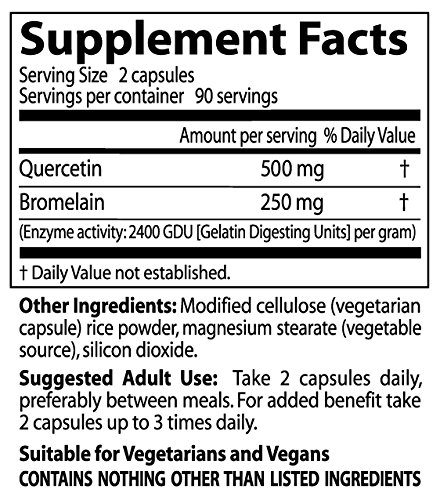
    The Doctor’s Best Quercetin/Bromelain Capsules ingredients are:

    #75888
    Kevin W
    Member

    Both my dogs loved the duck acana and the pumpkin 🙂 I just hope so much that my baby can finally not suffer so badly. We are using a cortisone stayon 1% lotion for her right now from the vet to offer some relief so hope it kicks in. She wears a doggy shirt all the time to keep her from scratching till she cuts herself so we can avoid yet another staph infection.

    I so greatly appreciate all of you for taking the time out of you life to help me and my babies. I will look into the probiotics/supplements as well as shampoos to help keep her safe and comfortable. I’m just glad she is so bullheaded and outgoing so she doesn’t let this keep her down.

    How often should I give the pumpkin as well? The people there said a tbs or two with each feeding. Should I give it more often or larger amounts?

    #75866
    Anonymous
    Member

    I am not familiar with the foods you mentioned, I would go with the prescription food recommended by the veterinarian that is treating your dog. I thought the article below made sense. Hope this helps.

    http://dalmatianrescue.org/info/feeding.htm
    By Beth White, Melody Kennels
    We generically recommend for most Dalmatians foods with the protein source of chicken and turkey, with protein levels in the range of 20-24%. No one food is good for all dogs, but with this range it should cover most dogs. Rather than the protein level, the source of the protein is what is important. Chicken and turkey are the lowest in purines.

    If a Dalmatian has urinary problems then it usually means that he can’t break down purines in his diet. Beef is highest in purines so we recommend the other protein sources. We also suggest that Dalmatians (again, most dogs) be fed scraps as a healthy addition to their “balanced” diet. It is interesting to note that all foods, from Walmart’s Old Roy to the most expensive foods on the market state “nutritionally complete” or “balanced”. Ever wonder why pet foods are considered balanced but human food isn’t?

    Scraps help make the dog’s diet more complete. One of the worst things that has happened to modern pets is modern dog food….but that is another story. When we used to slop the hogs and slop the dogs, we didn’t have hip dysplasia or many of the other more modern structural problems. Our convenient dog foods are an improvement in many ways, but they are not complete or balanced. Scraps are also “tasty” and fun for the dog.

    Veterinarians began recommending not feeding human food when the average pet was found to be too fat., Moving from the farm to the city and from work to retirement caused many pets to loose their shape. Feeding too many scraps isn’t good if it adds weight to dog, but there are just too many nutrients that go down the drain or in the trash that are helpful and useful to our pets. Modern dog foods are not always the best source of nutrients (from a source of diseased livestock possibly, etc.). The foods are also shipped long distances and sit on the shelf sometimes for months, are exposed to heat, etc. All this contributes to reduction in the quality and quantity of nutrients within the food fed to our pets.

    There is a growing movement of feeding dogs raw diets, with great health results. For more information, search for Bones and Raw Food diet (BARF), or authors Billingshurst or Pitcairn, who have excellent books on the subject, on the web. Another great resource for dog owners is The Whole Dog Journal. Call 1-800-829-9165 for a trial copy.

    Some dogs (Dalmatians included) can’t tolerate ethoxyquin. It is best to feed a food without this preservative. Dalmatians (all dogs even) should always be fed with water added to their food. It need not be soaked, but served like milk on a bowl of cereal. Ask yourself why we add milk to a bowl of grain. It is easier to eat that way. But, with a Dalmatian, there is the added benefit of the dog taking in a larger quantity of water than normal (in order to get to his food) and he flushes his kidneys twice a day. This is good for the kidneys.

    All dogs should be fed twice a day. Fortunately, most people have gotten away from feeding only once a day. Livestock is fed twice a day and we eat three times. Once a day simply isn’t enough. We don’t recommend free feeding because it isn’t practical if water is added to the food. If not eaten immediately, it becomes soggy and then either spoils or is wasted. Besides, food exposed to the air loses more of its nutritional potency.

    When a Dalmatian has urinary stones the old method, prior to modern commercial kidney diets, was to feed rice and vegetables (cooked with oil, bacon grease, salt, herbs of all sorts for flavor, etc.). Cottage cheese can also be added. Commercial kidney foods are fine, but they are usually not very palatable and often expensive.

    Rice and vegetables are healthy and any Dalmatian can live on them and look great. Nothing gets fat on rice! When I prepared this diet for a dog that I once kept, I cooked the rice with various types of oils (Olive, safflower, corn, etc.) and threw in whatever herbs and seasonings I had on the shelf. I also added potatoes, green beans, and many other vegetables. The rice concoction was quite tasty and I usually sampled it too! A vitamin/mineral supplement was also added.

    Dogs fed rice and vegetables usually hold their weight quite well. The owner, however, must remember to feed more than he would feed commercial dog food. The good thing is that most dogs actually love rice and vegetables, when herbs and spices and oils are added during cooking. Most of the time this method only requires cooking twice a week. Cook large batches and refrigerate what isn’t fed. Warm cold rice concoction and water in the microwave slowly. When traveling, obviously, it would be better to take commercial kidney foods.
    For non-chronic stone formers, but dogs with gravel or sediment in need of veterinary treatment, it is always best to follow your veterinarians advice. But, once the urine has attained a normal pH, attempt to start the dog back onto a quality commercial food. Often a dog’s system has been corrected and by feeding low purines and lots of water, he can return to commercial foods. Make sure that the food is WELL WATERED.

    #75853
    DogFoodie
    Member

    OK, then I’d probably try the NVI LID and would choose either duck or rabbit.

    And, yes, like Pitlove mentioned, it could definitely also be seasonal allergies. My dog with food intolerances also has seasonal allergies, but my dog that can eat anything, has none. Also, because of the age of your puppy, you would likely just now be starting to see those seasonal allergy symptoms and you have nothing to connect them to except food. I would start keeping a journal now of all of her symptoms and once you’ve cycled a year, you might start to see some patterns. I would still change her food, just in case.

    For my dog’s seasonal allergies this year, I started using Quercetin with Bromelain and Papain along with an Omega 3 supplement. I also started putting Collodial Silver drops in his ears. It’s helped quite a bit and our pollen levels have been at a 20 year high. I’ve noticed my guy starts scratching his ears more when the mold is high. Which it is today after yesterday’s storms.

    Here’s an article that references the supplements I mentioned: http://healthypets.mercola.com/sites/healthypets/archive/2012/06/22/pets-seasonal-allergies.aspx

    #75679
    Mark C
    Member

    I just adopted my third dog recently and have been considering changing the food to a More budget friendly one. Right now I feed Acana which seems to be very good food and everybody brags about it rather than complains about it. Unfortunately it’s a bit pricey. Especially considering a 25 pound bag only lasts me about four weeks right now.

    So I looked on this forum And found some budget friendly foods that Mike has listed and I find the horizon complete to be something I would consider feeding my dogs and the price is much cheaper.

    My question is has anybody fed this to their dogs and what did they think about it? And also two of my dogs are smaller breeds one is small terrier the other is a border collie so he’s kind of medium and then I have a large round who’s about 70 pounds.

    I was considering feeding them the complete lifestage because the ingredients are pretty similar my big I could use the glucosamine but I think I can accomplish giving them that with a supplement. I would just be interested in any kind of feedback from people who may offend this food to their dogs.

    #75651
    Delilah S
    Member

    Hello! I am new to this site. I have looked at ratings, etc. before, but this is my first post.

    I have a 4 year old English Bulldog. Jan 2014 she got a UTI. She had since had issues with recurring UTI’s…she had one in Jan, Feb, May, Oct, Nov, Jan & a trace of blood in her follow up Urine Analysis in Feb. She had done different antibiotics, we tried to supplement her with d-mannose, etc. etc. She has had x-rays & ultrasounds…all clear. Urine analysis(es) showed struvite crystals and a pH around 8-8.5. At a loss, our vet recommended Hills c/d in Feb to see if he headed off the infection. Sure enough, it did. She’s been UTI free since Feb.

    Her skin has been mess…her face swollen, ears yeasty, she’s never been stinky & she smelled terrible, irritated face folds, the works (& that was on 2 benadryl twice a day). At the last trip to the vet he gave her steroids, but was pretty adamant about not switching her off of the c/d…talking long term allergy management treatment instead.

    We sought a second opinion from another well respected, touted to be “more holistic,” vet in our area a few weeks ago. We were feeding Earthborn holistic meadow feast before the c/d and had not tried any other commercial foods. Based on the allergies, the new vet agreed that it was worth trying another food & ran a blood panel to check thyroid which came back ok. She wants to see a UA in 4 weeks on the new food.

    After a lot of research we decided to switch her to The Honest Kitchen Keen because it’s supposed to be good for dogs with urinary issues. I have been monitoring her urine pH at home and it was a 6 when starting the transition from c/d. After one week it remained a 6. I checked it today and it was a 7. Today was the first day she was fully on the Honest Kitchen food.

    I know 7 is still considered neutral. But, I am SO anxious now!! I was SO hopeful this would work for us to balance the allergies and urinary issues both. Our vet said 6-8 weeks on the new food to see what would happen with the allergies, but I could tell a big difference after about a week. She’s still not perfect, but there is a definite improvement in her looks & smell and I can’t tell that she’s feeling better.

    I guess….are we on the right track?? Does anyone know of anything supplement wise I should talk to our vet about? She is currently on an omega 3 and probiotic as well (both of those are new within the last 3-4 weeks. Any other ideas or suggestions? I am going to keep an eye on it at home every few days vs. once a week and see if it continues to climb.

    Thanks!

    #75639
    crazy4cats
    Participant

    Hi Erin-
    Have you tried to add any type of green supplement to the diet. I have used both Essential Greens by Flint River Ranch and Nu-Pet Granular Greens by Ark Naturals. They seem to help curb my grass eating dog’s need for grass a bit. The Essential Greens has a type of kelp or algae that is supposed to benefit oral health as well. i also find it worrisome when he gets really anxious about eating weeds, even though he never throws it up. Anyway, just an idea. Thought you might want to give it a try. Good luck!

    Alex Z
    Member

    Hey guys,

    First, thanks in advance for any help.

    My wife and I have been struggling to find a good food for our 3 year old lab. He has always been very sensitive to different foods, but in the past two years his allergies (itchy paws, runny eyes, ear infections, anal glands) really seemed to have gotten worse so we’ve tried several different food trials to attempt to find a food that worked for him.

    We’ve already tried the following foods with no luck:
    Blue Buffalo Basics Turkey & Potato
    Merrick Whitefish
    Wellness Core Whitefish
    Zignature Duck
    Wellness Complete Health Whitefish & Sweet Potato

    Granted, with a few of these he got significantly worse and we did not finish a full 3-6 month trial, generally quitting after the first bag so I am not opposed to revisiting any food above as we did not know how to properly run a food trial at the time. He is an 85lbs lab, but has maintained a very healthy weight through all of this (he’s very tall).

    He has been on the Wellness Complete Health Whitefish & Sweet Potato for about 3-4 months now, supplemented with probiotics and pure pumpkin as his stool was VERY loose.

    I just had him in for a checkup at our vet, and they recommended trying out Hill’s Prescription Diet d/d Duck & Potato, or Royal Canin’s Veterinary Vegetarian diet. I am a little hesitant to go with either of these diets, cost set aside. Are there any other food’s you would recommend trying first? Or do you guys think one of the prescription diet is needed?

    Again, any help is greatly appreciated!

Viewing 50 results - 1,851 through 1,900 (of 4,398 total)