🐱 NEW!

Introducing the Cat Food Advisor!

Independent, unbiased reviews without influence from pet food companies

Search Results for 'supplements'

Viewing 50 results - 1,051 through 1,100 (of 2,323 total)
  • Author
    Search Results
  • #77827

    In reply to: best multivitamin?

    Dori
    Member

    I use Standard Process’s Canine Whole Body Support for only one of my dogs and that is because she is 16 years old and has some health issues now. My dogs are commercial raw frozen fed, also at times freeze dried. Their treats are fruits and veggies. Nothing processed so that, in theory, the other two (6 years old) don’t need any supplements so they don’t get any. I only started adding the supplements to my old girl a couple of years ago on a regular basis. My theory with her is that at her age and health issues she could use a bit of extra help.

    IMHO, Pet Tabs are one of the worst multi-vitamins on the market complete or otherwise. As I said, just my opinion.

    Standard Process Canine Whole Body Support can be purchased on line or directly from Standard Process through a veterinarian. It’s a whole food supplement in powder form, comes with a scoop and for my size dog I give her 1/8 tsp. 1X daily mixed into one of her meals.

    #77659

    In reply to: Lump on dog's nose.

    Anonymous
    Member

    A concern is, that many folks pursue these alternative therapies instead of getting veterinary care. Some people won’t bother getting the animal properly diagnosed.
    And some of these natural remedies have interactions with real medicine….

    There are all these products advertised all over the internet that claim to cure just about anything, unfortunately some people believe it.

    PS: I use supplements on myself and pets in moderation and in conjunction with medical care. Less and less lately, as I can’t afford them and am skeptical as to how much it really helps.
    “To each his own”

    #77657

    In reply to: Lump on dog's nose.

    Anonymous
    Member

    There are a bunch of reasons people why don’t go to the vet right away (or at all). Just to name a few:

    1) Fear and mistrust of medical people, especially veterinarians.
    2) Financial concerns
    3) Denial that the condition could be serious, supported by well meaning friends “Oh, it’s probably nothing”. “It will go away”.
    4) Trust issues, pet owner may think all vets and veterinary clinics are out to “rip them off”.
    5) Decide to try home remedies, supplements, and over the counter gobbledygook.
    6) Look into homeopathic care (see #5)
    7) Decide the dog food is to blame, try new diet.

    PS: Recent SkeptVet blog http://skeptvet.com/Blog/2015/08/veterinary-medicine-is-a-business-and-that-includes-alternative-medicine/

    Sorry, I couldn’t help myself šŸ™‚

    #77643
    C4D
    Member

    Hi Kevin B,

    The thing is, Purina is including some of the things that more natural feeders have been using for years and calling it proprietary. MCTs, fish oil and glucosamin can be found in a lot better products than generic poultry byproduct meal, generic fish oil and manufactured MCT oil. They are also charging a fairly high price for some mediocre ingredients.

    Link: https://www.proplan.com/dogs/products/bright-mind-adult-7plus-chicken-rice-formula/#ingredientsandguaranteedanalysis

    I have an almost 11 year old Lab (aka old dog by your standards) with diagnosed arthritis in her 2 back knees (torn ccl’s) and she is on NO medications, walks/jogs almost 2 miles daily, runs and chases all the wildlife in the back yard, has stellar blood panels, a beautiful shiny coat, good teeth overall (she’s any aggressive chewer and had some dental work done as a result) and does act like a young dog. I feed her some good kibble and canned food mix along with a fresh meal daily. She does get supplements of Coconut oil, fish oil (human supplement sardine and anchovy) and Glucosamin/Chondroitin. You might want to try adding some really good fresh or canned food to his diet and look into supplements and you might be surprised how much more improvement you’ll see. šŸ™‚

    • This reply was modified 10 years, 3 months ago by C4D. Reason: defining fish oil I use
    #77633
    Anonymous
    Member

    I don’t read the bags that closely, who knows how accurate they are.
    And all dogs are different. My senior small breed does well on Wysong Senior softened in water overnight in the fridge with a liitle cooked chicken or lean meat or scrambled egg.
    He also does well on Nutrisca Salmon and Chickpea.
    Supplements as indicated.

    #77592

    In reply to: Chronic diarrhea

    Anonymous
    Member

    Have you consulted an Internal Medicine Specialist? If you haven’t, I would.
    Food and supplements are not medication or treatment.
    PS: In my experience, less is better when you are dealing with a dog with a sensitive stomach.
    No supplements. No OTC gobbledygook. Keep it simple.

    #77591
    Allison A
    Member

    I have a 4-year-old, 65-lb English Pointer who has always had very loose, unformed stools (applesauce or unset pudding), regardless of the food or supplements I have given him. He has a clean bill of health, and no medical reason for the loose stools that the vet has been able to find. He does have formed (still soft) stools on Hills Adult Light, which has a 13% fiber content. The vet thinks he is fiber responsive since the high fiber food gives his stool some consistency. I hate feeding him Hills; all my previous dogs have done great on 5-star foods. He is an ā€œears and rearsā€ dog, and both seem to bug him when he eats the Hills. Currently, he’s getting half Hills and half Orijen Regional Red with a couple Primal freeze-dried nuggets (lamb) and a hard-boiled egg on top. I think the Primal freeze-dried actually firms up his stool a bit. I can’t afford to feed him freeze-dried exclusively.

    The freeze-dried contains ground bone, and I am wondering if that is what helps. It’s a minor improvement, as I’m only topping his kibble with these nuggets, but there is a slight difference (mashed banana consistency). Any thoughts on giving him supplemental bone meal? There are human grade options on Amazon, and several reviewers mention it firming up their dog’s stool.

    All ideas are welcomed. Below is a list of things we have tried, and that have failed.
    – Limited ingredient diets – fish-based (Merrick, Natural Balance)
    – Oat bran
    – Canned pumpkin
    – Diggin’ Your Dog (dried pumpkin fiber powder)
    – Yogurt
    – Probiotics
    – Ground flaxseed (Missing Link supplement)
    – Psyllium (aka: Metamucil)

    #77574
    Raquel A
    Member

    Hello everyone!

    My name is Raquel Astacio and I run Doggy’s Digest along with my boyfriend, Alexis. We are a site dedicated to thoroughly covering the topic of probiotics for dogs. I originally reached out to Dog Food Advisor to see if we could contribute a post; unfortunately they do not accept any but did say we can post in the forums.

    Many dog owners are not aware about canine probiotics and our mission at Doggy’s Digest is to help increase awareness. I am posting the original article that I was going to contribute to Dog Food Advisor. If this is an inconvenience or violates guidelines, please do let me know. If you find the content informative and have questions, please let me know and I will be more than happy to answer! Thank you.

    ========================

    The Benefits of Canine Probiotics

    For years now, we as humans have been learning the many health benefits of probiotics. Just like humans, dogs need healthy food, plenty of exercise, vitamins, and probiotics in order to be in optimum health. Probiotics are bacteria and live yeasts that improve overall health, especially in regards to our digestive systems. We usually think of all bacteria as being harmful and causing diseases. When we hear the word “bacteria” we think of antibacterial products and antibiotics that we use to destroy unhealthy bacteria.

    So why would we want to willingly ingest or feed something to our dogs that has live bacteria in it? The answer is that digestive systems naturally consist of a correct balance of both “good” and “bad” bacteria. Illnesses, diet, medications, and our environment can upset this balance that is needed to stay healthy. The bacteria from probiotics is healthy bacteria. The microorganisms in probiotics are actually alive. They produce short-chain fatty acids (SCFAs), which inhibit the growth and activity of harmful bacteria. They can greatly improve a host’s gut and overall health when ingested in the proper amounts.
    Probiotics are a relatively new, healthy trend in the dog and pet industry. People are realizing how essential it is to provide their pets with healthy supplements to their diet. Probiotics promote a healthy gastrointestinal system and intestinal balance in your dog. The healthy bacteria can also build up the immune system.

    Veterinarians prescribe probiotics for many different conditions. They are recommended for dogs who suffer from SIBO (small intestinal bacterial overgrowth), chronic diarrhea, auto-immune disorders, skin problems, irritable bowel, and intestinal infections like Giardia and Clostridia. They may even reduce allergic reactions and prevent urinary tract infections.

    Once you have decided to provide your dog with probiotics, how do you choose which kind to use? It is first important to make sure that you are getting a quality product. New canine probiotics are being advertised all the time and dog food brands are adding probiotics to their foods. The challenge is that dog probiotics, like all probiotics, are live cultures that are unstable in their active states (yogurts or liquid-containing products). When exposed to extreme conditions, much of the bacteria can die off and lose their beneficial properties before reaching the intestine. This is the case for a lot of canine probiotics. This means that you need to choose a quality brand that has taken these things into account and are not just cheap probiotics added to a brand for marketing purposes.

    It is first important to check the kinds and amounts of probiotic strains and amount of CFU in the probiotic. Look for 2-4 billion CFU and 8 or less strains of bacteria. Significantly less CFU may not provide any added benefits to your dog’s diet, and much higher CFU and a high number of strains may be indicators of possible harmful combinations.

    Probiotics come in various forms: maintenance, intermediate, and concentrated. Maintenance probiotics are usually in powder or granule form and are used to combat everyday stress such as changes in environment or being left alone. Intermediate probiotics are usually powders and fed to your dog daily to deal with chronic stress and digestive issues. Finally, concentrated probiotics come in pastes or liquids and are temporarily used for the duration of a pet’s illness.

    For everyday uses, probiotics in dry form are good options to consider. These provide a healthy and convenient option for dog owners. They contain stabilized strains of bacteria that will come back to life once they have reached the dog’s stomach. They then move to the intestines and multiply hundreds of times. Since they are not in an unstable, liquid form, they do not require refrigeration. It is simple to sprinkle these probiotics on your dog’s food.

    Freeze-dried probiotics are another viable option. These probiotic microorganisms do not lose any of their potency or viability until they are mixed with water. This will happen naturally during digestion.

    Whichever probiotic product you choose, you must be sure to store and use them properly. If you are using powder or granules, keep them closed and dry until feeding time. You may freeze dried forms once, but they may not be repeatedly frozen and thawed. If you choose a paste or liquid form, it must be refrigerated but cannot be frozen. Lastly, follow label instructions for proper dosage. Canine probiotics can be a wonderfully healthy addition to your dog’s diet and improve their vitality for years to come.

    ===================

    Please let me know if you have any questions. I hope you enjoyed the post!

    • This topic was modified 10 years, 3 months ago by Raquel A.
    • This topic was modified 10 years, 3 months ago by Raquel A.
    • This topic was modified 10 years, 3 months ago by Raquel A.
    #77573
    Allison A
    Member

    Hi all, I need input. I adopted a 4-year-old, 65-lb English Pointer a few months ago. He is the second Pointer I have owned. He has always had very loose, unformed stools (like Motts applesauce or unset pudding), regardless of the food or supplements I have given him. He has a clean bill of health, and no medical reason for the loose stools that the vet has been able to find. He does have formed (still soft) stools on Hills Adult Light, which has about a 13% fiber content. The vet thinks he is fiber responsive since the high fiber food give his stool some consistency. I hate feeding him Hills; all my previous dogs have done great on 5-star foods. He is an “ears and rears” dog, and both seem to bug him when he eats the Hills. At the moment, he’s getting half Hills and half Orijen Regional Red with a couple Primal freeze-dried nuggets (lamb) and a hard-boiled egg on top. I think the Primal freeze-dried actually firms up his stool a bit. I can’t afford to feed him freeze-dried exclusively.

    The freeze-dried contains ground bone, and I am wondering if that’s what is helping. It’s a very minor improvement, as I’m just topping his kibble with these nuggets, but there is a slight difference (mashed banana consistency). Any thoughts on giving him supplemental bone meal? There are human grade options on Amazon, and several reviewers mention it firming up their dog’s stool.

    Any and all ideas are welcomed!! Below is a list of things we have tried, and that have failed miserably.
    – Limited ingredient diets – fish-based (Merrick, Natural Balance)
    – Oat bran
    – Canned pumpkin
    – Diggin’ Your Dog (dried pumpkin fiber powder)
    – Yogurt
    – Probiotics
    – Ground flaxseed (Missing Link supplement)
    – Psyllium (aka: Metamucil)

    Thank you in advance!

    Adam W
    Member

    Here’s a cool blog post on probiotics:
    http://www.bdwbio.com/Blog/Probiotics_And_What_They_Do_For_Animals

    And another one on the mechanisms behind probiotics:
    http://www.bdwbio.com/Blog/How_Do_Probiotics_Actually_Work

    Some (many…most?) supplements are bogus, especially those for pets. There’s an increasing amount of evidence that probiotics don’t fall in this category. However, any probiotic product you buy needs to have enough colony forming units (CFU) to be helpful. There is some debate about whether multiple strains are helpful, but the reality is that most products which list multiple strains really don’t have enough CFU of most of them to matter at all anyway.

    Susan
    Participant

    Hi, could be IBD (Colitis) she may have a food intolerance/sensitivity, my boy was pooing blood & mucus, mucus & blood is from something irritating the bowel (Colitis). My boy cant eat boiled rice or boiled oats in cooked meals or wet tin foods, boiled rice & oats irritate his bowel causing blood, mucus poos…he also cant have any gluten & most vet diet have gluten, corn & boiled rice, so he cant eat most vet diets plus vet diets use chicken or hydrolyzed chicken….so if your dog has a sensitivity to chicken then vet diets won’t help…..

    Have you tried to feed a cooked limited ingredient meals, just 1 protein & 1 carb, a protein she hasn’t eaten before, a protein low in fat is best & try adding some boiled potatoes, or sweet potatoes if you want more fiber… My boy does real well on beef, pork, lamb or fish, I have found….Elimination diets are best to feed when this is happening, then when she is stable (firm poos) then only add 1 new ingredient each week…… in the beginning less is best cause you will not know what is causing the diarrhea, if she is eating too many things or too many supplements are given… & keep a diary…I’ve been cooking this morning, to lightly boil some meat & boil some sweet potatoes doesn’t take long, I make 1/2 cup size meals. I put thru the blender it helps with digestion if you dogs gulps food, then I freeze small meals..
    You may need a new vet, a vet that knows more about IBD…..

    #77298
    Anonymous
    Member

    “So what I’m wondering is what can I do to improve all my puppies health? Should I start making homemade puppy food? What supplements and flea medicines should I be giving them? They have to be on a leash outside so do you have any fun exercises I can do with them? Any other advice you want to give me, especially towards the new puppy”?

    I think you should ask your vet these questions when you see him. He looks like he may be a small breed mix, dachshund? There is a dog dna test you could try when things get settled, if you must know.
    Puppies do well with 3 or 4 small meals a day, soft and dry mixed with water. They sleep, play and eat…..see if he will play fetch? Carry him to the area you would like him to use as the bathroom every 2 hours so he will get the idea.

    #77296
    Cody G
    Member

    So, about a week ago we found this adorable puppy that our neighbors abandoned and left our on doorstep when they moved.

    He was so little and cute! His eyes still weren’t even open šŸ™ The worst part was he had these bumps all over his body which I assumed were either chigger bites, or *gasp* Mange.

    Of course, when the vet opened my wife and I carried him to get checked out. Sadly, Rambo did have Mange and worms (goes back next week to get vaccinated, he was just treated for Mange and to remove the worms this time). Luckily we kep’t him isolated from our other dogs (both lab mixes, one is husky the other is border colly).

    Looking at this puppy (picture included) and seeing how he looked made me really want to step-up on keeping all my dogs healthier. The puppy is *I think* just a few weeks old maybe a month, my Husky is 1 year, and my Border Colly is 2 years.

    So what I’m wondering is what can I do to improve all my puppies health? Should I start making homemade puppy food? What supplements and flea medicines should I be giving them? They have to be on a leash outside so do you have any fun exercises I can do with them? Any other advice you want to give me, especially towards the new puppy?

    Btw I think the vet said hes mixed with Pomeranian but hes too young to really tell what else he is mixed with maybe you can help decide, I honestly can’t tell what kind he is at all šŸ™‚

    1

    #77282

    In reply to: DinoVite

    Tammy A
    Member

    I’ve read all the comments and am amazed at how judgemental some of the comments are when expressing dissatisfaction for Dinovite. I wasn’t going to leave a comment, but decided I would because there may be someone who has experienced the same issues I had with Dinovite. I have two Cairn Terriers and there’s nothing I would not do for my babies.

    After much research, my husband and I decided to start feeding our dogs the cooked homemade dog food recipe on the Dinovite website. Things were going great for three weeks, then the intestinal problems started. Both dogs had stools covered with mucus and then diarrhea. Since the only changes were in the diet, we started backtracking. We stopped putting Dinovite in the food, and their stools started to get back to normal. We knew we shouldn’t continue to feed the homemade food without supplements, do we started researching dog foods.

    After a 24 hour fast, we started feeding our dogs Wellness Core. They love it, and everything is back to normal. Thank goodness!

    So, Dinovite may work for many of you, but it did not work for me.

    • This reply was modified 10 years, 4 months ago by Tammy A.
    • This reply was modified 10 years, 4 months ago by Tammy A.
    • This reply was modified 10 years, 4 months ago by Tammy A.
    #77206

    In reply to: NuVet products

    Anonymous
    Member

    NuVet Supplement=Same Old Snake Oil


    below is an excerpt, click on link for full article and 111 comments, as of today.

    Bottom Line
    This product is a hodgepodge of nutrients, herbal ingredients, and nutraceuticals thrown together with no clear logic or rationale. The claims that many pet diseases are due to toxins or other deficiencies in commercial diets and to oxidative damage are unsupported by any real evidence. Only a few of the specific claims for the ingredients in the mixture are backed by research evidence, and the quality of this is generally poor and only available for humans. The advertising of the product contains many of the hallmarks of snake oil marketing, but it does not contain any research evidence at all concerning the safety or effectiveness of the product, because none appears to exist.While I have no reason to doubt the sincerity of the manufacturer of this product, I believe it is unethical to sell a product with no research establishing the safety or efficacy of the product for any disease and with little to no research even into the safety and efficacy of its constituents. Promoting the product with unproven or outright false claims about pet nutrition and disease designed to instill fear in pet owners and with wild and ridiculous claims about the effectiveness of the product for numerous unrelated diseases is wrong regardless of how sincerely the manufacturer believes in their own pseudoscientific theories. Any responsible manufacturer of a medical therapy should be expected to demonstrate their claims through rigorous science before profiting from the desperate need of people with sick pets.

    #77203
    Sheryl P
    Member

    Has anyone used the NuVet vitamins and/or joint health supplements? I have been giving them to my almost 15 year old Aussie and my 5 year old Golden Retriever for about 3 weeks now. The Aussie’s joints seem to be not quite so stiff now. He had actually stopped swimming with my Golden about 6 months ago and has just in the last week started getting back in the water. My Golden is prone to hot spots because he practically lives in the water year round (we live on a farm surrounded by ponds and creeks) so his fur stays damp pretty much all day until I dry him off to come in at night! I can honestly say he has not had a outbreak since he started on these supplements. Just wondering if anyone else had used them and what kind of results they were having. I also have a 16 week old Aussie pup and was wondering at what point I should start joint supplements on him. He is on a premium puppy food (4.5 rated at DFA) so I’m not sure if he needs any supplements yet.

    #77200

    In reply to: Darwin's Alternative

    InkedMarie
    Member

    Hi Chuck,
    I have a brittany who is 5! I buy grinds from Hare Today, Reel Raw Dog and a new england meet up. I feed ones with bone & organ, tripe too for most. They’re complete. I add minimal supplements: salmon oil 3x weekly, eggs 3x weekly, Bug off Garlic & joint supps for my older dog. All you do is put the bowl on a scale, tare it, scoop it then feed. I do use some beef rib bones & necks as well for dental care.

    Anonymous
    Member

    Please check the search engine here: /forums/search/allergies/
    Lots of information that you may find helpful, come back if you have more questions.

    This is from one of the SkeptVet’s blogs, an excerpt from a response to a comment about allergies. Hope this helps.

    ā€œIn general, diet trial involve picking a new primary protein source and strictly eliminating all others for 2-3 months before any change is likely to be seen. And there are many sources of allergies besides food proteins, so diet change may not dramatically improve symptoms, in which case other causes have to be investigated. I would strongly suggest working closely with your regular veterinarian or, if it is possible for you, with a board-certified veterinary dermatologist. Allergies require lifelong management tailored to the individual needs of the particular patient, and there is no simple or quick solutionā€.

    NuVet Supplement=Same Old Snake Oil

    Anther site: http://www.allergydogcentral.com/category/symptoms/

    Integrating Myths and Nonsense with Standard Advice for Allergic Pets


    excerpt is from above link (click for full blog and comments)
    ā€œThere is no research to suggest that the saliva testing is useful for identifying food allergies. It is sold based on questionable theory and anecdotes, which have little evidentiary value. And as far as uncontrolled testing, at least one dermatologist has run the test in dogs with confirmed food allergies responsive to diet change, and the test results were highly inaccurateā€.
    Other blogs that you might find helpful: http://skeptvet.com/Blog/2015/07/no-vet-for-my-pet-veterinary-nurses-can-sell-woo-too/

    Canine Nutrigenomics by Dr. Jean Dodds: Science as Windowdressing

    #77086
    Kevin R
    Member

    Hi all, I just wanted to reach out as I’m looking for a good food for my 9 year old Westie. She is a very allergic dog, but I’m not certain what all to. I believe its mostly environmental and dust, but maybe some foods. We had blood allergy tests done a few years back, but I’m not sure how accurate it was. In the past, she has been on steroids a few times and then ultimately Atopica. Also, I usually bathe her about once a week with Malaseb, but sometimes I may wait a little longer if she doesn’t appear to need a bath. Anyways, I’m trying to get her off of the Atopica completely if possible. Currently, her skin is somewhat “yeasty” and she may have a vaginal infection which I’m taking her to the vet for. Currently she is eating the Royal Canin prescription food “Venison and Potato.” I recently started giving her some supplements found in this Westie diet here – http://www.westierescueca.com/diet.htm, but I’m not certain if their ingredients would be aggravating any yeast issues she’s having. I had been giving her Greenies treats as well, but I’m looking to eliminate this as well if needed. I recently got some Orijen freeze dried duck treats since its just duck in the ingredients. I guess my question is what be a good food to try if I change her diet completely and should I look for a low glycemic food? Should I add any supplements? Thanks in advance for your help.

    #76930

    In reply to: Where Do I Start?

    Anonymous
    Member

    @Melisssa S.
    This is from one of the SkeptVet’s blogs, an excerpt from a response to a comment about allergies, I think it encapsulates what I was trying to say. Hope this helps.

    “In general, diet trial involve picking a new primary protein source and strictly eliminating all others for 2-3 months before any change is likely to be seen. And there are many sources of allergies besides food proteins, so diet change may not dramatically improve symptoms, in which case other causes have to be investigated. I would strongly suggest working closely with your regular veterinarian or, if it is possible for you, with a board-certified veterinary dermatologist. Allergies require lifelong management tailored to the individual needs of the particular patient, and there is no simple or quick solution”.

    NuVet Supplement=Same Old Snake Oil

    #76876

    In reply to: Where Do I Start?

    Anonymous
    Member

    Supplements, avoidance, and food are not medication or treatment.

    A mild case is one thing…but to advise people not to seek professional help when an animal is clearly suffering is mind boggling to me.

    PS: How does attacking someone’s comments help the OP?

    #76843
    Anonymous
    Member

    Please check with a veterinarian before adding supplements, or over the counter medication intended for humans.
    Remember, only a veterinarian that has examined your pet can make a diagnosis (animals).

    Jenn D
    Member

    My dog has come up with a staph infection a few months after TPLO surgery. He had lameness and inflammation in his elbow which clued us in. We’ve tried to determine if it was indeed in his knee surgery site first, but lab lost his FNA. So next step for now is to get to the end of 3week/3x per day antibiotic treatment and then they will do X-rays again and maybe FNA of his knee again to see if we still have an issue. Might have to remove the TPLO plate and screw. Would love to avoid as we’re thousands into this already. I was wondering if there were any supplements I could give him to help support/enhance the antibiotic treatment? He is a 8.5 year old yellow lab, 80 pounds. Maybe probiotics? Human ones?
    Also, suggestions on glucosamine and condroitin? We’ve had him on dasaquin msm. Just wondering if there is a good, cheaper alternative. Human stuff?

    #76757
    Anonymous
    Member

    I hope Nemo is feeling better. It could be anything, I recently took my 3 year old terrier to the vet because he vomited 3X in 24 hours. Lab work was normal, negative for pancreatitis. The vet said he had a GI virus, he responded to prn Cerenia (the Pepcid did nothing). He got some sq fluids too. Whatever it was, it passed.

    In my experience, dogs are more vulnerable after the age of 10. It sounds like you are giving him very good care. Try not to worry, sometimes less is better. Anything you give him has to go through the liver to get broken down and might make him more nauseous, that includes supplements.

    #76756
    Dixie W
    Member

    I have been reading a lot of good comments on Onijen dog food. My Boston Terrier has Cushing’s and I have been trying to find a food that will give him the protein he needs for his legs strength but low in carbs. He is a senior dog( 12 years) and not a puppy but you can check out Chewy.com and maybe get helpful info. I also got great information from the U of TN vet school on food and supplements. I have 3 other boston’s so they will never get any more “junk” dog food either! I’m making home cooked meals now and using supplements for the proper vitamins etc that they need. I grind up everything in the food processor to make it easier for him to chew. Good luck with you r new baby.

    #76644
    Anonymous
    Inactive

    Hi Jack- I’m sorry about your Mojo. IBD is no fun. What’s next? That depends on a lot of things, but with the right care there is hope for a good quality of life.

    My boy was diagnosed with lymphoplasmacytic IBD of his small intestine and colon via endoscopy with biopsy almost a year and a half ago. He was only a year and a half old and his symptoms started when he was 4-5 months old.

    One thing our internal medicine specialist stressed to us from the beginning is that IBD is a lifelong autoimmune disease and while it can be managed, it cannot (yet) be cured. Even if you get Mojo into remission, he may continue to be very sensitive and flares may happen. So be prepared for a few ups and downs.

    At this point, I would do as your specialist recommends with regard to diet and supplements. The use of probiotics in this disease is common and can be beneficial, but again, ask your specialist for a recommendation. The best diet is the diet on which your dog has the fewest symptoms, maintains good body condition and energy, and needs the least amount of medication. Sometimes it takes a few tries to find the right combination of everything. It takes patience and time and everyone in your dog’s life needs to strictly follow the plan.

    With regard to Mojo’s weight, some dogs can take a month or more to regain after starting prednisone.

    There is a yahoo group called ibdogs which is especially for people with dogs with confirmed IBD. There are a lot of caring people with lots of experience in the group and its worth a look if only to get a real sense of what this disease entails. You have to apply for membership by completing a short questionnaire.

    Take care and good luck.

    Madelon H
    Member

    Susan – thank you soooooo much! This is all so overwhelming and confusing. I don’t mind the EPI but I’m sick of the darn SIBO! SO – when Doc was on RC GSD Puppy his ears always had black gunk in them but it didn’t seem to bother him so I left them alone – I didn’t write down when it all started BUT I know he wasn’t itchy in the gastro – I really noticed the itchy when on TOTW Pacific Stream – his ears were so bad he woke me up scratching and they were bleeding – so I started cleaning them at first with malicidic acid from the vet and then I switched to vinegar and water solution – I also noticed him licking the bottom of paws – thought it was an allergy so I switched him to TOTW Sierra Mountain (lamb only) – his ears have remained good no paw licking but now he’s itchy all over his body – problem is he’s had tapeworms for a while so I don’t if it’s the worms (haven’t found much about them causing itching), if it’s shedding his old coat (I’ve heard this can happen as he’s now absorbing nutrients), if it’s an allergy or if it’s from increasing enzymes – uggggghhhhhh. Doc is on his SECOND round of Droncit for the tapeworms the first two doses didn’t get rid of them all – he gets his last dose for this round Friday – I’m calling the vet today because I’m concerned about how entrenched these things are – I haven’t been able to find anything about having to be on Droncit so long. Thanks for the info on the foods to stay away from. I did more researching yesterday and am wondering if I need to be giving supplements to help his gut – do you give supplements? What food are you feeding Patch? I was staying away from rice because of the whole grain thing but then read yesterday white rice is easily digestible. You mentioned the soluble/insoluble fiber percent – what should that percentage be? OMG I cannot thank you enough for your help.

    #76539

    In reply to: Struvite Crystals

    Nate D
    Member

    Red that is not true.
    Yes ph levels do fluctuate especially after dogs eat which is normal.
    That is why one needs to check the first catch of the day or at least 5/6 hours after the dog has had any meal or treats and has gone to the bathroom a few times.
    When a dog eats the food naturally rises urine ph levels.
    I recently switched vets and the vet has a nutritionist phd. Won’t even sell the prescription foods unless absolutely necessary.
    It does not take 3-4 months. You can most certainly see a a difference in ph in just a day of being 100% on a new food. I sure did.
    Now if you’re giving supplements on top of it then urine needs to be checked on a regular basis just to make sure things are not going in the wrong direction. Waiting 3-4 months is to long. 3-4 months is good for checking for actual crystals if a dog comes back negative. ph checking should start right away and if a dog is prone to crystals it should never stop. I check mine weekly as long as the levels are staying steady.
    So the key is to check the first catch of the day prior to feeding which will be accurate.

    For those looking for ph strips amazon is the best place to get them as they are affordable for a lot of them.
    Wysong also sells them.

    #76451
    sharon b
    Member

    HDM, I realize all these post’s are old, so not sure if you are still posting here. I just started feeding my two dogs raw. I like your meal plan, however wondering why so many supplements? Do your dogs suffer from any health issues? I have a Newf puppy 7 months and an 8 y/o husky and only adding coconut oil, salmon oil, and right now some Pumpkin as he is a bit constipated at the start as I am awaiting getting more meat alone from next order. he is getting a ground mix that is a 80/10/10 mix, so should be complete, yet even with a lot of water added he needs the pumpkin and stools are now good.

    #76242
    bigthree
    Participant

    Usually with big dogs especially when they are going to get real big it maybe best to get a large breed formula because they tend to have better supplements in them for the bigger breeds. But you might want to check with your vet. Mine I have on Buffalo Blue Large breed formula (chicken and brown rice formula). As far as giving him something else I wish I could, he has a lot of allergies and this is the only food that doesn’t make him sick.

    #76237
    Jonathan S
    Member

    I’m sure this has probably been covered before, but I’m looking for a recommendation for a supplement to help cover itchy, dry skin on my dogs.

    I’m in the process of rotating my dogs off their current kibble (they’re on the last of their Taste of the Wild) and on to Acana/Orijen, so I’m hoping that the change in food will help. This bloom of dry skin comes with a combination of changing the TotW mix from fish to lamb, and some hot dry weather here in Seattle. I’m also feeding my dogs raw food as half of their diet and they’re doing well with that.

    I’ve experimented with a number of food supplements. The most recent that seems to work well for them digestively is Flora4. I do include coconut oil in their diet, but sometimes the additional fat can have some effects on their stool quality. I see commercials on TV for Dinovite, but I’m pretty sure that’s not where I want to go.

    Anyone have any suggestions?

    #76192

    In reply to: Raw as a topper

    InkedMarie
    Member

    At the cost of canned, you’d find it cheaper to feed raw grinds. Companies to look at are Hare Today, Reel Raw Dog, My Pet Carnivore and Raw Feeding Miami. If you happen to be in the northeast, Pawfectly Raw NE.

    I buy grinds with bone, add a little boneless (from the store), weigh it, add the few supplements I use and feed.

    #76184

    In reply to: Acid reflux or GERD

    losul
    Member

    Hi Red. I do think it’s important to use caution with these things. Even if a vet were to give instructions to give antacids/inhibitors to my dog (or even a Doctor to me) on any kind of regular basis, I would be asking questions and investigating, is it acid reflux? what is causing it, how do I get to he root of the problem, and not just treat symptoms, what could/would be the consequences, could it actually be caused by low stomach acid, etc..
    ———–
    Hi Sue, I’m sorry couldn’t respond sooner, my time is limited lately, and having internet troubles on top of that.. I don’t find much about lymphocytic gastritis in dogs, or at least searching those 2 particular words alone. In humans, “Lymphocytic gastritis is a rare gastritis primarily diagnosed by the surgical pathologist. There is a peculiar infiltration of benign lymphocytes into the glands and surface mucosa. It may be associated with celiac disease and Helicobacter infection of the stomach. There are case reports of clearing of the disease by treatment for Helicobacter infection in the stomach.”

    http://www.thedoctorsdoctor.com/diseases/stomach_lymphocytic_gastritis.htm

    In dogs, most of the hits I came up as canine lymphocytic-plasmacytic gastroenteritis and is still of unknown causes(idiopathic). “Canine lymphocytic-plasmacytic gastroenteritis(LP) is one disease in a group of idiopathic, chronic intestinal diseases collectively termed inflammatory bowel disease (IBD), and is considered to be the most common cause of chronic vomiting and diarrhea in dogs. LP gastroenteritis is characterized by a diffuse infiltration of lymnphocytes and plasma cells into the lamina propria of the stomach and/or the small intestine resulting in diffuse mucosal inflammation. Lymphocytic-plasmacytic is the most prevalent form of IBD.”

    https://www.addl.purdue.edu/newsletters/2007/Fall/clpg.html

    Kind of a side note, and really just a curiosity, I found this study to be of interest, specially the apparent surprising resolution of the disease state, after all the numerous testing and therapies failed, and when the client was finally discouraged by no improvements, stopped all of it.

    http://www.ncbi.nlm.nih.gov/pmc/articles/PMC1082873/

    The “fundic region” would be the upper main portion of the stomach and should generally be much less acidic, especially at the beginninh process of digestion than the the lower portions. I think that would likely be why Patch’s diagnosis comments read that Helicobacter was usually more prominent in the fundic (less acidic) region.

    “•The fundus, which is the main upper portion of the stomach. Fundus means
    “enlargement” and refers to the rounded enlarged area at the top of the stomach.
    Food gets ground, mixed, and held in the fundus. It is in the fundus that enzymatic
    digestion takes place, assuming there are live enzymes present with your meals (or
    if you are using digestive enzyme supplements). Although stomach acid will be
    released into the fundus, IT IS ONLY AT ABOUT 30% CONCENTRATION and will not affect
    enzymatic digestion. After about 40-60 minutes in the fundus, the chyme will move
    on into the body of the stomach.”

    “•The body, which is the large middle section of the stomach. It is a primary area
    of digestion, and it is here that hydrochloric acid and pepsin begin to work full
    bore, and at levels sufficient to stop most enzymatic digestion.

    •The antrum, which is the last part of the stomach before the pylorus, the gate
    which prevents food from entering the intestine before its time. Actually, the
    major portion of digestion takes place in the antrum as food is held a long time
    and parceled out to the duodenum in a very slow, methodical manner. Incidentally,
    antrum means cave and pylorus means gatekeeper.”

    Your Stomach, Part 1

    I think there’s some REALLY good articles/summaries on that site, especially
    pertaining to human digestive/gastric systems, but most of it would be relevant to dogs
    also. He does deal with alternatives/naturapathic/holistic, and does also sell
    supplements, I don’t necessarily agree with all he says, but I think it’s one of
    the most comprehensive, complete, and easiest to understand articles/primers on
    digestion I’ve seen.here is the article “your stomach, part 3” , which may most
    pertain, especially to the significant importance of acid in digestion/health, but
    be sure to read all parts 1,2,3. and the overview on digestion also. In fact most of the whole digestion series is a good read.

    Your Stomach, Part 3


    http://jonbarron.org/article/overview-digestive-system#.Va1zwGd0w5s

    Digestive System

    I’m not sure where the “water” would be coming from after Patch ate his raw. Not
    excessive saliva? Did you add water to the raw food? Adding water would dilute his
    acid production. I’m not sure if you are saying that he threw up the raw or just
    water? The enzymes i think should be even more important/purposeful on cooked
    foods more so than raw. What kind of enzymes are they? Just go very slow on them at first. I would think Patch’s bio-fauna is much out of whack, and needs to be re-established with good bacteria. He may have mineral/vitamin deficiencies also. I was a little surprised that tha naturpath wanted to immediately switch Patch to raw. I would be a little hesitant to go full force raw right away, knowing Patch’s condition, which is why it’s important to be upfront with the
    naturopath as much as possible. Has the naturpath seen Patch, or was it just a
    consult? Is it Lew Olson?

    If it were me, I would take just baby steps, but I’d give the Naturpath’s advice a
    fair shot, and keep her/him informed. Not make too many changes all at once, or
    expect too much all at once. Build up very slowly on everything, the probiotics,
    the enzymes, the cooked or raw foods.Has Patch been weaned off antacids since the
    Helicobacter treatment and fairly stable most of the time with what he’s eating
    now? Can you try to introduce just a snack size meal of cooked along with
    appropriate small portion enzymes or maybe later raw in between those regular
    meals, and just very gradually increasing while decreasing the regular? I’m not
    familiar with Roo meat, how easy to digest, how much fat, saurated fats, etc. I
    think in the U.S. it’s thought that lean chicken is one of the easiest proteins to
    digest, along with well cooked white rice. Vets often advise this temporarily for
    gastric distress (provided they don’t have a sensitivity to chicken) and it works
    for many dogs. I’ve heard you say that Patch and grounded rice don’t get along? I
    don’t understand what you mmean by grounded. In the U.S. white rice is milled and
    has the husk, bran and germ removed, leaving virtually only the starchy interior,
    it’s usually then “enriched” with some vitamins/minerals. Should be fairly easy to
    digest by most dogs. Eventually though I would want to get him off all that starch,
    and get him on a more balanced diet. Are you giving him any vitamins/minerals at
    all?

    On another note, there are a couple of U.S. vets now using fecal matter transplants
    for dogs, from only verified healthy donor dogs of course. For humans, it’s
    catching on a bit more now, even in a few hospitals, with very promising results from persistent or recurrent IBD, SIBO, colitis, that is usually caused by
    persistent, pathogenic, and resistant overgrowths/infections.

    Sue, Maybe Patch can’t be completely cured, but I believe with the determination
    you’ve shown and continue to show, he WILL get better. There’s alot of people
    rooting for you and Patch, I know that I’m one of those!

    P.S. I might not be able to write back for a while again.

    ———————
    Hi weezerweeks, y/w.

    I understand your concerns with Bailey. Best wishes for his best health!

    Let us know how the vet visit goes.

    #76045

    In reply to: Acid reflux or GERD

    Anonymous
    Member

    Thanks for speaking up. I was always under the impression that these meds were for short term, prn use, and given with the guidance of a veterinarian.
    Also, a lot of these meds can have interactions with other meds/supplements.
    In reference to losul’s comment (excerpt below)

    “Weezerweeks, please use much caution about giving a dog human antacids/PPI’s/ acid , especially for any prolonged length of time, beyond occasional usage, without carefully regulated dosage, without guidance from a good vet, and without knowing the actual cause of acid reflux symptoms, if that’s even what it is (acid reflux). As said above, hypochlorhydria can cause the exact same symptoms. I cringe every time I hear of someone self medicating., and it could be creating worse problems, especially in the longer term, if the cause is low stomach acid, or even if the problem does not originate from excessive acid production.. Even, if the underlying cause were to be excessive acid production, if you cut a pill that was designed for a 160lb human in quarters and give to a 10 lb dog, that dosage seems way too much anyway. It’s too easy to intuitively assume these sort of symptoms (reflux or indigestion) stems from excessive stomach acid. It could be excess stomach acid production or refluxing for numerous reasons, but I feel that way too often it may be caused by just the opposite, probably both in dogs as in humans. If antacids are given to a dog in wrong dosage or if the dog really suffers from low stomach acid and antacids are given, it could lead to achlorydria (no stomach acid)”

    #75975

    . . .but wouldn’t it be great to have a sort of calculator that allows you to input ingredients that you want to avoid, and it would then filter all the dog foods listed on the site, leaving only the foods that don’t include those ingredients? That would be so helpful to those of dealing with numerous food allergies and picky eaters.

    I spend a great deal of time looking for foods to add into rotation that 1) my dog will eat (very picky!), 2) don’t cost a small fortune to feed a 65-pounder, 3) don’t contain one of her many allergens (white potato, rice, alfalfa, flax, peanut, soybean, rabbit. . .being just the more severe ones), and 4) provide a good nutritional balance (high in protein and not ridiculously high in fat with some fiber). I should also add that I’m a big believer in grain-free and minimal cooking/processing, but have a husband who is opposed to a home-cooked diet for our girl (that’s another story).

    We started out with Darwin’s and that seemed to work great until she decided not to eat it anymore. I’ve since not had any luck with frozen raw. She just barks at it. Ziwipeak was good for a while, then she quit eating it. I’ve tried Arcana Duck and Bartlett Pear (the least successful in terms of willingness to eat it), and several freeze dried and dehydrated brands that don’t contain something on the allergy list. There don’t seem to be many options once the allergens are eliminated.

    We’ve just started on Against the Grain canned, but there are only two proteins available, and she would need four cans a day, which would be expensive. I need something less expensive to add to it. Also, I have to offer variety, or she will refuse to eat anything in a few weeks. I’m going to try rotating in ZiwiPeak again. She has consistently liked K-9 Naturals freeze-dried, which I often mix with Honest Kitchen’s Preference Base Mix, but I’m concerned about the extremely high fat content in the K-9, and she has been a bit iffy on the Preference lately, sometimes refusing to eat it at all. The K-9 venison has somewhat lower fat, so I’m going to keep that in rotation. I’ve just ordered some small bags of Fresh Is Best freeze-dried to see how she likes that. She also likes Vital Essentials freeze dried, usually mixed with canned Tripett to provide some moisture. She does love tripe, but I know it doesn’t provide everything she needs nutritionally.

    I worry not just about her allergies but also a diet too high in fat. She’s a three-year old lab mix and pretty active. She needs lots of protein and some fiber (judging from poop consistency).

    I don’t currently have her on any supplements, having taken her off of them the last time she refused to eat her food (I’ve always put liquid or powdered supplements in her food, because she won’t eat treat-style supplements or pills). I need to identify any supplements that she may not be getting from her diet and try to find a way to get those in her.

    It’s a difficult thing to manage. All advice is welcome. Mike–any chance for that ingredient eliminator program?

    #75923

    In reply to: Struvite Crystals

    Nate D
    Member

    It’s been a quite some time since I’ve posted here, but wanted to give everyone some information.
    A lot of you are doing good with the water, supplements, etc..

    For dry food check out Zignature. I just recently heard of it. I’ve been feeding Fromm for so long.
    Zignature is limited ingredient, grain free, potato free (which I was told was very important), lower in calories, etc..
    All good things for helping keep ph in check and is good for dogs with kidney/bladder issues.
    I contacted them about the target ph and they said theirs is 5.5. That’s lower then most high quality foods. Fromm is 6-6.5 and Wellness was 7.
    A few others wrote me back with numbers all within 6-7, but Blue Buffalo told me they don’t know the ph because they aren’t prescription food. A response like that will keep me away from that food forever.
    I can say that since switching to Ziganture, adding water, a tablespoon of wet food and using an occasional dose of Berry Balance my dogs ph has been holding steady and no crystals.
    I did try the Wysong Biotic ph supplement, but I was not a fan of what was in it.
    What works for my dog may not work for another, but I thought I’d mention the Zignature food. Might be worth a try. A lot of their formulas have cranberries and blueberries in it, but there are a couple like the new Kangaroo that do not. zignature.com

    #75898
    Kevin W
    Member

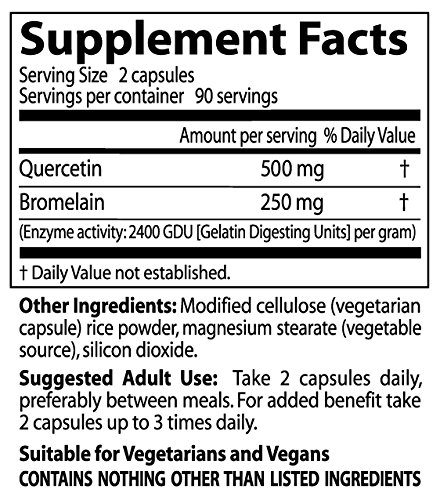
    Yeah, I have no Idea what’s what when it comes to supplements as I’ve never used anything ever. I just want to aid where I can and also be able to afford it.

    The Doctor’s Best Quercetin/Bromelain Capsules ingredients are:

    #75888
    Kevin W
    Member

    Both my dogs loved the duck acana and the pumpkin šŸ™‚ I just hope so much that my baby can finally not suffer so badly. We are using a cortisone stayon 1% lotion for her right now from the vet to offer some relief so hope it kicks in. She wears a doggy shirt all the time to keep her from scratching till she cuts herself so we can avoid yet another staph infection.

    I so greatly appreciate all of you for taking the time out of you life to help me and my babies. I will look into the probiotics/supplements as well as shampoos to help keep her safe and comfortable. I’m just glad she is so bullheaded and outgoing so she doesn’t let this keep her down.

    How often should I give the pumpkin as well? The people there said a tbs or two with each feeding. Should I give it more often or larger amounts?

    #75853
    DogFoodie
    Member

    OK, then I’d probably try the NVI LID and would choose either duck or rabbit.

    And, yes, like Pitlove mentioned, it could definitely also be seasonal allergies. My dog with food intolerances also has seasonal allergies, but my dog that can eat anything, has none. Also, because of the age of your puppy, you would likely just now be starting to see those seasonal allergy symptoms and you have nothing to connect them to except food. I would start keeping a journal now of all of her symptoms and once you’ve cycled a year, you might start to see some patterns. I would still change her food, just in case.

    For my dog’s seasonal allergies this year, I started using Quercetin with Bromelain and Papain along with an Omega 3 supplement. I also started putting Collodial Silver drops in his ears. It’s helped quite a bit and our pollen levels have been at a 20 year high. I’ve noticed my guy starts scratching his ears more when the mold is high. Which it is today after yesterday’s storms.

    Here’s an article that references the supplements I mentioned: http://healthypets.mercola.com/sites/healthypets/archive/2012/06/22/pets-seasonal-allergies.aspx

    #75545

    In reply to: Acid reflux or GERD

    Susan
    Participant

    Hi my boy suffers from acid reflux, two years I’ve been battling with new diets, ant acid meds etc & this is what I have found..
    You are better of leaving him on the Pepcid instead of stopping & re starting it again, the burning acid can burn their throat, esophagus & even cause ulcers if he hasn’t already got an ulcer..the Pepcid will relieve his discomfort…
    Slipperly Elm Powder is suppose to be good google how to make a slurry paste..Slippery Elm coats the throat, stomach & stops nausea, you can add about 1/4 teaspoon slippery elm powder to their meals…I’ve never tried adding with meals, I was going to try if this new diet doesn’t work.. I’ve ordered the Royal Canine Intestinal low fat kibble as much as I hate vet diets, I’ve run out of kibbles & wet tin foods.. I live Australia & low fat diets are very hard to find the weight loss diets are low in fat & are higher in fiber & you need to avoid high fiber diets I’ve read..
    I add about 1/2 teaspoon of the Slippery Elm Powder in a glass & add boiling water & stir till I have a thick paste but not too thick, I put about 3mls in a syringe when it cooled…this seem to help Patch but I hate giving him any meds, herbs, supplements..
    I had him on Zantac as the Zantac doesn’t interfere with the bowel like other ant acids do.. now I give liquid Mylanta 3mls in a syringe, I make about 2 syringes up & leave in the fridge, the cool Mylanta soothes the throat & stomach…
    I give 3mls Mylanta at 6am 1/2-1 hour before breakfast then if I see Patch unwell or feeling sick thru the day I give another 3ml Mylanta…it taste yuk but he lets me give it to him, so it must make him feel better normally he runs when he has to take tablets & see the syringe with water but with the Mylanta he doesn’t run away..I have found the Mylanta relieves Patches acid instantly..

    You need to book your boy in for an Endoscope & Biopsies to see what is happening…blood test will not show if there’s anything wrong with his stomach only his pancreas, has he had the blood test for his Pancreas? All Patches blood test came back good & he had all the symptoms of Pancreatitis again..so Patch had Endoscope & Biopsies last December his stomach looked good the vet said, no ulcers or any scaring from old ulcers, lucky he had the biopsies as well, they found the Helicobacter-Pylori infection, he was given the triple therapy antibiotics & Zantac for 3 weeks but as soon as the course was finished he had his real bad acid reflux again, so vet said keep him on the Zantac twice a day every 12 hours which I did for about 1 month then I stopped his Zantac to see if his acid reflux came back, I changed his diet again to a lower protein.. & was just giving the 1/3 Zantac 150mg tablet every morning 6 am 30mins-1 hour before food & I stopped the night Zantac & he seemed OK & if he did wake thru the night licking lips, I give Mylanta..

    I cant find a real low fat wet tin food only the Royal Canine Intestinal Low Fat or the Hills I/d Low Fat GI Restore they have boiled rice & Patch can’t eat boiled rice it gives him diarrhea, he can have grounded rice in kibbles, so I soak Patches kibble & drain all the water real well when the kibble is swollen then put thru a blender & its like wet tin food but has the low fat & low protein 8%-fat & 22%-protein.. I also cook Extra lean beef ground mince made into little rissoles balls, I also buy kangaroo mince for a change & blend a carrot broccoli & celery & add with the mince & bake in the oven & hardly any fat comes out of the extra lean beef or Kangaroo mince..

    I would cook then freeze little meals, a low fat meat with blended green veggies, broccoli, celery, beans, kale etc or another wet tin food where the fat is 2% & under….The Wellness Stews are 4%-fat so when converted to dry matter (Kibble) its 16.2% fat, that’s pretty high in fat… & put him back on the Pepcid if it works for him, some of the Wellness Stews have potatoes or sweet potatoes, I was looking for another recipe last night for acid reflux & it said stay away from starchy veggies, Potatoes, Legumes & sweet Potatoes & give Pumkin, Squash, Rutabaga Turnip instead.. here’s the link… http://ottawavalleydogwhisperer.blogspot.com.au/2013/12/acid-reflex-gerd-in-dogs-cats-natural.html
    I’ve read Kale is good, it has Chlorophyll what is found in grass, it settles their stomach & digestive upsets.. so I’m going to try adding some blended kale to his rissoles as well..

    #75522

    In reply to: Acid reflux or GERD

    Anonymous
    Member

    I would stop all gobbledygook supplements and pumpkin stuff, maybe this is what is making him nauseous.
    What does your vet who is prescribing the cerenia and okaying the prn pepcid recommend?
    If the GI upset has been going on for a while, I would seek out a specialist to get an exact diagnosis and treatment options.
    Less is better, keep the diet simple. A healthy dog can tolerate a variety of foods.
    Just my opinion.

    #75515
    weezerweeks
    Participant

    My yorkie seems to have this. He throws up about every 2 weeks. The cerenia or Pepcid clears it up but I don’t like giving drugs. He is on canned weruva and wellness stews at the moment. I give him Mercola’s probiotic and digestive enzyme. I have also been adding a teaspoon of pumpkin. I read he should be on low fat and low protein diet. I know his food is high in protein but low in fat. If I give low protein and low fat then that will mean high carbs and I don’t like carbs. Any suggestions on food and supplements that would help this. I don’t want his esophogus damaged. He does not have loose stools. He just throws his food up about an hour after he eats. He had blood panel and urinalisis in Jan. He is 7 now and I was going to wait until Jan. to have it again. I do it yearly but do u think I should have it done now? Thanks

    #75507

    In reply to: Nutriscan

    DogFoodie
    Member

    Hi Kate,

    I know you just spent about $275 on the NutriScan, but I recently had a food sensitivity test by Glacier Peak Holistic. The test results are the result of biofeedback energy collected from DNA on hair and saliva samples you send them. My test results are extensive. It tests 34 animal proteins plus numerous other fruits, vegetables, nuts, seeds, oils, spices as well as environmental sensitivities. Plus, it makes recommendations for beneficial supplements. It also identifies possible concerns to address with your vet. The test was $85. My test result yielded some surprises. I talked to two friends who received their test results at the same time and they feel the results are highly accurate based on past elimination diet results.

    Here’s a link: http://www.glacierpeakholistics.com/More-Than-an-Allergy-Test_p_80.html

    One problem with lamb, is that it’s frequently high in fat. So I understand, are you looking for a food that is lamb based and pea free? One that comes to mind is California Natural Lamb and Rice if you’re not opposed to grain.

    #75455
    InkedMarie
    Member

    I personally don’t want to pay for produce in my dogs food; I can give them that separate if I want to.

    I only give eggs 3x a week, salmon oil 3x a week, 1tsp diatamaceous earth 3x a week, Bug Off Garlic daily and my oldest gets some joint supplements.

    #75451
    Marta W
    Member

    Mary we’ve been or raw for a month this week, so maybe she could have new protein.
    i am thinking beef or pork mixes. Also i was going to get her turkey necks separate.

    DO you know if feeding that is all she needs or should i give her some supplements?
    RIght now her food has veggies mixed in but she wont have that with Pawfectly Raw.

    #75390

    In reply to: Advice on my raw diet

    sharon b
    Member

    Following! I started a thread on raw for large breeds but have not seen any recent comments. I thought I was mixing raw in their kibble, an 8 y/o husky and a 6 m/o Newf, only to find out the package “Vital Raw” is misleading and not Raw. I was going to just switch to raw as my pup has an ongoing infection when I read on another link of a man losing his 9 & 1/2 y/o Pitbull to I believe it was e-coli from chicken, but may have been salmonella, so decided to wait and see how others weigh in on this. It does not seem this has been an issue for others. I did want to ask a bit about the supplements though as others recommended omega 3’s and salmon oil’s for mine, but you mentioned flax seeds. Do you grind those daily and add them? Just a comment about flax seeds, as they are only active the day you do that, as they oxidize and then are of no benefit otherwise, including all the gel-tab’s etc. The market has us fooled, I am an R.Ph and learned that in an continuing Ed, only helpful w/ husks off for a couple hours.
    Because my dogs are so big this seems like a very expensive way to go, even though I know it’s healthier. Does anyone do kibble in the AM, and Raw in PM? What about all the hormones in the meat from grocery stores? All concerns of mine.
    Also for those of you that grind, how? Do you have a special grinder that does the bones? Trying to figure the most economical way to do this?

    Anonymous
    Member

    The Skeptvet has finally released his long-awaited review of Dr. Jean Dodds’ book “Canine Nutrigenomics.” The full review can be found here:

    Canine Nutrigenomics by Dr. Jean Dodds: Science as Windowdressing


    The Skeptvet provides many citations of peer-reviewed research to support his critiques
    “Please note that not all of these points are critical of Dr. Dodds–the Skeptvet does agree with her on some topics, such as fish oils”.

    Bottom Line
    While Dr. Dodds’ book is a mixture of fact and fiction, science and pseudoscience, plausible ideas and outright nonsense, overall the work is deeply misleading. It has little at all to do with nutrigenomics or epigenetics, despite the title and claims to the contrary, and it uses real science primarily to give an aura of legitimacy or authority to claims which are unproven or outright false. References are employed in a manner that suggests an academic research summary with conclusions based on scientific evidence. The reality is that the book is a collection of opinions, some plausible and some not, supported in most cases by very little evidence and in some cases clearly contradicted by this evidence. The references employed are often simply other people’s opinions or, in some cases, Dr. Dodds’ own opinions reprinted elsewhere.

    The recommendations made for and against specific feeding practices and dietary supplements are mostly typical for proponents of alternative medicine, and they stem from ideology and philosophical beliefs rather than scientific evidence. Occasionally, such claims turn out to be true, in the manner of a broken clock which happens to be right twice a day but this has little to do with the underlying principles. And while there are a few evidence-based claims here and there in the book, and some recommendations I would agree with, overall Canine Nutrigenomics is misleading, misguided, and in conflict with the best evidence and expert consensus in veterinary nutrition.

    #75099
    Susan
    Participant

    Hi Jen, I know what your going thru, for 2 years my boy has the same gulping fits, swollowing & swallowing, he had Endoscope & biopsies done, last December, biopsies found Moderate to chronic Lymphocytic gastritis with associated spiral bacteria infection..(Heliocobacter-Pylori) vet was surprised that his stomach had no ulcers or scaring from old ulcers & the stomach look really good, vet couldn’t get into the small bowel cause his lower pylori spincter was close & the only way to get more answers was to have Patch cut open & have more biopsies on small bowel to see what is happening, I said NO, I cant do that to him cut him open & then do what, we already have tried all the medications…. I thought once he takes all the meds for his Helicobacter & & a diet change (Vet Diet Royal Canin Gluten free Duck & Tapioca) everything will be great… when the meds were finished, he started his has swallowing & swallowing attacks again, more when he eats cooked foods or raw diet, he starts regurgitating & water comes up & then he swollows & swollows the water…I think his esophageal spincter isn’t closing properly.. I have it, its called non ulcer dyspepsia, vet said he has acid reflux & he was put on Losec cause the Zantac or Pepcid wasn’t working no more…
    You know how you said he’s on the Hills Z/d so we know its not the food PLEASE PLEASE try another food, my boy didn’t get better on the Hills Z/d…..a few other people I know from a Face Book group said their dogs also didn’t do well on the Hills Z/d vet diets…. at first we thought he was doing better cause Z/d has more insoluble fiber, so it moves thru the stomach quicker, then diets with more soluble fiber but now when I look back it was probably the Ant-Acid meds that stopped his swallowing & swallowing attacks….also low fat diets help…look for a new diet that’s limited ingredient, novel protein & 1 carb “California Natural” has hypoallergenic diets, their Lamb & Rice has just 4 ingredients, http://www.californianaturalpet.com/products & see if you see any improvement & try a different ant acid maybe Zantac if you don’t want to use a Pump Proton Inhibitor (Losec or Somac) I found Somac to be better as it didn’t affect the bowel like Losec did …You keep saying you know its not the food but have you tried any other diets, I would be trying a new diet before trying any medications, I’ve learnt along the way that food seem to work the best & supplements… Lew Olson has a great face book group called K9 Nutrition & she helps & answers all post…..

    Finally after Patch not getting better up & down some nights with these swallowing attacks, …I feed a Hypoallergenic gluten dairy sugar FREE Salmon & Sardine kibble that’s is 10% fat that I soak in water till its soft then drain all water very well then put thru a mini processer blender for a few seconds it comes out like wet tin food & what a difference it has made I’m not being woken up thru the night ….its not 100% we still have the odd swallowing attack (acid reflux) sometimes cause I’ve been introducing new foods to the diet, I just give 3 ml liquid Mylanta & the Mylanta seems to help & stops the swallowing & swallowing attacks….
    Sometimes you need to do things yourself as vets aren’t real good with nutrition & dog foods they stick with their vet diets & think they’re great, I tried them all, Hills being the worst as it caused bad skin problems & they use chicken even though the chicken is broken down some dogs still pick up that it was once a chicken & have a reaction with the Z/d diet.. join this Face Book group, there’s a few dogs that have these swallowing attacks aswell “Dogs with Inflammatory Bowel Disorder group” Good-Luck

    #75088
    Anonymous
    Member

    At 11 she is a senior, could she have a little dementia going on? My old guy gets confused, sometimes he sits in front of the fridg at 2am and barks. He thinks it’s time for breakfast.
    Ask your vet if there are supplements or otc meds or prescription meds that might help calm her so she is not as hungry and agitated.
    I have a bedtime cocktail (approved by his vet) that helps, I hesitate to share it, as I am not a veterinarian. Plus, my old guy doesn’t have any liver issues…he has other age related issues though.

    #74905

    In reply to: Raw after extraction?

    Dori
    Member

    Hi C4D. I figured that was what your concern was. I don’t think raw is an issue but if it will make you feel better than feed canned but please don’t forget that canned is not without it’s own bacterial issues. As to anti-inflammatory supplements I would look into feeding anti-inflammatory fruits and veggies. Just google them. I’ve never had any luck with turmeric or golden paste made with turmeric for any of my girls including myself. Also, don’t forget to avoid any and all pro-inflammatory ingredients. Google that also.

Viewing 50 results - 1,051 through 1,100 (of 2,323 total)