
Sign in or Register
Search Forums
Recent Topics
-
Aion 2 Gear Upgrade Tips Every New Player Should Know
by
wild petals
16 hours, 13 minutes ago -
PVPBank: All Cryoshock Serpent Locations in Fisch Roblox Guide
by
Macro M
1 day, 18 hours ago -
SSEGold Arc Raiders Flickering Flames Event Guide Rewards Merit Candleberries
by 2 days, 16 hours ago
-
Best enrichment toys for a smart dog? Others are getting boring.
by
George Lawson
6 days, 13 hours ago -
How Do You Handle Cost Challenges in Tunnel Construction Projects?
by
Flex Kingston
1 day, 18 hours ago
Recent Replies
-
ahnahaa alenaha on How Do You Handle Cost Challenges in Tunnel Construction Projects?
-
 Carter Fisher on "American Journey" Dog Food who manufacturer's it?
-
shanaa ahnhaa on rsgoldfast OSRS is a vast and ever-evolving game experience
-
voldemar leo on How Do You Handle Cost Challenges in Tunnel Construction Projects?
-
 Lis Tewert on Meijer Brand Dog Food
-
Otilia Becker on Precision Heat Treating – Annealing, Quenching, Tempering & Normalizing
-
Emilia Foster on dog vitamins
-
Israel Jennings on Supermarcat
-
Keti Elitzi on Chewy ingredient listing
-
Robert Butler on Score Big with Retro Bowl: A Nostalgic Touchdown Experience
-
-
Jeffrey Clarke on Choosing the Right Dog Food: Lessons from Strategy and Games
-
-
-
Rebecca ADougherty on Precision Heat Treating – Annealing, Quenching, Tempering & Normalizing
Search Results for 'el doctor'
-
AuthorSearch Results
-
October 21, 2015 at 8:24 am #79587
Ptcbass
MemberI have a 9 year old shih tzu that is a little overweight and would like to find a good high quality food. She doesn’t need to lose too much but just trim down. I have been looking for food with a lower fat content but then noticed that sometimes the fat content is higher but the calories per cup number is lower. What number is more important?
She is currently on Grandma Lucy’s Artisan Venison but has a hard time getting it out of the bowl so I am putting Fromm White Fish and Potato kibble in with it.The other problem I am struggling with is I just lost a dog this week. She had allergies and was put on prednisone and then developed small bladder stones. Then the doctor put her on Royal Canin SO (with me protesting but caved in). One week later she was in intensive care and in tons of pain with pancreatitis. She lasted a week (and over $4000 dollars later) she died. She was only 6 and I know that food caused it since she was healthy before and I didn’t feed treats or anything else during that week. Now I am looking for a food that won’t cause stones or pancreatic, is grain free and lower calorie, no Chinese ingredients and preferably organic. Well that is about impossible to find! I have read that sweet potatoes are bad to promote stones. Most grain free food contains sweet potatoes and then also low glycemic index food without grains seems to be hard to find. I know I am trying to find the “perfect” food but the pain my family and dog just went through was just horrible. I really want to do all I can not to ever repeat that again. Any suggestions would be appreciated! I am trying to take a step back and just go with a good food but then I get caught up in the details again. Right now I am looking at Natures Logic (but it is higher fat, acceptable calories), Acana Light and Fit (not grain free), Pinnalce, Stella and Chewy Duck (seems expensive), Grandma Lucy’s Pureformance (higher fat), and Fromm (grain free are higher fat). Help Please!
October 17, 2015 at 9:13 am #79510In reply to: Milk Thistle for Humans
Anonymous
MemberLOL! I am a licensed healthcare professional (not animals, humans) so, yes I am familiar with various medications and such.
Why are you folks so angry? If you don’t agree with anything you see posted, just say so and post your opinion and rationale why. No need to make it personal. Easy-peasy 🙂PS: A doctor I worked with once told me that many of the homeopathic supplements are in fact effective, however it is impossible to get the dosage correct, therefore making them unreliable. I have admitted people to the hospital from an ER setting carrying paper bags full of supplements that had to be discarded. So, I have formed my own opinion.
October 13, 2015 at 8:50 am #79407Topic: underweight troubles
in forum Diet and HealthLarry A
MemberMy 11 year old labradoodle is perpetually underweight. The vet has commented at every visit that she is underweight and is concerned that she is not eating adequately. She doesn’t show any other symptoms of a GI problem and has good energy levels. She weighed in yesterday at 44.1 lbs, down one pound from last year, and at her lowest weight since reaching adulthood.
For years, we fed her Wellness CORE Original Recipe and now that she is older, she eats Hill’s Ideal Balance Chicken and Brown Rice Recipe Mature Adult Dog Dry Food. We offer her 3 cups once a day, and she rarely eats the full 3 cups at meal time. Frequently there is still a cup left in her bowl by her next feeding.
The doctor suggested that we are feeding her too healthily (?!) and might consider additional treats each day or a different recipe.
Any thoughts or suggestions?
Thanks
September 23, 2015 at 7:45 am #78554MemberThe echo is important to rule out a leaky valve, found a decent article on mitral valve insufficiency. Excerpt below: Can’t post the link but you can find the complete article at:
Doctors Foster and Smith Pet Education, Search articles for: Heart Failure (Mitral Valve Insufficiency) in the DogTreatment of dogs with mitral insufficiency depends upon the size of the heart and if clinical signs are present. Guidelines for the diagnosis and treatment of valvular heart disease in dogs are based on classifying dogs into several stages:
•Stage A: Dogs with no murmur or symptoms but who are at risk of developing valvular heart disease. These include Cavalier King Charles spaniels and small breeds of dogs.
•Stage B1: Dogs with no heart enlargement or symptoms.
•Stage B2: Dogs with enlarged left atriums and/or ventricles but no symptoms.
•Stage C: Dogs with heart enlargement and symptoms of congestive heart failure.
•Stage D: Dogs not responding to treatment for congestive heart failure.Dogs in Stages A and B1 generally do not receive treatment, but are monitored for any changes in heart size or progression into symptoms.
Treatment of dogs in Stage B2 is controversial. Some veterinarians believe treatment of these dogs will slow progression of the disease, others do not.
Treatment of dogs in the Stage C with heart enlargement and symptoms is based on medications to help the heart pump more efficiently. Drugs that may be used include diuretics that cause the dog to urinate more and thereby remove excess fluids from his lungs. These include furosemide (Lasix) or spironolactone .
Medications such as pimobendan or an angiotensin-converting-enzyme (ACE) inhibitor like enalapril may be given to help the heart pump more efficiently. Digoxin, another heart medication may also be prescribed. If the dog does not respond well to these medications and is in Stage D, other therapies such as amlodipine may be used. Cough suppressants and bronchodilators may be prescribed is there is a chronic cough.Diets lower in sodium may assist in decreasing the fluid build-up. It is important to maintain adequate protein intake. Attempts should be made to maintain the dog at his ideal weight. The use of omega-3 fatty acid supplements is often recommended.
What is prognosis for dogs with mitral valve insufficiency?
Many dogs with heart murmurs due to mitral valve insufficiency may live for years before developing any symptoms. They should be carefully monitored however, so treatment can be started as soon as warranted. In those dogs with heart failure, approximately half will not survive for more than 6-12 months.
August 29, 2015 at 5:33 pm #77662In reply to: Lump on dog's nose.
Dori
MemberRed, I’m sorry but I can’t agree or accept any of the reasons on your list. There is absolutely no excuse, in my mind, for not getting medical treatment if you have chosen to be a guardian to a companion animal or multiples. It is akin to saying that you will not get medical help for your human children and use any of those excuses. It is one thing to say that you may not be able to feed expensive, or whatever, foods. So that is why you are feeding a, b or c. I happen to believe there are a lot of quality foods that are not all that expensive far better than some of the garbage people feed. I’m a raw feeder so I’ll go no further on that topic.
I know you don’t actually think that homeopathic, holistic, natural, etc. is gobbledygook and just going to take it as you being cute. That’s okay. I use allopathic medicine and doctors as well as integrative and homeopathic medicines with my three dogs. Some work better than others and also, of course, depends on the extremeness of the situation. I also use tissue salts, essential oils, remedies, etc. All in moderation and with a watch full eye. None at the expensive of good old fashioned medicine which I also at times will take with a grain of salt. BUT…..I do get my dogs checked out once every single year, Hannah will be 16 on 9/9 and she goes twice a year. If I find lumps, bumps, drooling or what have you, I’m at the vet like a shot.
As for finances. Credit Card. A lot of doctors will give you a payment plan. Though I may be glib at times about allopathic vets I do believe there are a number of really good caring veterinarians that will help you make a payment plan and their concern is the animal and do no harm. If one is going to the other type of vets, then they should have moved along a long time ago. Okay, I’ll get off my band wagon now.
August 23, 2015 at 1:08 pm #77428In reply to: Lump on dog's nose.
DogFoodie
MemberI agree with Dori. That’s crazy that your vet can’t get you in until September 14th! Call first thing in the morning and tell them she needs to be seen ASAP. Sometimes when we call doctors / vets, etc., about things we think maybe aren’t serious, the person we speak to doesn’t think it’s serious either. I know I’ve done that in the past with my daughter and the condition was very serious. If they still can’t get you in, find a different vet or look for an emergency vet clinic affiliated with a College of Veterinary Medicine.
August 6, 2015 at 6:38 pm #76849In reply to: Heavy swallowing and some coughing
Susan
ParticipantHi, just be very careful with Prilosec, Somac as these are Pump Proton Inhibitors & once you start taking them you can not just stop taking them after taking them for 3-6 weeks…One vet prescribed Patch Losec & Patch was doing green sloppy poos, licking & licking his mouth & looked worse, wouldn’t get out of his bed for his walks, so I stopped the Losec on the 3 day, I saw another vet & he explained to me how the stomach works & PPI’s are no good to take for long periods, Pepcid & Zantac are better to give & can be stopped whenever also after 2 years I’ve just learnt about Hypochlorhydria… Hypochlorhydria is lack of stomach acid & we have the same symptoms, acid reflux, gas, heartburn, nausea etc & Doctors will just prescribe an ant acid meds & what I have found Patch got worse when he took the ant acid meds, so now I just give him some Mylanta when needed & I’ve been leaving him be, no more drugs….I’ve been feeding foods that don’t give him his acid reflux & keeping a diary of what foods were good & what foods didn’t work also slippery elm made into a slurry is suppose to be good for lining the stomach……sounds like your on the right track with the cook books……
July 28, 2015 at 9:45 am #76532In reply to: Diagnosed with IBD – What's Next???
MemberI would think long walks would be fine. I might avoid anything too strenuous like running for now. He may be feeling a little run down due to the weight loss and all.
I avoid dog parks, havens for germs and diseases like parvo, imo. When your immune system isn’t up to par, you are more vulnerable to pick up things.Found a nice article about IBD at Doctors Foster and Smith Pet Education, when I try to post the link my comment gets deleted.
July 26, 2015 at 9:15 pm #76463In reply to: Problems on raw or stress?
MemberConsider making an appointment with a dermatologist for skin testing IDT, maybe your vet can refer you to a specialist .
Environmental allergies are more common than food sensitivities/allergies.
If you use the search engine you will find many posts on this subject. /forums/search/allergies/Helpful article below:
By Klaus Loft, DVM
Angell Dermatology ServiceAnyone who suffers debilitating environmental allergies tied to changing seasons, pet dander or household dust mites knows first-hand the misery of a scratchy throat, itchy eyes or painful rashes.
Not everyone knows, however, that our pets can experience similar allergic reactions — and other very bothersome dermatological issues. But our pets need not suffer in silence. Modern veterinary science has evolved such that advanced, comprehensive treatments are now available to treat a range of skin conditions.
Top pet dermatological issues
Our four-legged friends suffer from some of the same skin issues as we do — and several that we do not. The most common conditions we see at Angell include:
•Parasites, such as mites, fleas and mange (scabies)
•Infectious diseases, such as Staphylococcal pyoderma (“Staph”) skin infections, yeast and fungal infections and skin fold infections
•Systemic diseases, such as autoimmune diseases
•Skin cancer, such as Squamous cell carcinoma, cutaneous lymphoma, Mast cell tumors
•Allergies, such as flea allergy dermatitis, adverse food reactions, environmental allergies, etc.All of these conditions can become serious and, if untreated, dramatically reduce quality of life. But the tremendous strides made in veterinary innovation, however, is very good news for our pets. Specifically, the testing and treatments for allergies now rivals human healthcare in its sophistication, quality of care and long-term health outcomes.
Unlike humans, dogs and cats cannot tell us about their dermatological health issues. So we as pet owners must look for the signs. The most common indicators that a pet is suffering from some kind of allergy involve frequent episodes of ear infections, red raised or open sores on the skin, constant licking or biting of paws or groin — sometimes causing wounds that will not go away.
Allergies present a particular challenge because there can be hundreds (even thousands) of potential allergens that impact pet health, from foods to pollen from grasses, weeds, trees, dust mites and more. Today’s specialty veterinary hospitals have access to the very latest diagnostic tests to get to the bottom of what’s ailing our pet. Among these tests is the Intra Dermal Test (IDT).
IDT is generally considered the gold standard of testing for identifying allergens that cause pets to suffer from chronic skin and/or ear diseases. IDT involves injections of a series of concentrated allergens into the skin to determine which of them generate allergic reactions in a given animal. The use of fluorescein — a chemical that illuminates the inflammation caused by the injected allergens in order to visualize the strength of individual reactions — is key to accurately diagnosing pet allergies, and is just one of the many ways veterinarians use new technologies to improve care and diagnostics.
The results of IDT (as well as a review of the pet’s medical history) can then inform comprehensive immunotherapy treatments to relieve suffering. Veterinary dermatologists rely on IDT to build customized treatment plans for patients called Allergen Specific Immuno Therapy or “ASIT” for short.
ASIT involves a series of injections specifically created for the allergic animal’s skin. These injections, of diluted allergens, are designed to make a pet less sensitive to their allergens over time. In most cases these injections must be continued for life to reduce symptoms, but they are highly effective. Seventy to 90 percent of pets experience a reduction in symptoms as a result of ASIT treatment. These treatments can be delivered even more easily via droplets under the tongue, perfect for pet owners who are squeamish about giving injections to their pet.
This treatment is very new to the North American field of medicine (both human and veterinary) and underscores just how far innovation in veterinary medicine has come.
When it’s time to see the vet
Many pet owners are understandably concerned about taking their animals to the veterinarian because the cost (to say nothing of the fear some animals experience when going do the doctor) may outweigh any perceived reduction in suffering. To help pet owners know when it’s time to bring Fido to the doctor I’ve compiled my “Top Ten” list of dermatological symptoms that should never be ignored:
•Intense itching of the skin (head shaking, running the face into the carpet, furniture, etc.)
•Biting at the skin that creates red, raw crusting areas of the skin
•Multiple ear infections (head shaking, odor from ears, scratching at the ears with hind legs)
•Paw licking or chewing and frequent infections of the skin in the webbed skin of the paws
•Staining of the fur of the paws and nails on multiple feet
•Reoccurring skin infections in the groin, under the shoulders, perianal areas (on or under the tail)
•Greasy scaling skin and/or fur with odorous skin
•Hair loss, or thinning of the fur
•Dark pigmentation of the skin that is chronically infected
•Sudden depigmentation of skinAllergies and other dermatological issues can be as frustrating for pet owners and their veterinarians as they can be for pets. I encourage any pet owner whose animal is experiencing any of these symptoms to consult with their veterinarian.
July 23, 2015 at 9:52 am #76278In reply to: Is Raw Giving My Puppy UTIs?
Pitlove
MemberIt is extremely dangerous to recommend only one source of info constantly which you do with SkeptVet and the constant recommendation to only speak to ones existing vet and not look further for information. I can tell you this from personal experience dealing with human doctors. It took 3 doctors– 2 of which dismissed my symptoms as “back spasms”, 1 of which laughed at me and asked me if I had a medical degree because I said I thought it was something with my kidneys– to figure out I had a UTI that was causing me the most severe back pain in my life. Vet’s are no different. Trusting the opinion of one vet over the internet or one source over the internet and in real life is highly dangerous and might not lead to a solution.
July 20, 2015 at 10:49 pm #76184In reply to: Acid reflux or GERD
losul
MemberHi Red. I do think it’s important to use caution with these things. Even if a vet were to give instructions to give antacids/inhibitors to my dog (or even a Doctor to me) on any kind of regular basis, I would be asking questions and investigating, is it acid reflux? what is causing it, how do I get to he root of the problem, and not just treat symptoms, what could/would be the consequences, could it actually be caused by low stomach acid, etc..
———–
Hi Sue, I’m sorry couldn’t respond sooner, my time is limited lately, and having internet troubles on top of that.. I don’t find much about lymphocytic gastritis in dogs, or at least searching those 2 particular words alone. In humans, “Lymphocytic gastritis is a rare gastritis primarily diagnosed by the surgical pathologist. There is a peculiar infiltration of benign lymphocytes into the glands and surface mucosa. It may be associated with celiac disease and Helicobacter infection of the stomach. There are case reports of clearing of the disease by treatment for Helicobacter infection in the stomach.”http://www.thedoctorsdoctor.com/diseases/stomach_lymphocytic_gastritis.htm
In dogs, most of the hits I came up as canine lymphocytic-plasmacytic gastroenteritis and is still of unknown causes(idiopathic). “Canine lymphocytic-plasmacytic gastroenteritis(LP) is one disease in a group of idiopathic, chronic intestinal diseases collectively termed inflammatory bowel disease (IBD), and is considered to be the most common cause of chronic vomiting and diarrhea in dogs. LP gastroenteritis is characterized by a diffuse infiltration of lymnphocytes and plasma cells into the lamina propria of the stomach and/or the small intestine resulting in diffuse mucosal inflammation. Lymphocytic-plasmacytic is the most prevalent form of IBD.”
https://www.addl.purdue.edu/newsletters/2007/Fall/clpg.html
Kind of a side note, and really just a curiosity, I found this study to be of interest, specially the apparent surprising resolution of the disease state, after all the numerous testing and therapies failed, and when the client was finally discouraged by no improvements, stopped all of it.
http://www.ncbi.nlm.nih.gov/pmc/articles/PMC1082873/
The “fundic region” would be the upper main portion of the stomach and should generally be much less acidic, especially at the beginninh process of digestion than the the lower portions. I think that would likely be why Patch’s diagnosis comments read that Helicobacter was usually more prominent in the fundic (less acidic) region.
“•The fundus, which is the main upper portion of the stomach. Fundus means
“enlargement” and refers to the rounded enlarged area at the top of the stomach.
Food gets ground, mixed, and held in the fundus. It is in the fundus that enzymatic
digestion takes place, assuming there are live enzymes present with your meals (or
if you are using digestive enzyme supplements). Although stomach acid will be
released into the fundus, IT IS ONLY AT ABOUT 30% CONCENTRATION and will not affect
enzymatic digestion. After about 40-60 minutes in the fundus, the chyme will move
on into the body of the stomach.”“•The body, which is the large middle section of the stomach. It is a primary area
of digestion, and it is here that hydrochloric acid and pepsin begin to work full
bore, and at levels sufficient to stop most enzymatic digestion.•The antrum, which is the last part of the stomach before the pylorus, the gate
which prevents food from entering the intestine before its time. Actually, the
major portion of digestion takes place in the antrum as food is held a long time
and parceled out to the duodenum in a very slow, methodical manner. Incidentally,
antrum means cave and pylorus means gatekeeper.”I think there’s some REALLY good articles/summaries on that site, especially
pertaining to human digestive/gastric systems, but most of it would be relevant to dogs
also. He does deal with alternatives/naturapathic/holistic, and does also sell
supplements, I don’t necessarily agree with all he says, but I think it’s one of
the most comprehensive, complete, and easiest to understand articles/primers on
digestion I’ve seen.here is the article “your stomach, part 3” , which may most
pertain, especially to the significant importance of acid in digestion/health, but
be sure to read all parts 1,2,3. and the overview on digestion also. In fact most of the whole digestion series is a good read.
http://jonbarron.org/article/overview-digestive-system#.Va1zwGd0w5sI’m not sure where the “water” would be coming from after Patch ate his raw. Not
excessive saliva? Did you add water to the raw food? Adding water would dilute his
acid production. I’m not sure if you are saying that he threw up the raw or just
water? The enzymes i think should be even more important/purposeful on cooked
foods more so than raw. What kind of enzymes are they? Just go very slow on them at first. I would think Patch’s bio-fauna is much out of whack, and needs to be re-established with good bacteria. He may have mineral/vitamin deficiencies also. I was a little surprised that tha naturpath wanted to immediately switch Patch to raw. I would be a little hesitant to go full force raw right away, knowing Patch’s condition, which is why it’s important to be upfront with the
naturopath as much as possible. Has the naturpath seen Patch, or was it just a
consult? Is it Lew Olson?If it were me, I would take just baby steps, but I’d give the Naturpath’s advice a
fair shot, and keep her/him informed. Not make too many changes all at once, or
expect too much all at once. Build up very slowly on everything, the probiotics,
the enzymes, the cooked or raw foods.Has Patch been weaned off antacids since the
Helicobacter treatment and fairly stable most of the time with what he’s eating
now? Can you try to introduce just a snack size meal of cooked along with
appropriate small portion enzymes or maybe later raw in between those regular
meals, and just very gradually increasing while decreasing the regular? I’m not
familiar with Roo meat, how easy to digest, how much fat, saurated fats, etc. I
think in the U.S. it’s thought that lean chicken is one of the easiest proteins to
digest, along with well cooked white rice. Vets often advise this temporarily for
gastric distress (provided they don’t have a sensitivity to chicken) and it works
for many dogs. I’ve heard you say that Patch and grounded rice don’t get along? I
don’t understand what you mmean by grounded. In the U.S. white rice is milled and
has the husk, bran and germ removed, leaving virtually only the starchy interior,
it’s usually then “enriched” with some vitamins/minerals. Should be fairly easy to
digest by most dogs. Eventually though I would want to get him off all that starch,
and get him on a more balanced diet. Are you giving him any vitamins/minerals at
all?On another note, there are a couple of U.S. vets now using fecal matter transplants
for dogs, from only verified healthy donor dogs of course. For humans, it’s
catching on a bit more now, even in a few hospitals, with very promising results from persistent or recurrent IBD, SIBO, colitis, that is usually caused by
persistent, pathogenic, and resistant overgrowths/infections.Sue, Maybe Patch can’t be completely cured, but I believe with the determination
you’ve shown and continue to show, he WILL get better. There’s alot of people
rooting for you and Patch, I know that I’m one of those!P.S. I might not be able to write back for a while again.
———————
Hi weezerweeks, y/w.I understand your concerns with Bailey. Best wishes for his best health!
Let us know how the vet visit goes.
July 19, 2015 at 1:21 am #76044In reply to: Acid reflux or GERD
MemberWeezerweeks, please use much caution about giving a dog human antacids/PPI’s/ acid , especially for any prolonged length of time, beyond occasional usage, without carefully regulated dosage, without guidance from a good vet, and without knowing the actual cause of acid reflux symptoms, if that’s even what it is (acid reflux). As said above, hypochlorhydria can cause the exact same symptoms. I cringe every time I hear of someone self medicating., and it could be creating worse problems, especially in the longer term, if the cause is low stomach acid, or even if the problem does not originate from excessive acid production.. Even, if the underlying cause were to be excessive acid production, if you cut a pill that was designed for a 160lb human in quarters and give to a 10 lb dog, that dosage seems way too much anyway. It’s too easy to intuitively assume these sort of symptoms (reflux or indigestion) stems from excessive stomach acid. It could be excess stomach acid production or refluxing for numerous reasons, but I feel that way too often it may be caused by just the opposite, probably both in dogs as in humans. If antacids are given to a dog in wrong dosage or if the dog really suffers from low stomach acid and antacids are given, it could lead to achlorydria (no stomach acid)…
I spent a great deal of time studying on this over the last year and a half or so, the “acid” reflux, GERD, hypochlorydria, achloridia, hyperchlorydria, digestion problems, etc. and how it relates to overall health/disease. It’s a complicated issue, and I’m absolutely no medical pro at all, but I think I’ve learned some good info on the subject. Good health really begins in the first part of digestion, the stomach, IMO. Most of the info available pertains to humans, but should apply to dogs as well. I’ve been wanting to write about this again for awhile now….It’s been high on my to do list… I really sympathize and feel with the folks and their dogs, the helplessness feeling and distressed feelings such as on forum threads like “dog gulping and swallowing”, and of course with Sue and her dog Patch, and anyone else’s also.
Sue, I think you’re finally probably on the right track now with your thinking, and on the right path with consulting with the Naturopath vet, I hope you continue with that. I hope you are also up front with her/him about Patch’s extensive past antacid usage, also the extensive antibiotics usage. H. Pylori thrives in lower stomach acid and will in fact even help create a less acidic atmosphere for itself via it’s large production of urease, which metabolizes in the stomach to ammonia and neutralizes stomach acid. The H pylori can also damage the mucous and the parietal cells in the stomach, which produce the hydrochloric acid and pepsin in the stomach. It does become necessary to use the antacids along with the antibiotic therapy to eradicate the h pylori. I thought this odd at first, but it turns out, I found that H. Pylori does needs hydrochloric acid in it’s metabolism, so to limit stomach acid during eradication makes sense. And of course antacids become necessary to allow time for ulcers or damaged esophagus, etc. to heal. I think you already said that Patch didn’t have ulcers or damage to his esophagus? Actually H. Pylori is very rare in the stomachs of dogs as I understand it, but other helicobacter species are more common and may be a normal inhabitant of a canine stomach.
I don’t believe there are any good tests on a dog to find out about stomach acid production. There’s a good test for humans, the Heidelburg PH capsule test, minimally invasive, although it’s not a mainstream or well known diagnostic tool, (nope most doctors will just prescribe an antacid) and it can also even measure PH in the small and large intestine.. I called them sometime back and asked if there was any in use for dogs, which I already doubted, I was told no, but that she would bring it up at the next company meeting. Humans can do some limited self testing to a certain extent, which I won’t get into, but can’t really do that with dogs, as they can’t tell exactly what they are feeling at the moment.
I’ve got whole lots of links bookmarked on this subject, when I can get to them and when I get time. For now, there’s a pretty good summary of digestion/disease issues just from the Heidelberg Medical site. I would read ALL the “learn more” topics (on the right side), including hypochlorhydria, allergies, diabetes, gastritis, asthma, dumping syndrome, hyperchlorydria, achlorydria, the medications, PPI’s, H2’s GERD, antibiotics, pyloric insufficiency, etc. Please read them all.
July 18, 2015 at 8:55 pm #76035In reply to: Acid reflux or GERD
Participant“Hydrochlorhydria” is when you do not make enough hydrochloric acid in the stomach you have the same symptoms acid reflux, burping, heartburn, gas, bloating etc doctors & vets hear the symptoms & just assume your making too much hydrochloric acid & prescribe an ant acid medication…what I’m finding with Patch, he feels sick or vomits after taking Zantac, he vomited after taking Pepcid, he had pain after eating when he took Losec & Somac, after taking Carafate he was whinging & crying, so I’m starting to think he’s not making enough stomach acid & when he takes an ant-acid medication, it makes everything worse apparently as we get older we don’t make as much hydrochloric acid…I don’t think there’s any tests for dog or cats to find out if they’re not making enough hydrochloric acid.
July 14, 2015 at 8:18 pm #75898In reply to: Allergy Friendly Premium Dog Food?
Kevin W
MemberYeah, I have no Idea what’s what when it comes to supplements as I’ve never used anything ever. I just want to aid where I can and also be able to afford it.
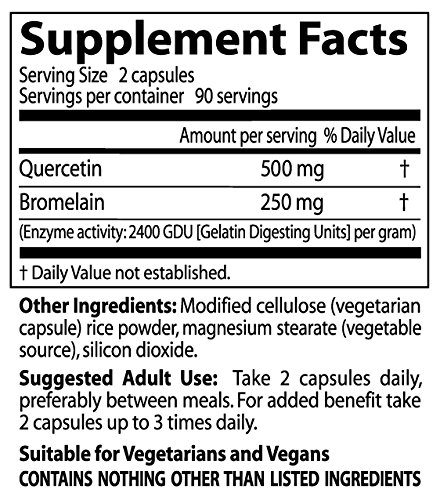
The Doctor’s Best Quercetin/Bromelain Capsules ingredients are:
 July 14, 2015 at 5:24 pm #75893
In reply to: Allergy Friendly Premium Dog Food?
MemberI see Quercetin is for histamine management which I would like to add, can you recommend any of these from amazon? Also, is there one that would have omega 3 in it as well?
I’m going to by Mercola’s Organic Peppermint shampoo for her on amazon as well so would like to just get everything from there if possible so any recommendations are welcomed
This is for all dog suppliments with it in it
http://www.amazon.com/s/ref=nb_sb_noss_2?url=search-alias%3Dpets&field-keywords=QuercetinI’m considering this with both Quercetin 500mg/Bromelain250mg per tab
July 11, 2015 at 9:52 pm #75733In reply to: raw chicken for large dogs
C4D
MemberAs a side note to skeptvet, I don’t ask a normal veterinarian what to feed my dogs any more than I would ask my general practioner doctor what I should be eating. I would ask a nutritionist if I needed advice.
I also believe that man and dog has survived and thrived for many thousands of years without asking a vet/doctor/nutritionist what they should be eating. I don’t think any living thing, man or beast ate kibble to survive those many thousands of years.July 9, 2015 at 3:53 pm #75633In reply to: Lab with Food Allergies – Any Help is Appreciated!
Shawna
MemberRed, environmental allergies definitely are much more common than food “allergies” but not necessarily more common than food intolerances or sensitivities. I have had over 30 dogs in my house and only one had an environmental allergy while MANY had food sensitivities and intolerances. In fact, four of the six currently in my home have a food sensitivity.
Edit — all of those symptoms you site can also been seen with food sensitivities and intolerances. In addition to those, they know that sensitivities and intolerances to a protein called a lectin can actually cause auto immune diseases as well. I had a food sensitivity that went undiagnosed for over 20 years until I found the right doctor – She is an MD and a Certified Clinical Nutritionist and treats holistically and with alternatives. My symptoms were as diverse as white matter brain lesions, temporary but complete vision loss, itching scalp (to the point I would make it bleed while sleeping), arthritic type pains, malnutrition due to villous atrophy (which led to iodine deficiency hypothyroid, b12 anemia and iron anemia as well as all the symptoms associated with those, and other, deficiencies). DON’T underestimate a food sensitivity or intolerance.
-
This reply was modified 10 years, 5 months ago by
Shawna.
July 9, 2015 at 10:28 am #75616In reply to: Lab with Food Allergies – Any Help is Appreciated!
MemberWhat you describe sounds like environmental allergies which are more common than food allergies/intolerances. Environmental allergies tend to wax and wane, they get worse as the dog gets older.
I had excellent results after taking my dog to a dermatologist/specialist for skin testing. If the dog is really uncomfortable you may want to start there. I wasted a lot of time going back and forth to the regular vet, trying all kinds of different diets etc
Frequent bathing with Malaseb or GNC Antifungal shampoo for dogs does seem to help in conjunction with other treatments. Nutrisca salmon and chickpea kibble agrees with her the best.
If you go to the home/forums page here and use the search engine to look up allergies, you will find a ton of posts regarding pet owners going through the same thing.Helpful article below:
By Klaus Loft, DVM
Angell Dermatology ServiceAnyone who suffers debilitating environmental allergies tied to changing seasons, pet dander or household dust mites knows first-hand the misery of a scratchy throat, itchy eyes or painful rashes.
Not everyone knows, however, that our pets can experience similar allergic reactions — and other very bothersome dermatological issues. But our pets need not suffer in silence. Modern veterinary science has evolved such that advanced, comprehensive treatments are now available to treat a range of skin conditions.
Top pet dermatological issues
Our four-legged friends suffer from some of the same skin issues as we do — and several that we do not. The most common conditions we see at Angell include:
•Parasites, such as mites, fleas and mange (scabies)
•Infectious diseases, such as Staphylococcal pyoderma (“Staph”) skin infections, yeast and fungal infections and skin fold infections
•Systemic diseases, such as autoimmune diseases
•Skin cancer, such as Squamous cell carcinoma, cutaneous lymphoma, Mast cell tumors
•Allergies, such as flea allergy dermatitis, adverse food reactions, environmental allergies, etc.All of these conditions can become serious and, if untreated, dramatically reduce quality of life. But the tremendous strides made in veterinary innovation, however, is very good news for our pets. Specifically, the testing and treatments for allergies now rivals human healthcare in its sophistication, quality of care and long-term health outcomes.
Unlike humans, dogs and cats cannot tell us about their dermatological health issues. So we as pet owners must look for the signs. The most common indicators that a pet is suffering from some kind of allergy involve frequent episodes of ear infections, red raised or open sores on the skin, constant licking or biting of paws or groin — sometimes causing wounds that will not go away.
Allergies present a particular challenge because there can be hundreds (even thousands) of potential allergens that impact pet health, from foods to pollen from grasses, weeds, trees, dust mites and more. Today’s specialty veterinary hospitals have access to the very latest diagnostic tests to get to the bottom of what’s ailing our pet. Among these tests is the Intra Dermal Test (IDT).
IDT is generally considered the gold standard of testing for identifying allergens that cause pets to suffer from chronic skin and/or ear diseases. IDT involves injections of a series of concentrated allergens into the skin to determine which of them generate allergic reactions in a given animal. The use of fluorescein — a chemical that illuminates the inflammation caused by the injected allergens in order to visualize the strength of individual reactions — is key to accurately diagnosing pet allergies, and is just one of the many ways veterinarians use new technologies to improve care and diagnostics.
The results of IDT (as well as a review of the pet’s medical history) can then inform comprehensive immunotherapy treatments to relieve suffering. Veterinary dermatologists rely on IDT to build customized treatment plans for patients called Allergen Specific Immuno Therapy or “ASIT” for short.
ASIT involves a series of injections specifically created for the allergic animal’s skin. These injections, of diluted allergens, are designed to make a pet less sensitive to their allergens over time. In most cases these injections must be continued for life to reduce symptoms, but they are highly effective. Seventy to 90 percent of pets experience a reduction in symptoms as a result of ASIT treatment. These treatments can be delivered even more easily via droplets under the tongue, perfect for pet owners who are squeamish about giving injections to their pet.
This treatment is very new to the North American field of medicine (both human and veterinary) and underscores just how far innovation in veterinary medicine has come.
When it’s time to see the vet
Many pet owners are understandably concerned about taking their animals to the veterinarian because the cost (to say nothing of the fear some animals experience when going do the doctor) may outweigh any perceived reduction in suffering. To help pet owners know when it’s time to bring Fido to the doctor I’ve compiled my “Top Ten” list of dermatological symptoms that should never be ignored:
•Intense itching of the skin (head shaking, running the face into the carpet, furniture, etc.)
•Biting at the skin that creates red, raw crusting areas of the skin
•Multiple ear infections (head shaking, odor from ears, scratching at the ears with hind legs)
•Paw licking or chewing and frequent infections of the skin in the webbed skin of the paws
•Staining of the fur of the paws and nails on multiple feet
•Reoccurring skin infections in the groin, under the shoulders, perianal areas (on or under the tail)
•Greasy scaling skin and/or fur with odorous skin
•Hair loss, or thinning of the fur
•Dark pigmentation of the skin that is chronically infected
•Sudden depigmentation of skinAllergies and other dermatological issues can be as frustrating for pet owners and their veterinarians as they can be for pets. I encourage any pet owner whose animal is experiencing any of these symptoms to consult with their veterinarian.
July 8, 2015 at 7:30 am #75556In reply to: What is my dog allergic to?
MemberYou didn’t mention how old your dog is? What you describe sounds like environmental allergies which are more common than food allergies/intolerances. Environmental allergies tend to wax and wane, they get worse as the dog gets older.
I had excellent results after taking my dog to a dermatologist/specialist for skin testing. If the dog is really uncomfortable you may want to start there. I wasted a lot of time going back and forth to the regular vet, trying all kinds of different diets etc, frequent bathing with Malaseb or GNC Antifungal shampoo for dogs does seem to help in conjunction with other treatments.
If you go to the home/forums page here and use the search engine to look up allergies, you will find a ton of posts regarding pet owners going through the same thing.Helpful article below:
By Klaus Loft, DVM
Angell Dermatology ServiceAnyone who suffers debilitating environmental allergies tied to changing seasons, pet dander or household dust mites knows first-hand the misery of a scratchy throat, itchy eyes or painful rashes.
Not everyone knows, however, that our pets can experience similar allergic reactions — and other very bothersome dermatological issues. But our pets need not suffer in silence. Modern veterinary science has evolved such that advanced, comprehensive treatments are now available to treat a range of skin conditions.
Top pet dermatological issues
Our four-legged friends suffer from some of the same skin issues as we do — and several that we do not. The most common conditions we see at Angell include:
•Parasites, such as mites, fleas and mange (scabies)
•Infectious diseases, such as Staphylococcal pyoderma (“Staph”) skin infections, yeast and fungal infections and skin fold infections
•Systemic diseases, such as autoimmune diseases
•Skin cancer, such as Squamous cell carcinoma, cutaneous lymphoma, Mast cell tumors
•Allergies, such as flea allergy dermatitis, adverse food reactions, environmental allergies, etc.All of these conditions can become serious and, if untreated, dramatically reduce quality of life. But the tremendous strides made in veterinary innovation, however, is very good news for our pets. Specifically, the testing and treatments for allergies now rivals human healthcare in its sophistication, quality of care and long-term health outcomes.
Unlike humans, dogs and cats cannot tell us about their dermatological health issues. So we as pet owners must look for the signs. The most common indicators that a pet is suffering from some kind of allergy involve frequent episodes of ear infections, red raised or open sores on the skin, constant licking or biting of paws or groin — sometimes causing wounds that will not go away.
Allergies present a particular challenge because there can be hundreds (even thousands) of potential allergens that impact pet health, from foods to pollen from grasses, weeds, trees, dust mites and more. Today’s specialty veterinary hospitals have access to the very latest diagnostic tests to get to the bottom of what’s ailing our pet. Among these tests is the Intra Dermal Test (IDT).
IDT is generally considered the gold standard of testing for identifying allergens that cause pets to suffer from chronic skin and/or ear diseases. IDT involves injections of a series of concentrated allergens into the skin to determine which of them generate allergic reactions in a given animal. The use of fluorescein — a chemical that illuminates the inflammation caused by the injected allergens in order to visualize the strength of individual reactions — is key to accurately diagnosing pet allergies, and is just one of the many ways veterinarians use new technologies to improve care and diagnostics.
The results of IDT (as well as a review of the pet’s medical history) can then inform comprehensive immunotherapy treatments to relieve suffering. Veterinary dermatologists rely on IDT to build customized treatment plans for patients called Allergen Specific Immuno Therapy or “ASIT” for short.
ASIT involves a series of injections specifically created for the allergic animal’s skin. These injections, of diluted allergens, are designed to make a pet less sensitive to their allergens over time. In most cases these injections must be continued for life to reduce symptoms, but they are highly effective. Seventy to 90 percent of pets experience a reduction in symptoms as a result of ASIT treatment. These treatments can be delivered even more easily via droplets under the tongue, perfect for pet owners who are squeamish about giving injections to their pet.
This treatment is very new to the North American field of medicine (both human and veterinary) and underscores just how far innovation in veterinary medicine has come.
When it’s time to see the vet
Many pet owners are understandably concerned about taking their animals to the veterinarian because the cost (to say nothing of the fear some animals experience when going do the doctor) may outweigh any perceived reduction in suffering. To help pet owners know when it’s time to bring Fido to the doctor I’ve compiled my “Top Ten” list of dermatological symptoms that should never be ignored:
•Intense itching of the skin (head shaking, running the face into the carpet, furniture, etc.)
•Biting at the skin that creates red, raw crusting areas of the skin
•Multiple ear infections (head shaking, odor from ears, scratching at the ears with hind legs)
•Paw licking or chewing and frequent infections of the skin in the webbed skin of the paws
•Staining of the fur of the paws and nails on multiple feet
•Reoccurring skin infections in the groin, under the shoulders, perianal areas (on or under the tail)
•Greasy scaling skin and/or fur with odorous skin
•Hair loss, or thinning of the fur
•Dark pigmentation of the skin that is chronically infected
•Sudden depigmentation of skinAllergies and other dermatological issues can be as frustrating for pet owners and their veterinarians as they can be for pets. I encourage any pet owner whose animal is experiencing any of these symptoms to consult with their veterinarian.
July 1, 2015 at 10:57 pm #75202In reply to: Thoughts on Vegan dogs
MemberI 100% agree El Doctor. It is a shame the way animals are treated that are fed to dogs, cats and humans as well. The documentary “Food Inc” was very enlightening for me.
June 29, 2015 at 9:58 am #75083In reply to: Raw after extraction?
MemberThanks everyone. I’m happy to report the patient seems to be doing well so far. el doctor and Dori, I did back off the raw for her and am feeding just canned for the next few days. She is enthustiascally eating it while the others are having their raw. I have a lot of raw, but may throw some chickens into the crock pot so she can indulge! 🙂
Dori, I’m watching the potatoes and feeding the anti-inflammatory foods, so she hasn’t had any swelling yet. 🙂 The vet asked if I wanted and NSAID, of course I said no, but she is getting a bit of Tramadol.
jakes mom, she LOVES her coconut oil and would love any excuse for more!
el doctor, that was my main concern. Since it was in the front of her mouth, bacteria was a consideration and since she has a host of occaisonal issues, I didn’t want to stress her system any further.
So far, so good! Hopefully we will be able to keep her teeth clean and won’t have these issues again.
But, here’s another question. Has anyone used an electric toothbrush for their dogs teeth? I was thinking this might be more efficient in brushing if I can get them used to the sound. Thoughts and experiences are greatly appreciated!
June 28, 2015 at 6:30 pm #75056In reply to: switching large breed dogs to raw
MemberHi Sharon- While I can’t give you a ton of advice on raw (others here can and Im sure will chim in) I do know that raw meaty bones help clean their teeth really well and are quite healthy for them.
I’ve also heard from a few people that they don’t feel that puppies in general should eat grain free however that is probably more towards dry food and not raw since raw is the ideal diet and contains no grains or carbs. Dr. Karen Becker interviewed a doctor who breeds Newfies and has all the pups on a raw diet. One of his Dam’s lived to 17 years old on raw.
Perhaps check out Darwins Pet Foods, they do raw and its already complete and balanced. Hare Today is grinds so you have to add your own vitamins etc. I’m sure others who do feed raw can give you some other sites or suppliers to look into. If your Newfie pup is still under 8 months you will need to make sure he’s getting proper calcium and phosphorus levels and make sure hes not being overfed. That will also aid in preventing skeletal disorders and overgrowth.
June 28, 2015 at 3:25 am #75036In reply to: Frustrated!
Member“The results came back as to much protein in her urine. The doctor wants me to put her on some medication that she said she may have to be on the rest of her life as well as eye medications she also said she would need the remainder of her life”.
The proteinuria needs to be taken seriously before making any changes to her diet and medications outside of what a veterinarian that has examined her advises.
Is this condition acute or chronic? Is it her kidneys? More testing may be indicated and even the services of a specialist to obtain a precise diagnosis and treatment.
Food alone won’t solve these issues (imo)June 27, 2015 at 1:39 pm #74972In reply to: Frustrated!
MemberFrom the symptoms you have described it sounds like your dog has environmental allergies, if it was my dog would make an appointment with a specialist/dermatologist and get the skin testing done asap. It helps to feed a high quality limited ingredient food, my dog does well on Nutrisca salmon and chickpea….but until she started ASIT, nothing helped and it kept getting worse. Use the search engine on the home page, Forums, on this site to look up allergies, I think you will find some helpful information. /forums/search/allergies/
Helpful article below:
By Klaus Loft, DVM
Angell Dermatology ServiceAnyone who suffers debilitating environmental allergies tied to changing seasons, pet dander or household dust mites knows first-hand the misery of a scratchy throat, itchy eyes or painful rashes.
Not everyone knows, however, that our pets can experience similar allergic reactions — and other very bothersome dermatological issues. But our pets need not suffer in silence. Modern veterinary science has evolved such that advanced, comprehensive treatments are now available to treat a range of skin conditions.
Top pet dermatological issues
Our four-legged friends suffer from some of the same skin issues as we do — and several that we do not. The most common conditions we see at Angell include:
•Parasites, such as mites, fleas and mange (scabies)
•Infectious diseases, such as Staphylococcal pyoderma (“Staph”) skin infections, yeast and fungal infections and skin fold infections
•Systemic diseases, such as autoimmune diseases
•Skin cancer, such as Squamous cell carcinoma, cutaneous lymphoma, Mast cell tumors
•Allergies, such as flea allergy dermatitis, adverse food reactions, environmental allergies, etc.All of these conditions can become serious and, if untreated, dramatically reduce quality of life. But the tremendous strides made in veterinary innovation, however, is very good news for our pets. Specifically, the testing and treatments for allergies now rivals human healthcare in its sophistication, quality of care and long-term health outcomes.
Unlike humans, dogs and cats cannot tell us about their dermatological health issues. So we as pet owners must look for the signs. The most common indicators that a pet is suffering from some kind of allergy involve frequent episodes of ear infections, red raised or open sores on the skin, constant licking or biting of paws or groin — sometimes causing wounds that will not go away.
Allergies present a particular challenge because there can be hundreds (even thousands) of potential allergens that impact pet health, from foods to pollen from grasses, weeds, trees, dust mites and more. Today’s specialty veterinary hospitals have access to the very latest diagnostic tests to get to the bottom of what’s ailing our pet. Among these tests is the Intra Dermal Test (IDT).
IDT is generally considered the gold standard of testing for identifying allergens that cause pets to suffer from chronic skin and/or ear diseases. IDT involves injections of a series of concentrated allergens into the skin to determine which of them generate allergic reactions in a given animal. The use of fluorescein — a chemical that illuminates the inflammation caused by the injected allergens in order to visualize the strength of individual reactions — is key to accurately diagnosing pet allergies, and is just one of the many ways veterinarians use new technologies to improve care and diagnostics.
The results of IDT (as well as a review of the pet’s medical history) can then inform comprehensive immunotherapy treatments to relieve suffering. Veterinary dermatologists rely on IDT to build customized treatment plans for patients called Allergen Specific Immuno Therapy or “ASIT” for short.
ASIT involves a series of injections specifically created for the allergic animal’s skin. These injections, of diluted allergens, are designed to make a pet less sensitive to their allergens over time. In most cases these injections must be continued for life to reduce symptoms, but they are highly effective. Seventy to 90 percent of pets experience a reduction in symptoms as a result of ASIT treatment. These treatments can be delivered even more easily via droplets under the tongue, perfect for pet owners who are squeamish about giving injections to their pet.
This treatment is very new to the North American field of medicine (both human and veterinary) and underscores just how far innovation in veterinary medicine has come.
When it’s time to see the vet
Many pet owners are understandably concerned about taking their animals to the veterinarian because the cost (to say nothing of the fear some animals experience when going do the doctor) may outweigh any perceived reduction in suffering. To help pet owners know when it’s time to bring Fido to the doctor I’ve compiled my “Top Ten” list of dermatological symptoms that should never be ignored:
•Intense itching of the skin (head shaking, running the face into the carpet, furniture, etc.)
•Biting at the skin that creates red, raw crusting areas of the skin
•Multiple ear infections (head shaking, odor from ears, scratching at the ears with hind legs)
•Paw licking or chewing and frequent infections of the skin in the webbed skin of the paws
•Staining of the fur of the paws and nails on multiple feet
•Reoccurring skin infections in the groin, under the shoulders, perianal areas (on or under the tail)
•Greasy scaling skin and/or fur with odorous skin
•Hair loss, or thinning of the fur
•Dark pigmentation of the skin that is chronically infected
•Sudden depigmentation of skinAllergies and other dermatological issues can be as frustrating for pet owners and their veterinarians as they can be for pets. I encourage any pet owner whose animal is experiencing any of these symptoms to consult with their veterinarian.
June 27, 2015 at 1:14 pm #74971Topic: Frustrated!
in forum Diet and HealthKym G
MemberI’m not sure if this is where I should ask this or even if you can help me. I’m really confused. March of 2014 I took my seven year old MinPin to her vet for skin problems. It started out as a rash on her underbelly. Then she started getting little scabs on her body and if you scratched them off, it would take off a patch of fur. The vet gave us some antibiotics and a shampoo. The symptoms improved but came back. Once again the vet gave her antibiotics, antihistamine, vitamin e tablets for her food and said continue the shampoo. The results were great but once the antihistamine was gone she started getting rough patches on the base of her tail. It is now all over her tail and anal area. It looks scabby and black. She also has scabs on her chin and she keeps licking her paws. I also noticed that her eyes looked cloudy and red. When I took her in they said she had protein in her urine and charged me $300 for two urine tests. The results came back as to much protein in her urine. The doctor wants me to put her on some medication that she said she may have to be on the rest of her life as well as eye medications she also said she would need the remainder of her life.
I’m so sad for my baby girl (Heidi) and frustrated that she still has skin problems and now the doctor, who didn’t get rid of the skin problems, now says she needs this other medication for other problems.
I had tried several dog foods and was feeding her Instinct (Salmon) to try and rule out anything that might cause an allergy. I found out that Instinct is very high in protein. Couldn’t this lead to the protein in her urine? Maybe she doesn’t need the medication. I told the doctor about the food but she dismissed it. It still seems like a possibility to me. I really would hate for her to be on a medication if she really didn’t need it.
Now I’m back to searching for a new food that is not to high in protein but could possibly help her as well. I have a four year old MinPin too so I have to consider her diet as well. I’m at a loss and completely frustrated. Heidi is uncomfortable and I have to figure out how to help her. By trying to change her eating habits and not getting good results, I had figured the skin problems may be due to airborne allergies. Could I be wrong? Could it still be her diet?
June 21, 2015 at 5:39 pm #74717In reply to: Balance It Prescription Diets?
Dog_Obsessed
Member@BCnut/El Doctor Thanks! I played with the website a bit more after posting this topic and found the one for specific health issues. It would be great except for the fact that Lily needs a novel protein source, such as bison, venison, or kangaroo, and I’m pretty sure that isn’t really practical to use for a homemade diet based on the availability/cost of novel meat sources.
June 13, 2015 at 4:14 am #74330In reply to: Skin rash and issues on Pitbulls
MemberIf it has been going on for more than 1 year/4 seasons and the dog has not shown improvement despite food changes, frequent bathing, etc and continues to suffer.
The allergens that the dog is responding to are probably environmental, impossible to avoid and not diet related.
If you use the search engine above on the forum home page and look up “allergies” you will find a lot of my posts and some articles that are very informative.
/forums/search/allergies/I suggest you consult a dermatologist/specialist as there are other reasons for the symptoms you describe other than food intolerances.
Helpful article below:
By Klaus Loft, DVM
Angell Dermatology ServiceAnyone who suffers debilitating environmental allergies tied to changing seasons, pet dander or household dust mites knows first-hand the misery of a scratchy throat, itchy eyes or painful rashes.
Not everyone knows, however, that our pets can experience similar allergic reactions — and other very bothersome dermatological issues. But our pets need not suffer in silence. Modern veterinary science has evolved such that advanced, comprehensive treatments are now available to treat a range of skin conditions.
Top pet dermatological issues
Our four-legged friends suffer from some of the same skin issues as we do — and several that we do not. The most common conditions we see at Angell include:
•Parasites, such as mites, fleas and mange (scabies)
•Infectious diseases, such as Staphylococcal pyoderma (“Staph”) skin infections, yeast and fungal infections and skin fold infections
•Systemic diseases, such as autoimmune diseases
•Skin cancer, such as Squamous cell carcinoma, cutaneous lymphoma, Mast cell tumors
•Allergies, such as flea allergy dermatitis, adverse food reactions, environmental allergies, etc.All of these conditions can become serious and, if untreated, dramatically reduce quality of life. But the tremendous strides made in veterinary innovation, however, is very good news for our pets. Specifically, the testing and treatments for allergies now rivals human healthcare in its sophistication, quality of care and long-term health outcomes.
Unlike humans, dogs and cats cannot tell us about their dermatological health issues. So we as pet owners must look for the signs. The most common indicators that a pet is suffering from some kind of allergy involve frequent episodes of ear infections, red raised or open sores on the skin, constant licking or biting of paws or groin — sometimes causing wounds that will not go away.
Allergies present a particular challenge because there can be hundreds (even thousands) of potential allergens that impact pet health, from foods to pollen from grasses, weeds, trees, dust mites and more. Today’s specialty veterinary hospitals have access to the very latest diagnostic tests to get to the bottom of what’s ailing our pet. Among these tests is the Intra Dermal Test (IDT).
IDT is generally considered the gold standard of testing for identifying allergens that cause pets to suffer from chronic skin and/or ear diseases. IDT involves injections of a series of concentrated allergens into the skin to determine which of them generate allergic reactions in a given animal. The use of fluorescein — a chemical that illuminates the inflammation caused by the injected allergens in order to visualize the strength of individual reactions — is key to accurately diagnosing pet allergies, and is just one of the many ways veterinarians use new technologies to improve care and diagnostics.
The results of IDT (as well as a review of the pet’s medical history) can then inform comprehensive immunotherapy treatments to relieve suffering. Veterinary dermatologists rely on IDT to build customized treatment plans for patients called Allergen Specific Immuno Therapy or “ASIT” for short.
ASIT involves a series of injections specifically created for the allergic animal’s skin. These injections, of diluted allergens, are designed to make a pet less sensitive to their allergens over time. In most cases these injections must be continued for life to reduce symptoms, but they are highly effective. Seventy to 90 percent of pets experience a reduction in symptoms as a result of ASIT treatment. These treatments can be delivered even more easily via droplets under the tongue, perfect for pet owners who are squeamish about giving injections to their pet.
This treatment is very new to the North American field of medicine (both human and veterinary) and underscores just how far innovation in veterinary medicine has come.
When it’s time to see the vet
Many pet owners are understandably concerned about taking their animals to the veterinarian because the cost (to say nothing of the fear some animals experience when going do the doctor) may outweigh any perceived reduction in suffering. To help pet owners know when it’s time to bring Fido to the doctor I’ve compiled my “Top Ten” list of dermatological symptoms that should never be ignored:
•Intense itching of the skin (head shaking, running the face into the carpet, furniture, etc.)
•Biting at the skin that creates red, raw crusting areas of the skin
•Multiple ear infections (head shaking, odor from ears, scratching at the ears with hind legs)
•Paw licking or chewing and frequent infections of the skin in the webbed skin of the paws
•Staining of the fur of the paws and nails on multiple feet
•Reoccurring skin infections in the groin, under the shoulders, perianal areas (on or under the tail)
•Greasy scaling skin and/or fur with odorous skin
•Hair loss, or thinning of the fur
•Dark pigmentation of the skin that is chronically infected
•Sudden depigmentation of skinAllergies and other dermatological issues can be as frustrating for pet owners and their veterinarians as they can be for pets. I encourage any pet owner whose animal is experiencing any of these symptoms to consult with their veterinarian.
June 12, 2015 at 3:04 pm #74294Topic: All Life Stage Quality Food
in forum Editors Choice ForumChristie
ParticipantI recently rescued a 4 month old Catahoula mix puppy. The limited paperwork that I received from the previous foster mom said she had been feeding her “retriever puppy food” from the tractor supply store. During her initial vet check, the doctor said her teeth (mostly baby thankfully) were in terrible condition and said I should feed her quality food. She wanted to sell me on Royal Canin, which is the only line the vet directly sells.
I have a 6 year old APBT mix who eats Ideal Balance Large Breed Dry. I started the puppy on IB’s puppy dry, but she eats both her food and the adult food. And while I know occasional snacking of the adult food isn’t terrible, I would prefer if possible, to buy 1 food for both dogs.
All of the Editor’s Choice list foods seem to be specifically formulated for adults (and there’s the separate list for puppies). I don’t want to cut quality for cost.
Neither dog is overly attached to Ideal Balance and I often have to top their kibble with canned food to get them to eat.
Anyone have any 4-5 recommendations for All Life Stages food or am I just better off sticking to the adult and puppy food?
Thanks!
May 29, 2015 at 10:26 pm #73353In reply to: Best chew for stomach
chris
MemberYeah, long story short on what happen is basically one day I left the house to run into the grocery store and was gone not nearly 30 minutes and when I returned he was super excited as always too see me well I jumped up with his front paws on our kitchen counter. I pointed at him and said get down from there you no better and he started whimpering a ton. He laid down on our floor and couldn’t stand up. I ran him within 5 minutes later to the pet emergency center where I live and they said it was back pain and think he has a little arthritis in his back. That might be but I knew better then that as he is only 5 years old and very active. So I took him to my family vet the next day and they said it could be his hip or back as well. Again I told my family vet I highly doubt that is the case but they suggested to give him steroid meds and give it a week too see what happens. A few days later when he would walk (and only when he would walk) I noticed a lump on his right side by his stomach near his penis. I immediately ran him to the family doctor that night they did an x-ray and said they see nothing wrong other then his stomach was completely filled with bowels and that lump could be a hard piece of bowel pushing out. Something still seemed fishy to me so every night I kept an eye on it and would rub it with my hand to make sure it wasn’t getting hard or larger in size. It stayed squishy and it’s been around a month now and got smaller in size but it’s still there a little. So I did a ton of research and i’m almost certain he has a small stomach hernia. Well I said long story short, sorry got a little carried away hehe.
Anyways ever since I switched his food to Merrick’s and been giving him canned food daily I check his poop everyday as I walk him and it’s completely how it should be. I gave the vets a sample and they said it looks perfect now and he’s been going twice a day. Once in the morning and once in the evening now. He is also back to being very active, running, playing, his normal self.
His name is Sparky though, I call him just Spark or My Boy as he is like my son. After I heard you guys mentioning that the canned Tripe has natural Enzymes and prebiotics that immediately set in my mind that i’m getting a few cans.
-
This reply was modified 10 years, 6 months ago by
chris.
May 27, 2015 at 4:23 pm #73210In reply to: Mast Cell Tumor and what is the best Diet
Heather H
MemberWhile I appreciate your reply and honesty, I knew this panel would not be made up of vets, I was just curious if anyone had any experience with Mast Cells in the past. I have done a lot of research, we have a great vet, and an oncology vet as well that are taking care of the case, but lets face it vets are like doctors, they too see “representatives,” the holistic approach is a great thought, but that comes down to a raw diet, and seeing what else they may have to offer, Thanks pitlove!
May 26, 2015 at 1:08 pm #73102In reply to: Overwhelmed with choices- itchy and shedding boxer
MemberHelpful article below:
By Klaus Loft, DVM
Angell Dermatology ServiceAnyone who suffers debilitating environmental allergies tied to changing seasons, pet dander or household dust mites knows first-hand the misery of a scratchy throat, itchy eyes or painful rashes.
Not everyone knows, however, that our pets can experience similar allergic reactions — and other very bothersome dermatological issues. But our pets need not suffer in silence. Modern veterinary science has evolved such that advanced, comprehensive treatments are now available to treat a range of skin conditions.
Top pet dermatological issues
Our four-legged friends suffer from some of the same skin issues as we do — and several that we do not. The most common conditions we see at Angell include:
•Parasites, such as mites, fleas and mange (scabies)
•Infectious diseases, such as Staphylococcal pyoderma (“Staph”) skin infections, yeast and fungal infections and skin fold infections
•Systemic diseases, such as autoimmune diseases
•Skin cancer, such as Squamous cell carcinoma, cutaneous lymphoma, Mast cell tumors
•Allergies, such as flea allergy dermatitis, adverse food reactions, environmental allergies, etc.All of these conditions can become serious and, if untreated, dramatically reduce quality of life. But the tremendous strides made in veterinary innovation, however, is very good news for our pets. Specifically, the testing and treatments for allergies now rivals human healthcare in its sophistication, quality of care and long-term health outcomes.
Unlike humans, dogs and cats cannot tell us about their dermatological health issues. So we as pet owners must look for the signs. The most common indicators that a pet is suffering from some kind of allergy involve frequent episodes of ear infections, red raised or open sores on the skin, constant licking or biting of paws or groin — sometimes causing wounds that will not go away.
Allergies present a particular challenge because there can be hundreds (even thousands) of potential allergens that impact pet health, from foods to pollen from grasses, weeds, trees, dust mites and more. Today’s specialty veterinary hospitals have access to the very latest diagnostic tests to get to the bottom of what’s ailing our pet. Among these tests is the Intra Dermal Test (IDT).
IDT is generally considered the gold standard of testing for identifying allergens that cause pets to suffer from chronic skin and/or ear diseases. IDT involves injections of a series of concentrated allergens into the skin to determine which of them generate allergic reactions in a given animal. The use of fluorescein — a chemical that illuminates the inflammation caused by the injected allergens in order to visualize the strength of individual reactions — is key to accurately diagnosing pet allergies, and is just one of the many ways veterinarians use new technologies to improve care and diagnostics.
The results of IDT (as well as a review of the pet’s medical history) can then inform comprehensive immunotherapy treatments to relieve suffering. Veterinary dermatologists rely on IDT to build customized treatment plans for patients called Allergen Specific Immuno Therapy or “ASIT” for short.
ASIT involves a series of injections specifically created for the allergic animal’s skin. These injections, of diluted allergens, are designed to make a pet less sensitive to their allergens over time. In most cases these injections must be continued for life to reduce symptoms, but they are highly effective. Seventy to 90 percent of pets experience a reduction in symptoms as a result of ASIT treatment. These treatments can be delivered even more easily via droplets under the tongue, perfect for pet owners who are squeamish about giving injections to their pet.
This treatment is very new to the North American field of medicine (both human and veterinary) and underscores just how far innovation in veterinary medicine has come.
When it’s time to see the vet
Many pet owners are understandably concerned about taking their animals to the veterinarian because the cost (to say nothing of the fear some animals experience when going do the doctor) may outweigh any perceived reduction in suffering. To help pet owners know when it’s time to bring Fido to the doctor I’ve compiled my “Top Ten” list of dermatological symptoms that should never be ignored:
•Intense itching of the skin (head shaking, running the face into the carpet, furniture, etc.)
•Biting at the skin that creates red, raw crusting areas of the skin
•Multiple ear infections (head shaking, odor from ears, scratching at the ears with hind legs)
•Paw licking or chewing and frequent infections of the skin in the webbed skin of the paws
•Staining of the fur of the paws and nails on multiple feet
•Reoccurring skin infections in the groin, under the shoulders, perianal areas (on or under the tail)
•Greasy scaling skin and/or fur with odorous skin
•Hair loss, or thinning of the fur
•Dark pigmentation of the skin that is chronically infected
•Sudden depigmentation of skinAllergies and other dermatological issues can be as frustrating for pet owners and their veterinarians as they can be for pets. I encourage any pet owner whose animal is experiencing any of these symptoms to consult with their veterinarian.
May 20, 2015 at 1:04 pm #72824Topic: All Wellness & Subsidiary Brands Toxic!!!
in forum Dog Food IngredientsCircaRigel
MemberI’ve just discovered that all Wellness dog foods, and foods of their subsidiaries, now contain Green Tea Extract. This ingredient can cause liver toxicity in dogs, sometimes fatal. If you question this, you may look up the scientific studies about it here (which is where all doctors and veterinarians go to look up journals on research): http://www.ncbi.nlm.nih.gov/pubmed/?term=dogs+green+tea+extract
Anyone feeding this to their dogs is feeding them low levels of poison, which over time could cause permanent damage and even death. I strongly suggest black balling Wellness, Holistic Select, Eagle Pack, and their other subsidiary foods that contain green tea extract.
May 11, 2015 at 9:25 pm #72135jella
MemberDear LT,
I just checked the Acana and it had white potatoes. So that is out. But it looked like Orijen Tundra didn’t have any of his bad foods but aren’t you scared of alfalfa? That is for horses and grown in fields with high pesticides. I might consider this one if I have to do so but years ago started getting a little arthritis so they tested me for gluten intolerance and I tested positive. Doctor said then that human and our pets should not have foods with gluten in them. Causes constant inflammation and visits to the doctor. I think Alfalfa has gluten. My vet asked me to strictly abide by her rules for 3 months with only what he is allowed to eat. She found out he also had environment allergies to oak trees, Bahia grass, and palm trees. She wants to avoid allergy shots so she wants to see for three months how he does with the food test. So far so good. Hardly any thick eye discharge in the mornings when he first wakes up. No scratching, itching or red spots so far.But it seems they just pick one of the company brands to write about and I need to check all the offered ones everything on their label. Do you know how to do this?
May 11, 2015 at 11:24 am #72099In reply to: Blue Buffalo chicken training treats
Membersomebodysme- see a doctor about a chill pill. I have fed BB and my dog didnt have side effects either. however he stopped eating it one day. i think you missed the point where i mentioned how BB is very overpriced and they have been dishonest for a year about what is in their food. me and many other people do not like giving money to a company who can’t even be honest about what is in their bags. it’s not my “expert advice” its my opinion. and i’m not alone in the feeling. plently of people on this site and in this thread dont feed BB anymore.
c4c (who I respect on here) and you might have given your dogs popcorn in the past but its not one of the human foods i choose to share with my dog. again my opinion. and it’s also my opinion that im not surprised he got an upset stomach with all the butter on popcorn. not saying its dangerous for them to eat just saying i can see how their stomach could get upset from it. no reason for the temper tantrum.
May 4, 2015 at 2:28 pm #71724In reply to: More anal gland issues :(
MemberDog Obsessed. I have also read, heard, and been told that anal glands should not be expressed on a regular basis and, in fact, if you take your dogs to groomers the groomers should be told not to express their anal glands. You can find many many articles from learned doctors on the subject. They should also not be removed unless, of course, in cases of tumors or cancer. I’m sure that’s not Lily’s problems or your vet would already be aware of it.
I’ve tried to read thoroughly the posts here on this never and if I missed it I’m sorry for asking but….did you mention anywhere what the consistency is of Lily’s poops? In almost every case that is the reason for anal issues and scooting. Either their poops are not hard enough to push through and squeeze out the scent through the anal glands along with the poop or the scooting is due to a diet intolerance/sensitivity or allergy and their butt is itchy and they scoot to scratch or lick it because it’s itchy or burning in feel to them.
-
This reply was modified 10 years, 7 months ago by
Dori.
May 1, 2015 at 6:00 pm #71568In reply to: Struvite Crystals
J S
MemberThought I should register and share our story since I’ve gained so much info from all of your stories. We just found out dog #2 ALSO has struvite crystals and high pH, so I’ve been researching foods. Both dogs have been on Canidae All Stages kibble with water and mix-ins (human leftovers or soup, etc.). Both are 1/2 Saluki and from a great rescue organization in NorCal called Stola. I’m beginning to think this breed is high strung, and if not, their early years of abuse or neglect has probably not helped them be mellow, however, we’ve seen improvements lately even in the one we’ve had for two years now, so that tells us to never give up. Anyway, I was angered by someone’s message whose doctor said there was no alternative to Science Diet. That stuff is cr** and it makes me mad that Vet’s are pushers of that. We have our #1 dog (who did have stone surgery just before we adopted her) on part Royal Canin, which probably isn’t much better. We did it all the time for several weeks but she blimped up because of the chicken fat. We used NaturVet Cranberry Relief for awhile but that didn’t prevent a 2nd UTI a year later, so that’s when we started swimming the kibble in water and going out to pee every four hours as well. Now we have to do the same with #2 dog. There’s no sign of infection, but we want to get the pH lower. Even though Canidae is a good brand I’m looking for other options other than cooking for them, if possible. I’m probably going to be baking dog biscuits in case the Kirkland brand is part of the pH issue. I’ve subscribed to this thread so will be following along. Thank you for all your help.
April 29, 2015 at 4:48 am #71402In reply to: Nutriscan Results. Suggestions?
MemberHelpful article below:
By Klaus Loft, DVM
Angell Dermatology ServiceAnyone who suffers debilitating environmental allergies tied to changing seasons, pet dander or household dust mites knows first-hand the misery of a scratchy throat, itchy eyes or painful rashes.
Not everyone knows, however, that our pets can experience similar allergic reactions — and other very bothersome dermatological issues. But our pets need not suffer in silence. Modern veterinary science has evolved such that advanced, comprehensive treatments are now available to treat a range of skin conditions.
Top pet dermatological issues
Our four-legged friends suffer from some of the same skin issues as we do — and several that we do not. The most common conditions we see at Angell include:
•Parasites, such as mites, fleas and mange (scabies)
•Infectious diseases, such as Staphylococcal pyoderma (“Staph”) skin infections, yeast and fungal infections and skin fold infections
•Systemic diseases, such as autoimmune diseases
•Skin cancer, such as Squamous cell carcinoma, cutaneous lymphoma, Mast cell tumors
•Allergies, such as flea allergy dermatitis, adverse food reactions, environmental allergies, etc.All of these conditions can become serious and, if untreated, dramatically reduce quality of life. But the tremendous strides made in veterinary innovation, however, is very good news for our pets. Specifically, the testing and treatments for allergies now rivals human healthcare in its sophistication, quality of care and long-term health outcomes.
Unlike humans, dogs and cats cannot tell us about their dermatological health issues. So we as pet owners must look for the signs. The most common indicators that a pet is suffering from some kind of allergy involve frequent episodes of ear infections, red raised or open sores on the skin, constant licking or biting of paws or groin — sometimes causing wounds that will not go away.
Allergies present a particular challenge because there can be hundreds (even thousands) of potential allergens that impact pet health, from foods to pollen from grasses, weeds, trees, dust mites and more. Today’s specialty veterinary hospitals have access to the very latest diagnostic tests to get to the bottom of what’s ailing our pet. Among these tests is the Intra Dermal Test (IDT).
IDT is generally considered the gold standard of testing for identifying allergens that cause pets to suffer from chronic skin and/or ear diseases. IDT involves injections of a series of concentrated allergens into the skin to determine which of them generate allergic reactions in a given animal. The use of fluorescein — a chemical that illuminates the inflammation caused by the injected allergens in order to visualize the strength of individual reactions — is key to accurately diagnosing pet allergies, and is just one of the many ways veterinarians use new technologies to improve care and diagnostics.
The results of IDT (as well as a review of the pet’s medical history) can then inform comprehensive immunotherapy treatments to relieve suffering. Veterinary dermatologists rely on IDT to build customized treatment plans for patients called Allergen Specific Immuno Therapy or “ASIT” for short.
ASIT involves a series of injections specifically created for the allergic animal’s skin. These injections, of diluted allergens, are designed to make a pet less sensitive to their allergens over time. In most cases these injections must be continued for life to reduce symptoms, but they are highly effective. Seventy to 90 percent of pets experience a reduction in symptoms as a result of ASIT treatment. These treatments can be delivered even more easily via droplets under the tongue, perfect for pet owners who are squeamish about giving injections to their pet.
This treatment is very new to the North American field of medicine (both human and veterinary) and underscores just how far innovation in veterinary medicine has come.
When it’s time to see the vet
Many pet owners are understandably concerned about taking their animals to the veterinarian because the cost (to say nothing of the fear some animals experience when going do the doctor) may outweigh any perceived reduction in suffering. To help pet owners know when it’s time to bring Fido to the doctor I’ve compiled my “Top Ten” list of dermatological symptoms that should never be ignored:
•Intense itching of the skin (head shaking, running the face into the carpet, furniture, etc.)
•Biting at the skin that creates red, raw crusting areas of the skin
•Multiple ear infections (head shaking, odor from ears, scratching at the ears with hind legs)
•Paw licking or chewing and frequent infections of the skin in the webbed skin of the paws
•Staining of the fur of the paws and nails on multiple feet
•Reoccurring skin infections in the groin, under the shoulders, perianal areas (on or under the tail)
•Greasy scaling skin and/or fur with odorous skin
•Hair loss, or thinning of the fur
•Dark pigmentation of the skin that is chronically infected
•Sudden depigmentation of skinAllergies and other dermatological issues can be as frustrating for pet owners and their veterinarians as they can be for pets. I encourage any pet owner whose animal is experiencing any of these symptoms to consult with their veterinarian.
April 24, 2015 at 12:01 pm #71176In reply to: New and Looking into feeding Raw
Memberlosul. I’ll be checking out their facility with my husband one day next week. I’ll report back on this thread.
Like your post very much and I can now also see the benefit of using All Provide (after visit to their facility) as a possible replacement periodically for one of the girls meals a day and the other commercial raws as their other meal.
It would be really nice if AAFCO some day would do a profile on commercial raw dog foods. As I doubt very highly that they’ll be doing that anytime soon, I will continue with my rotational feeding and ignore whether a company is really entitled to use “meets AAFCO guidelines” on their product. It doesn’t pertain to commercial raws in any way that I can see. I’ve been feeding commercial raw foods in rotation for the past 3 1/2 years maybe a little longer and all three girls are doing well. Well, except for Hannah who is 15 years 8 months old and spent the first 12 years of her life eating kibble. Bad mama, I didn’t know any better at the time. All things considered for her age and have a couple of forms of cancer she’s doing pretty damn well. Her doctors are still stunned that she remains asymptomatic to either cancer. Her only real issues pertain to geriatric decline. Hard of hearing, night blindness, a little arthritic, stuff like that, that we, even as humans, come down with.
I’m still not thrilled that Allprovide has no issue with the possible inclusion of antibiotics or hormones in their proteins but as I don’t feed anything feathered it may not apply to my situation.
April 22, 2015 at 1:37 pm #71068In reply to: New to homemade – need advice
Aj K
MemberI make a home made stew of ground turkey, 85% lean, chopped frozen spinach, frozen or fresh green beans, frozen carrots & peas, Sw potato(occasionally)cook I low sodium broth until all is soft ( I cook turkey first & mash it up) . Then add 1 tsp of cinnamon & turmeric, those are both good spices that are anti-inflammatory. Then I add 1/2 c oatmeal for fiber. I have a part breed Rotty, 13 yrs old with bad teeth ( soft food needed) missing a back let and hip dysplasia in the other back leg. She doesn’t get much exercise, therefore, the oatmeal, for fiber. I also have grain-free kibble in the 4-5 star cat short from dog advisor.com,for the additionals vitamins and pro biotics. I mix it half & half. She also get Rimadyl & an maintainer joint supplement for her dysplasia. We freeze 3 containers and work out of one. I just have to make it once a week. Then get another container out and warm the portion (1/2 c) in microwave ( mixed with the 1/2 c of kibble) We feed her twice a day.
I also give her Adequan shots once a month.
I am a medical doctor, not a vet, but after much research, I believe the cheaper brand dog foods some are giving their pets are causing Cancer….. Just like the foods, you hear about that can cause cancer in humans.
My dog still gets around even though she has bone grinding on bone. We do all this to keep her lean, so she can ambulated better. She’s right at 47/50 lbs.
I wanted to get a cart for her, but she keeps living longer than we’ve expected. She was a rescue & had to have her back leg amputated. Hope this helps!April 19, 2015 at 3:11 am #70834In reply to: PLEASE HELP!!
MemberAllergies? If the current treatment is not effective and the dog is seriously uncomfortable, you may want to consider seeing a specialist/dermatologist, especially if this has been going on for 1 year/4 seasons without any significant periods of relief.
http://www.allergydogcentral.com/2011/06/30/dog-allergy-testing-and-allergy-shots/#comment-1283
Or consult a homeopath http://theavh.org/
Dr Falconer’s latest blog http://vitalanimal.com/natural-dog-food-work/
/forums/topic/atopic-dermatitisyeast-issues-smartest-food-choice/
Helpful article below:
By Klaus Loft, DVM
Angell Dermatology ServiceAnyone who suffers debilitating environmental allergies tied to changing seasons, pet dander or household dust mites knows first-hand the misery of a scratchy throat, itchy eyes or painful rashes.
Not everyone knows, however, that our pets can experience similar allergic reactions — and other very bothersome dermatological issues. But our pets need not suffer in silence. Modern veterinary science has evolved such that advanced, comprehensive treatments are now available to treat a range of skin conditions.
Top pet dermatological issues
Our four-legged friends suffer from some of the same skin issues as we do — and several that we do not. The most common conditions we see at Angell include:
•Parasites, such as mites, fleas and mange (scabies)
•Infectious diseases, such as Staphylococcal pyoderma (“Staph”) skin infections, yeast and fungal infections and skin fold infections
•Systemic diseases, such as autoimmune diseases
•Skin cancer, such as Squamous cell carcinoma, cutaneous lymphoma, Mast cell tumors
•Allergies, such as flea allergy dermatitis, adverse food reactions, environmental allergies, etc.All of these conditions can become serious and, if untreated, dramatically reduce quality of life. But the tremendous strides made in veterinary innovation, however, is very good news for our pets. Specifically, the testing and treatments for allergies now rivals human healthcare in its sophistication, quality of care and long-term health outcomes.
‘Doc, it itches when I do this!’
Unlike humans, dogs and cats cannot tell us about their dermatological health issues. So we as pet owners must look for the signs. The most common indicators that a pet is suffering from some kind of allergy involve frequent episodes of ear infections, red raised or open sores on the skin, constant licking or biting of paws or groin — sometimes causing wounds that will not go away.
Allergies present a particular challenge because there can be hundreds (even thousands) of potential allergens that impact pet health, from foods to pollen from grasses, weeds, trees, dust mites and more. Today’s specialty veterinary hospitals have access to the very latest diagnostic tests to get to the bottom of what’s ailing our pet. Among these tests is the Intra Dermal Test (IDT).
IDT is generally considered the gold standard of testing for identifying allergens that cause pets to suffer from chronic skin and/or ear diseases. IDT involves injections of a series of concentrated allergens into the skin to determine which of them generate allergic reactions in a given animal. The use of fluorescein — a chemical that illuminates the inflammation caused by the injected allergens in order to visualize the strength of individual reactions — is key to accurately diagnosing pet allergies, and is just one of the many ways veterinarians use new technologies to improve care and diagnostics.
The results of IDT (as well as a review of the pet’s medical history) can then inform comprehensive immunotherapy treatments to relieve suffering. Veterinary dermatologists rely on IDT to build customized treatment plans for patients called Allergen Specific Immuno Therapy or “ASIT” for short.
ASIT involves a series of injections specifically created for the allergic animal’s skin. These injections, of diluted allergens, are designed to make a pet less sensitive to their allergens over time. In most cases these injections must be continued for life to reduce symptoms, but they are highly effective. Seventy to 90 percent of pets experience a reduction in symptoms as a result of ASIT treatment. These treatments can be delivered even more easily via droplets under the tongue, perfect for pet owners who are squeamish about giving injections to their pet.
This treatment is very new to the North American field of medicine (both human and veterinary) and underscores just how far innovation in veterinary medicine has come.
When it’s time to see the vet
Many pet owners are understandably concerned about taking their animals to the veterinarian because the cost (to say nothing of the fear some animals experience when going do the doctor) may outweigh any perceived reduction in suffering. To help pet owners know when it’s time to bring Fido to the doctor I’ve compiled my “Top Ten” list of dermatological symptoms that should never be ignored:
•Intense itching of the skin (head shaking, running the face into the carpet, furniture, etc.)
•Biting at the skin that creates red, raw crusting areas of the skin
•Multiple ear infections (head shaking, odor from ears, scratching at the ears with hind legs)
•Paw licking or chewing and frequent infections of the skin in the webbed skin of the paws
•Staining of the fur of the paws and nails on multiple feet
•Reoccurring skin infections in the groin, under the shoulders, perianal areas (on or under the tail)
•Greasy scaling skin and/or fur with odorous skin
•Hair loss, or thinning of the fur
•Dark pigmentation of the skin that is chronically infected
•Sudden depigmentation of skinAllergies and other dermatological issues can be as frustrating for pet owners and their veterinarians as they can be for pets. I encourage any pet owner whose animal is experiencing any of these symptoms to consult with their veterinarian.
April 13, 2015 at 7:30 pm #70515In reply to: What is a Dental?
MemberUnfortunately where I live and the vets that I chose to use are very expensive, but they know my dogs so I wouldn’t have it done by someone that doesn’t know my dogs and that I don’t know them. I’m not saying that’s right or wrong. Just me being neurotic about my girls. I have always had blood work done before anything having to do with anesthesia. Also, that wouldn’t be just my choice but by the doctors orders also.
Have your dogs teeth professionally cleaned is a must when needed. Hopefully before needed too much. It’s just like ourselves. We brush our teeth, of course, but we still go the the dentist so that the hygienist does a complete dental cleaning. Bacteria would probably also go into our bloodstream and do harm to our kidneys and liver just as it would with our animals if we never cleaned our teeth.
April 13, 2015 at 11:54 am #70492In reply to: Doggy Dementia
MemberL M. Marie, Myself, Labs, and quite a few others have been counseling, advising, and pleading her to get Ginger’s dental done since the first week she got her. That is well over a year ago. I’d also like to remind you and others on this thread that she has repeatedly asked for advice. We have repeatedly given her the advice she asked for. No, no one has to take anyone’s advice even if you’ve asked for said advice. Then stop asking for the same advice on the same issue over and over and over again if you know you’re not going to do anything anyway. Have you read all 15 pages of this forum thread? If not and when you have a moment, you might want to read it from the beginning. I think that you and others may think that we are being too hard on Akari and need to take it easy on her. It is inhumane to allow anyone, anything to suffer as long as the poor dog has suffered due to the condition of Ginger’s teeth.
We all have had old dogs at some time or another and we all dread the exams. I for one have had my Maltese, Hannah, all her life. She was 15 years old last September. She has two types of cancer (bladder and lung), she’s been hypothyroid almost half her life. She has two degenerated discs mid spine. All these issues I’ve been treating medically, holistically, with SP supplements, homeopathically, with the aid of not only her own vet but with counsel from holistic/homeopathic vets and specialists for her conditions. Also I have often asked for advice here on DFA. It’s a wonderful place filled with loving, caring, compassionate people and when we see and hear these stories we have to speak up and point out what we know is wrong and is abusive behavior. Hannah is not suffering in the least. She’s eating, drinking, peeing, and pooping. Playing with her two “sisters” all the time. Barks at everyone passing the property. She long ago decided that she was our watch dog and door bell all rolled into one. Each and every time I have to take her to any of her vets, my heart is in my throat. I all but break into a sweat. But that does not stop me from getting her to her doctors appointment. And when the day comes that my husband and I feel that she is suffering we will do what is best for Hannah, not for ourselves. We will let her go because to do otherwise would be selfish to the maximum on our part. We have had to make that decision in the past and you never ever get over it. It stays with you forever. All my dogs have been like my children. My own “human” child died 8 years ago last August. Let me tell you that the pain and longing is not much different than losing a furry member of your family. You miss them, you think you hear them, you think they’re just sleeping in their bed, or laying on the sofa with the t.v. on. You think you hear their dog tags jingling. I still have each and every dog collar and all dog tags and all ashes from each and every dog I’ve ever had including a yellow naped Amazon parrot I had about 30 years ago. In the end the decision should be about what is best for them, not for ourselves. Of course we don’t want them to be sick and/or die, but what needs to be done for “furry family members” that we brought into our homes to care for and protect means from beginning to end it is about them! Not us! Again, if I sound harsh on the subject of the decisions that Akari has chosen in her care of Ginger it is because it pains me that Ginger is still (a year or so later) in the condition that she is in and has been allowed to be this way since she was brought into her home.
I’m proud of all of us who have spoken up. So many people in this life will turn a blind eye because they don’t want to get involved. That’s not me and neither is it the posters that have seen something wrong happening and we do get involved. When I see abusive behavior in any form in my day to day life I am one of those that do speak up. I’m not so afraid that I’m going to pretend that I don’t see or hear what’s going on. It’s one of the problems that society has right now. People don’t want to get involved, they don’t want to upset the apple cart. I don’t care if the apple cart topples over so long as I have been instrumental in getting someone to open their eyes and see what they’ve done.
April 12, 2015 at 11:38 am #70436In reply to: Sick dog and no answers.
Sam Koch
MemberUpdate: Got a fecal test, it showed the parasite Coccidia. We started treatment and the doctor said it should be cleared up after treatment, but if it doesn’t then it’s something else.
Everything had been normal until today. Her poop has been a little mushy but I think that’s because of me switching her diet up. She didn’t eat all of her food today (maybe about 2/3 of it) and she’s asked to go outside three different times and hasn’t done anything, not even squatted. Now I’m smelling poop, I don’t know if she’s having gas or I’m just paranoid…April 7, 2015 at 10:06 am #70055Topic: Liver failure :(
in forum Diet and HealthZ B
Participant9 yr old female spayed
pit-boxer mix,43 lbs, at ideal weight and in good shape
Diet: Kibble (most recently Dr Tims Kinesis grain free & Natures Variety LID Duck) topped with 5 star canned
Heartguard every 6 weeks
Frontline or other topical flea treatment every 2 months
Flea bath once every 1-3 monthsShe has never taken steroids, painkillers, or antibiotics except for 2 courses of amoxicillin in the past year for a skin infection. To my knowledge she has not eaten any poisons, poisonous plants, etc. She’s an inside dog and walked on a leash. I don’t have a fenced yard so she’s never outside unattended.
Last week her water intake increased dramatically and she peed large volumes on the floor several nights in a row. Other than that she appears to feel fine, eating well, enjoys her walks, is not showing urgency to pee nor peeing frequently. Urinalysis showed signs of infection so she’s now taking antibiotic Zeniquin.
Yesterday I received the results of her bloodwork and her liver enzymes are OFF THE CHARTS.
The doctor recommends I give her SAM-e and Milk Thistle to support liver health. Is there anything else I can do, diet-wise, supplements, etc. I see Science Diet and Royal Canin have liver support diets but I hope not to feed those foods if I don’t have to. I’m willing to do homemade if I need to (commercial raw is not in my budget) but would prefer to stick with a high quality kibble and canned if possible.
Should I be concerned about the foods I’m currently feeding? Contamination????
April 5, 2015 at 4:22 am #69961MemberMy dog’s skin test showed allergies to a variety of grasses/weeds/trees, wool, Cockroach, American (specialist explained this doesn’t mean you have roaches) this stuff is dander, waste of all living things, it is everywhere, in the air, dirt, she scored a 3 for this one, plus the wool and one of the trees.
Three 3s. The other 13 were 2’s
The scratching, skin irritations, stomach upset, 2 ear infections, red rashes, 2 prednisone trials went on for a year before I took her for testing. I never had the blood test that identifies food allergies done. A lot of the allergens are airborne….impossible to avoid.
I tried an air purifier, dehumidifier….useless and noisy.The link I provided (previous post) to Dog Allergy Central explains immunotherapy in detail.
I noticed a little improvement right away, it will be 2 years now, she’s sees the specialist once a year. She is much improved. She still scratches occasionally, but not that crazy, intense stuff.
The specialist I went to doesn’t even recommend the skin test unless the symptoms have been going on for 1 year/4 seasons without any periods of significant relief.Helpful article below:
By Klaus Loft, DVM
Angell Dermatology ServiceAnyone who suffers debilitating environmental allergies tied to changing seasons, pet dander or household dust mites knows first-hand the misery of a scratchy throat, itchy eyes or painful rashes.
Not everyone knows, however, that our pets can experience similar allergic reactions — and other very bothersome dermatological issues. But our pets need not suffer in silence. Modern veterinary science has evolved such that advanced, comprehensive treatments are now available to treat a range of skin conditions.
Top pet dermatological issues
Our four-legged friends suffer from some of the same skin issues as we do — and several that we do not. The most common conditions we see at Angell include:
•Parasites, such as mites, fleas and mange (scabies)
•Infectious diseases, such as Staphylococcal pyoderma (“Staph”) skin infections, yeast and fungal infections and skin fold infections
•Systemic diseases, such as autoimmune diseases
•Skin cancer, such as Squamous cell carcinoma, cutaneous lymphoma, Mast cell tumors
•Allergies, such as flea allergy dermatitis, adverse food reactions, environmental allergies, etc.All of these conditions can become serious and, if untreated, dramatically reduce quality of life. But the tremendous strides made in veterinary innovation, however, is very good news for our pets. Specifically, the testing and treatments for allergies now rivals human healthcare in its sophistication, quality of care and long-term health outcomes.
‘Doc, it itches when I do this!’
Unlike humans, dogs and cats cannot tell us about their dermatological health issues. So we as pet owners must look for the signs. The most common indicators that a pet is suffering from some kind of allergy involve frequent episodes of ear infections, red raised or open sores on the skin, constant licking or biting of paws or groin — sometimes causing wounds that will not go away.
Allergies present a particular challenge because there can be hundreds (even thousands) of potential allergens that impact pet health, from foods to pollen from grasses, weeds, trees, dust mites and more. Today’s specialty veterinary hospitals have access to the very latest diagnostic tests to get to the bottom of what’s ailing our pet. Among these tests is the Intra Dermal Test (IDT).
IDT is generally considered the gold standard of testing for identifying allergens that cause pets to suffer from chronic skin and/or ear diseases. IDT involves injections of a series of concentrated allergens into the skin to determine which of them generate allergic reactions in a given animal. The use of fluorescein — a chemical that illuminates the inflammation caused by the injected allergens in order to visualize the strength of individual reactions — is key to accurately diagnosing pet allergies, and is just one of the many ways veterinarians use new technologies to improve care and diagnostics.
The results of IDT (as well as a review of the pet’s medical history) can then inform comprehensive immunotherapy treatments to relieve suffering. Veterinary dermatologists rely on IDT to build customized treatment plans for patients called Allergen Specific Immuno Therapy or “ASIT” for short.
ASIT involves a series of injections specifically created for the allergic animal’s skin. These injections, of diluted allergens, are designed to make a pet less sensitive to their allergens over time. In most cases these injections must be continued for life to reduce symptoms, but they are highly effective. Seventy to 90 percent of pets experience a reduction in symptoms as a result of ASIT treatment. These treatments can be delivered even more easily via droplets under the tongue, perfect for pet owners who are squeamish about giving injections to their pet.
Dog is prepared for Intra Dermal Testing
This treatment is very new to the North American field of medicine (both human and veterinary) and underscores just how far innovation in veterinary medicine has come.
When it’s time to see the vet
Many pet owners are understandably concerned about taking their animals to the veterinarian because the cost (to say nothing of the fear some animals experience when going do the doctor) may outweigh any perceived reduction in suffering. To help pet owners know when it’s time to bring Fido to the doctor I’ve compiled my “Top Ten” list of dermatological symptoms that should never be ignored:
•Intense itching of the skin (head shaking, running the face into the carpet, furniture, etc.)
•Biting at the skin that creates red, raw crusting areas of the skin
•Multiple ear infections (head shaking, odor from ears, scratching at the ears with hind legs)
•Paw licking or chewing and frequent infections of the skin in the webbed skin of the paws
•Staining of the fur of the paws and nails on multiple feet
•Reoccurring skin infections in the groin, under the shoulders, perianal areas (on or under the tail)
•Greasy scaling skin and/or fur with odorous skin
•Hair loss, or thinning of the fur
•Dark pigmentation of the skin that is chronically infected
•Sudden depigmentation of skinAllergies and other dermatological issues can be as frustrating for pet owners and their veterinarians as they can be for pets. I encourage any pet owner whose animal is experiencing any of these symptoms to consult with their veterinarian.
March 24, 2015 at 8:23 pm #69388AJ A
MemberThanks for all your opinions and experiences, I am glad I received replies.
I won’t ever go back to kibble EVER.
And I don’t run to the Vet all the time. I am organic myself since 15 yrs and haven’t seen a doctor since. Not even once!
I use common sense and needed to see if my case was only happening to my pup. As I can see it is definitely the water in the meat. Thats why they dont need to drink as much water as they do with kibble. Today I controlled a little the water intake and he pees less often, but still bigger spots than before and specially after feeding the chicken. He is doing just fine and has top energy, his coat started shining and it is growing faster than it was 1 month ago.
Before I switched to raw I did a deep education to be prepared, asking raw feeding breeders all over from Australia to Germany, checked everything online and started to understand that raw diet should not contain veggies neither grains like the BARF diet.. Wolves dont get a complete balanced diet everyday, neither do we and certainly they wont be searching for carrots, spinach and grains in their habitat. They receive the fermented enzymes from the digested food of their prey’s tripe, thats the good stuff, thats what they will eat first, thats where lots of balanced nutrients are.
When starting a raw diet with puppies (especially small breed) you best start with chicken, because low fat and easier digested than ground beef. Because I tried both, beef (grass fed 95%lean) and chicken. He regurgitated the whole ground beef everytime he ate it. He never did with the chicken. The wing helps cleaning his teeth and he gets supplements from the core of the bone and calcium.1 egg a week for breakfast. I give bone meal since he does not yet get enough bones in his food yet. Once he is used to the chicken and wings/necks I will start to join some liver and heart and green tripe little by little to not upset his digestion. Than we will do the same with duck, lamb and rabbit including organ and muscle meat as well. Of course a meaty bone everyday or 3 times a week.
Once established his likes than we can start feeding 1 day chicken, next duck and so on. I forgot the fish. Some fresh fish once a week is important as well.
I think probiotics , enzymes and clay are a must have in the kitchen. So is ionic silver and therapeutic grade essential oils like geranium, peppermint, frankincense and lemon. When they get lose stool some clay with enzymes/probiotics and diarrhea is cleared.
I use ionic silver to disinfect drinking water, once in a while internal against parasites and to clear my Shih Tzu’s eyes (14yrs). He suffers dry eyes and since he is on raw diet as well since 2 weeks his dry eye symptoms are already totally gone!! Yeahhhh! Now I hope to see changes in his coat like color and softness. His constant fear should disappear as well and his appetite should get better and better. I really hope to gain some more years of his company. I love him so much and hope we can gain back as much health as he has lost due to those bad kibble diet. He lost some of his hair on his back and I truly hope the high protein intake will fix most of his problems.
I stopped using vaccines on my Shih Tzu since 10yrs, neither I believe in spaying/neuter dogs. My pup received vaccines from her Vet, he won’t ever receive any other vaccines in his life. I dont believe it does any good, not for pets and neither for humans. Build up a healthy immune system and eat organic food and you will be fine!!! Same for dogs. THEY ARE DOGS NOT HUMANS!!! THEY DESERVE TO EAT HOW NATURE DESIGNED THEM TO.March 17, 2015 at 12:06 pm #68942In reply to: Hypoallergenic Dog Food – commercial?
Lori E
MemberHello, new member and looking for feedback on dog foods that have helped clear up allergy symptoms. We have a 5 yr rottie who has been experiencing chronic allergies for the past 2 years. Her eyes are puffy and have lost most of the hair around them due to rubbing with paws. Additional symptoms are excessive paw licking and what we have come to know as “fly catching syndrome” where she keeps biting in the air as if she is trying to catch a fly. After 2 years of doctors and specialists, we decided to try a holistic approach. Any feedback is welcome.
March 14, 2015 at 10:52 am #68780In reply to: Weightloss food question.
cdubau
ParticipantThe food I’m feeding them is listed under the Best Weight Loss Foods, so it should “work” to help them lose weight. I didn’t assume that because it said it was reduced fat it would work. I assumed it would work because its a 5 star food and its listed HERE as a best in weight loss. It has high protein to help them feel fuller, low in fat and low in calorie. And they don’t get but two small treats a day IF they actually get one.
They are older and aren’t losing weight, blood work was a question. Should I bring them to get blood work because they are eating BELOW recommended amount and NOT losing weight. If they were huma, eating the low end of caloric intake (even if it was high in carbs) and they weren’t losing weight, I would assume going to the doctor to have that person checked out would be the next step. Just my rational of thinking, but it really was a question.
February 22, 2015 at 9:05 pm #67277In reply to: No Chicken dog food?
Sandra D
MemberI have been cooking for my dogs for almost a year. This has made rotation easy. After every crock pot full, they get a different combo of foods. About 1 month ago my daughter’s 12 year old poodle started throwing up almost daily. The vet said the rotation was bad and the dogs must be on a consistent diet. I disagree, but my son-one-law believes the vet must always be right (even though his personal doctor is almost always wrong).
The poodle was administered heavy doses of anti-vomiting meds. I am feeding a five star dog food right now to all the dogs. While the poodle is no longer throwing up, he still obviously feels bad.
Any ideas on what I can do to help?February 19, 2015 at 6:00 pm #67053In reply to: Science Diet
MemberAimee.
Sorry, I must learn to thoroughly read original posts. I sometimes skim read and I just focused on the part of the dog having stones. I thought he was asking for help with a diet for a dog that has or had stones.Tom. I agree with you completely on the ingredients in the foods that vets prescribe. I understand that there may be some animals out there that will benefit from them but I’ve had many dogs in my life and have never come across one of them needing one of those diets. Not to say that I haven’t been asked by vets to feed one or another of them through the years. I just politely let them know that I appreciate their advice and I’ll think about it. This vet that I’ve had for 13 years knows that I feed commercial raw diets so none of the vets in the practice or the techs ask me anymore what I feed my dogs. Dr. Susan Wynn is a nutritionist that has seen my 15 1/2 year old Maltese when she was diagnosed with very high liver levels, then a tumor in her bladder and then a mass on the lobe of one of her lungs. All those were discovered early last Spring. At that point Dr. Wynn suggested that I put Hannah on Nature’s Variety Instinct Raw Diet because it is HPP and if Hannah’s immune system was working hard with all that was going on with her she didn’t want her to be exposed to any unnecessary bacteria. I feed a rotational diet with all three of my dogs and Nature’s Variety Instinct Raw Food was already in their diets. I continued to keep with my rotational feeding of commercial raw foods as I have for the last three years. Some are HPP and some are not. Actually most are not. Typically poultry is what is put under HPP and I don’t feed any poultry because one of my girls is highly intolerant of all fowl. I also don’t feed white potatoes or any night shade plants because they are pro inflammatory. April will be a year that she was diagnosed. To the delight of all, she remains asymptomatic to bladder or lung cancer. Her liver levels are back down in the normal range. (The elevated liver levels were discovered in last Spring’s blood work during her annual physical which is what started the initial visit to Georgia Veterinary Specialists where Dr. Wynn practices and was one of her doctors). I did add a few supplements to Hannah’s diet manufactured by Standard Process. She is regularly monitored and her blood work comes back normal. Her titers are all really good also. Her vet and I decided last year that due to the cancer only titers will be done for her for the rest of her life which I pray is for many many more years. Hannah is the picture in my avatar that was taken last year.
-
This reply was modified 10 years, 5 months ago by
-
AuthorSearch Results
Sign in or Register
Search Forums
Recent Topics
-
Aion 2 Gear Upgrade Tips Every New Player Should Know
by 16 hours, 13 minutes ago
-
PVPBank: All Cryoshock Serpent Locations in Fisch Roblox Guide
by 1 day, 18 hours ago
-
SSEGold Arc Raiders Flickering Flames Event Guide Rewards Merit Candleberries
by 2 days, 16 hours ago
-
Best enrichment toys for a smart dog? Others are getting boring.
by 6 days, 13 hours ago
-
How Do You Handle Cost Challenges in Tunnel Construction Projects?
by 1 day, 18 hours ago
Recent Replies
-
-
Carter Fisher on "American Journey" Dog Food who manufacturer's it?
-
-
-
Lis Tewert on Meijer Brand Dog Food
-
-
-
-
-
-
-
-
-
-