🐱 NEW!

Introducing the Cat Food Advisor!

Independent, unbiased reviews without influence from pet food companies

Search Results for 'fish oil'

Viewing 50 results - 651 through 700 (of 1,446 total)
  • Author
    Search Results
  • #69503

    In reply to: Struvite Crystals

    Anonymous
    Member

    Nutrisca dry (salmon) is potato and grain free (ingredients copied from chewy.com)

    Salmon, Menhaden Fish Meal, Peas, Chickpeas, Salmon Meal, Dehydrated Alfalfa Meal, Sunflower Oil, Pea Fiber, Flaxseed, Calcium Carbonate, Salmon Oil (a source of DHA), Dicalcium Phosphate, Potassium Chloride, Dried Eggs, Natural Flavor, Tomato Pomace, Carrots, Cranberries, Apricots, Choline Chloride, Zinc Proteinate, Vitamin A Acetate, Vitamin D3 Supplement, Vitamin E Supplement, Niacin, Iron Proteinate, d-Calcium Pantothenate, Thiamine Mononitrate, Pyridoxine Hydrochloride, Riboflavin Supplement, Copper Proteinate, Manganese Proteinate, Folic Acid, Calcium Iodate, Cobalt Proteinate, Biotin, Selenium Yeast, Vitamin B12 Supplement, Rosemary Extract.

    #69439
    Jennifer H
    Member

    Sooo…this is the menu I’ve drawn up for next month for Toby’s raw diet. Would anyone care to check it over and see if I’m good for calcium/phos, vits/mins? I try to stick to the meat being in the PMR range, but I add veggies and supplements as well to balance everything out.
    Toby weighs 13lbs, although I think he should weigh a bit less. The morning mixes consist of ground whole prey (Hare Today), with added cooked/pureed veggies (varies according to season availability, but usually consists of a base of pumpkin, spinach, parsley, sweet potato, berries and I add an 8oz can of Oyster for manganese) and added egg. I mix up as much meat as I would need for all 4 weeks, then add half that amount in veggies, and then 2 eggs w/ shells from my backyard flock.
    He also gets .5oz of veggies in the evening. (I make a big batch and then portion into ice cube trays.)

    His organs consist of 2lb beef liver, 1lb chicken liver, 2lb beef kidney, and 1lb beef pancreas that were ground and mixed together and then portioned into ice cube trays for ease of use.

    AM
    Monday – 2.5 oz Tripe Mix
    Tuesday – 2.5oz Llama Mix
    Wednesday – 2.5oz Rabbit Mix
    Thursday – 2.5oz Tripe Mix
    Friday – 2.5oz Llama Mix
    Saturday – 2.5oz Rabbit Mix
    Sunday – 2.5oz Mutton Mix
    PM
    (Meals total roughly 3oz)
    Monday – Skinless Chicken Neck, Chicken Gizzard, .5oz Organ
    Tuesday – Chicken Foot, Beef Heart
    Wednesday – Goat, Sardine, Beef Gullet
    Thursday – Duck Neck, Turkey Gizzard, .5oz Organ
    Friday – Chicken Back Piece, 1oz Organ
    Saturday – Cornish Hen Wing, Goat, .5oz Organ
    Sunday – Goat, Sardine, Beef Gullet

    His supplements are as follows –

    MORNING – 1/2 TSP Missing Link Skin and Coat – Daily
    15 IU Vit E – Daily
    Carlson Low A Cod Liver Oil – Daily
    2tsp Kefir – Daily
    Fish Oil – Mon, Wed, Fri
    Coconut Oil – Tues, Thurs

    EVENING – 1/2 TSP ONP Daily Greens – Daily
    15 IU Vitamin E – Daily
    2tsp Kefir – Daily

    I’m also looking at adding k9 Natural Health Skin and Coat to his evening meal as well….but only at half dose or less (their doses seem extremely high).

    Does this look okay? I’m learning all the time, and hoping to create a nice varied but balanced diet for Toby. He loves his raw, and he’s done so well on it.

    • This reply was modified 10 years, 9 months ago by Jennifer H.
    • This reply was modified 10 years, 9 months ago by Jennifer H.
    AJ A
    Member

    Thanks for all your opinions and experiences, I am glad I received replies.
    I won’t ever go back to kibble EVER.
    And I don’t run to the Vet all the time. I am organic myself since 15 yrs and haven’t seen a doctor since. Not even once!
    I use common sense and needed to see if my case was only happening to my pup. As I can see it is definitely the water in the meat. Thats why they dont need to drink as much water as they do with kibble. Today I controlled a little the water intake and he pees less often, but still bigger spots than before and specially after feeding the chicken. He is doing just fine and has top energy, his coat started shining and it is growing faster than it was 1 month ago.
    Before I switched to raw I did a deep education to be prepared, asking raw feeding breeders all over from Australia to Germany, checked everything online and started to understand that raw diet should not contain veggies neither grains like the BARF diet.. Wolves dont get a complete balanced diet everyday, neither do we and certainly they wont be searching for carrots, spinach and grains in their habitat. They receive the fermented enzymes from the digested food of their prey’s tripe, thats the good stuff, thats what they will eat first, thats where lots of balanced nutrients are.
    When starting a raw diet with puppies (especially small breed) you best start with chicken, because low fat and easier digested than ground beef. Because I tried both, beef (grass fed 95%lean) and chicken. He regurgitated the whole ground beef everytime he ate it. He never did with the chicken. The wing helps cleaning his teeth and he gets supplements from the core of the bone and calcium.1 egg a week for breakfast. I give bone meal since he does not yet get enough bones in his food yet. Once he is used to the chicken and wings/necks I will start to join some liver and heart and green tripe little by little to not upset his digestion. Than we will do the same with duck, lamb and rabbit including organ and muscle meat as well. Of course a meaty bone everyday or 3 times a week.
    Once established his likes than we can start feeding 1 day chicken, next duck and so on. I forgot the fish. Some fresh fish once a week is important as well.
    I think probiotics , enzymes and clay are a must have in the kitchen. So is ionic silver and therapeutic grade essential oils like geranium, peppermint, frankincense and lemon. When they get lose stool some clay with enzymes/probiotics and diarrhea is cleared.
    I use ionic silver to disinfect drinking water, once in a while internal against parasites and to clear my Shih Tzu’s eyes (14yrs). He suffers dry eyes and since he is on raw diet as well since 2 weeks his dry eye symptoms are already totally gone!! Yeahhhh! Now I hope to see changes in his coat like color and softness. His constant fear should disappear as well and his appetite should get better and better. I really hope to gain some more years of his company. I love him so much and hope we can gain back as much health as he has lost due to those bad kibble diet. He lost some of his hair on his back and I truly hope the high protein intake will fix most of his problems.
    I stopped using vaccines on my Shih Tzu since 10yrs, neither I believe in spaying/neuter dogs. My pup received vaccines from her Vet, he won’t ever receive any other vaccines in his life. I dont believe it does any good, not for pets and neither for humans. Build up a healthy immune system and eat organic food and you will be fine!!! Same for dogs. THEY ARE DOGS NOT HUMANS!!! THEY DESERVE TO EAT HOW NATURE DESIGNED THEM TO.

    Anonymous
    Member

    Plenty information at these websites.
    http://www.homeovet.net/dynamic/php/downloads/dog-c8470f2c75dbe4b683205c3919ee2310/dog_diet_complete.pdf

    http://www.allergydogcentral.com/

    Environmental allergies are more common than food allergies, often food sensitivities are referred to as allergies.
    If the symptoms have been going on for more than a year, 4 seasons without significant relief I would consider seeing a specialist and having the skin testing done (if you haven’t done so already).

    Have you considered consulting with a homeopathic veterinarian?
    http://www.vitalanimal.com
    for a list of homeopathic vets in your area http://theavh.org/ Make sure the vet has at least 75% homeopathic cases in their practice, or you might just get the same old same old.

    My dog with allergies receives immunotherapy and seems to do best with Nutrisca dry (fish) as a base food. A daily fish oil capsule. Frequent baths with Malaseb.

    #68923
    Anonymous
    Member

    My dog with allergies is doing very well, she only needs the injection every 3 weeks now.
    We see the specialist once a year and pick up the solution every 6 months, he is available for questions by phone.
    Haven’t been to the regular vet in 3 years, no need, this dog will not be receiving any more vaccinations.
    Initially the testing is expensive but the maintenance isn’t bad at all. It is what it is.

    Not all dogs need immunotherapy, the allergies may only be seasonal, or related to food sensitivities.
    But seeing a specialist and trying simple foods should help, for some reason my allergy girl does well on Nutrisca (fish), or Wysong. I tried eliminating this and that, no chicken, no potato……. she has a delicate stomach, but now I give her a little chicken or lean meat (cooked) with her dry, a fish oil capsule every day, it’s supposed to help pruritis.
    Good luck.

    #68686
    Anonymous
    Member

    My poodle with allergies receives immunotherapy and does well on Nutrisca dry (fish) as a base combined with a homemade diet (see the link I provided in the Homemade Dog Food thread). She gets a fish oil capsule daily, too.
    Her allergies are environmental (as most are) but she does have a sensitive stomach.
    Often food sensitivities are referred to as allergies when they are not.
    Allergies often show up around this age and tend to get worse with age.
    I found helpful information here. http://www.allergydogcentral.com/

    #68576

    In reply to: Healthy food, in bulk?

    Anonymous
    Member

    The fish oils and vitamin E begin to dissipate immediately once the bag is opened. I store 1/2 the contents of a bag in a tightly closed container and store it in a cool place, put what I am using in a large coffee container in the fridg, refill every few days.

    #68475
    Anonymous
    Member

    I have been using GNC dog multivitamins and a glucosamine supplement for my pets, so far so good.
    I use some of their supplements (human) for myself.
    Sometimes I buy drugstore stuff because it is cheaper, such as fish oil….but who knows? They are all considered food supplements and don’t have to be checked by the FDA.
    I like Endurance products too and they have a dog multivitamin I have used and may go back to.

    #68454
    Anonymous
    Member

    A lot of small breeds have a heart murmur, as long as it is asymptomatic I wouldn’t worry too much. There are a lot of high quality dog foods out there, try them out. Some of my favorites are Wysong, Nutrisca, Wellness…..and I recently discovered Evangers.
    Fish oil is a good supplement for any dog, imo. I use a drugstore brand for humans, one capsule a day, check with your vet.

    #68447
    Chris S
    Participant

    Oh yes, the Cavalier is about top of the list of breeds that get this heart problem. My dog, Archie, has held off any problems for about 7 years. So I am thankful for that.

    I have read that both fish oil & Coq10 were both good for this, but can’t seem to find out dosages. And what brands of supplements are reliable & consistent.

    I am looking for what foods would be helpful as well.

    One question I have had for a long time is…why don’t the manufacturers make their food taste good to the dog. I have tried numerous 5 star dog foods & none seem to make an impression on Archie. This is just a short rant. Sorry.

    Thanks for your response. It verifies what I have been reading.

    #68439
    Anonymous
    Member

    http://www.homeovet.net/dynamic/php/downloads/dog-c8470f2c75dbe4b683205c3919ee2310/dog_diet_complete.pdf

    I use this as a guide, for supplements I add a dog multi vitamin, fish oil supplement, and other things depending on the dogs individual needs
    I also use a quality dry food as a base, tried to get away from it, but they seem to like a little kibble here and there.

    • This reply was modified 10 years, 9 months ago by Anonymous.
    #68431

    Any breed can have a heart murmur. What grade is the murmur, and did the vet say it was indicative of a specific disease? Fish oil is one of the best supplements you can use. Coq10 is said to be effective for certain types of heart disease as well.

    #68190

    In reply to: Best Foods With Kibble

    Naturella
    Member

    Just 3?!?! OMG! This is hard! LoL.

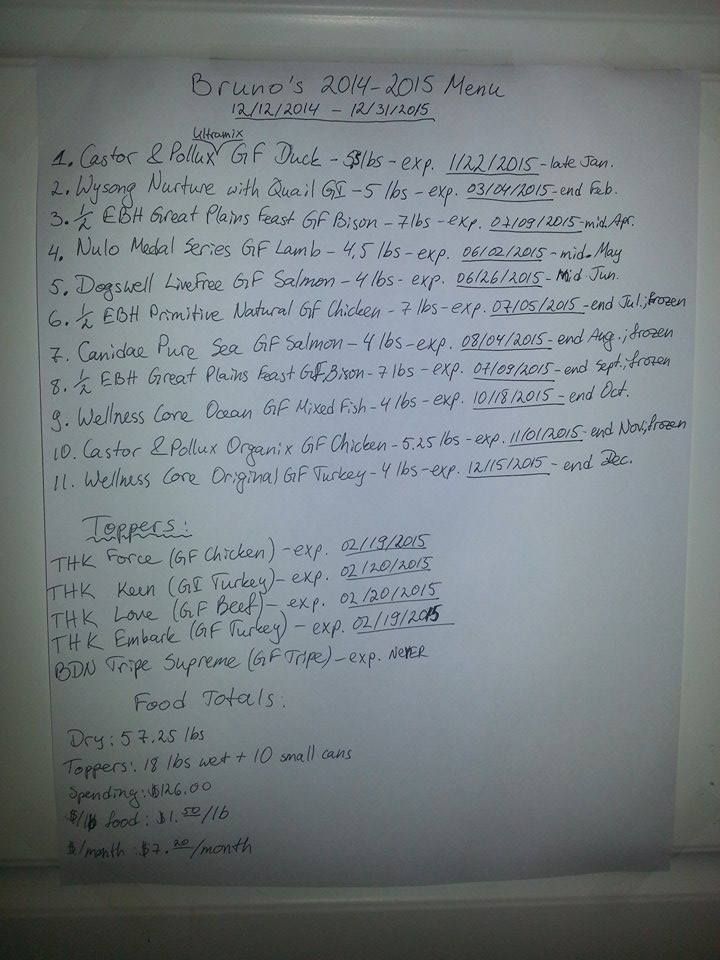
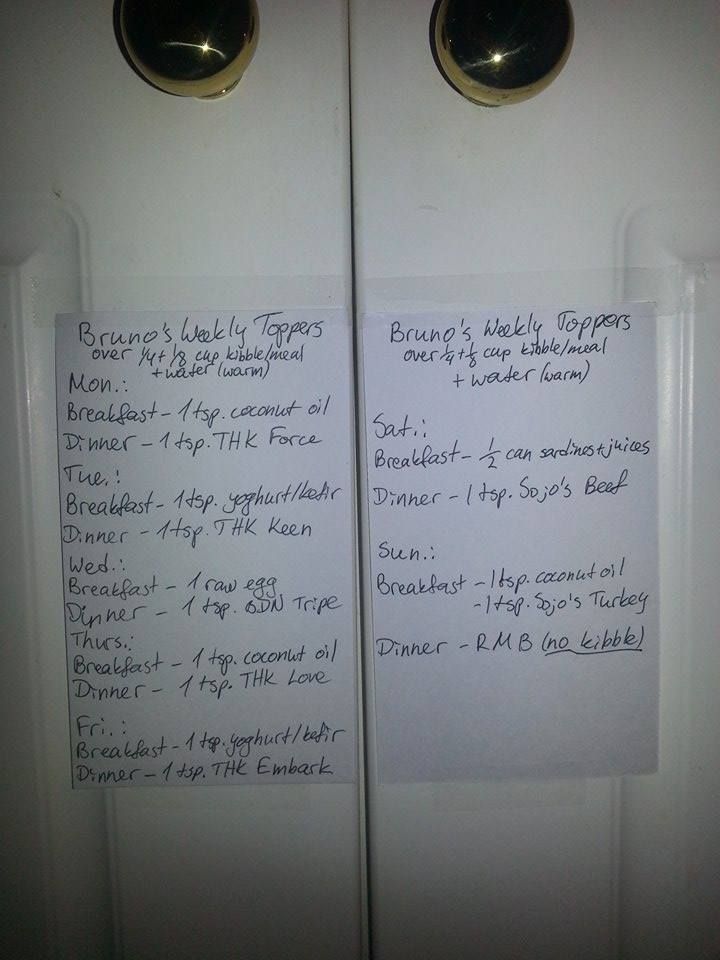
    I may have to say, almost the same as C4C’s – raw eggs (MAYBE with lightly cooked whites if I have a bigger dog in the future, but for Bruno it wouldn’t make too much of a difference so I feed the whole egg raw), canned sardines including their water/juices (mmmmmmm, Omega Fatty Acids… ), and RMBs (gotta keep the teethsies clean 😀 ).

    But if I could include more, there would be raw virgin unrefined COCONUT OIL (sardines are probably better, hence they made the cut, as they not only have the Omega FAs, but are a meat protein, with some bone for calcium, if I’m lucky a little fish organ left in there too), yoghurt/kefir, goat milk, canned food, dehydrated/air-dried/freeze-dried foods (I’m squishing them in one category), raw organ meats (livers, gizzards, kidneys, HEARTS, tongue, green tripe, whatever I can get my hands on. Yes, I know the heart, the tongue, and the gizzard are muscles. I count them toward the organs.), various fruits and veggies as treats (not in the kibble), and as needed canned plain pumpkin, Perfect Form, and maybe plain brown rice and boiled chicken for extreme tummy upsets.

    #67681

    In reply to: Looking for a new food

    GSDsForever
    Participant

    But you started this with a concern for digestibility, good absorption of nutrients, stool size, and gas. So I wanted to comment on that.

    “I don’t know if having more animal protein versus plant protein would help her digest the nutrients and poop/have gas less?”

    In short, no. It is the quality of the individual ingredients, what they are and their grade, that affect digestibility as they go into a formula. You’re also playing a balancing game with some ingredients, between rich in nutrients and greater digestibility. From there, processing matters. It can affect overall digestibility and preservation of nutrients. Finally freshness of ingredients going into the formula and from date of manufacture to purchase and use are very important.

    I would highly recommend calling the company of the the foods you’re considering, as well as the one you’ve been feeding (Infinia) and asking for Total Dry Matter Digestibility, plus digestibility of protein, fat, and carbs.

    The Infinia is rather low in protein, lower than I personally would feel comfortable feeding. But that isn’t the problem when looking at nutrient absorption and digestibility. But when the protein IS very low, then it becomes even more critical to ensure that it is very high quality and highly digested.

    Since Infinia Holistic Salmon & Sweet Potato’s primary ingredients are ones that look good and CAN be highly digestible . . .

    Salmon, Menhaden fish meal, sweet potatoes, potatoes

    it may the grade of ingredients and/or processing that is problematic.

    Fish meal, for example, comes in MANY different grades at VERY different price points to pet food companies. It can be very high ash & bones, leftover carcass material or low ash/high protein & high digestibility and come from good cuts included or whole fish with most bone filtered out, which costs the company considerably more and is harder to source. It also, by AAFCO definition, can be stripped of its oil (which is sold separately at profit, rather than going into the food) or have those precious Omega 3s left in. This formula appears to be very low in Omega 3, particularly for a fish formula, and even though it has been already boosted by plant oil (Canola). Reasons for fish formulas to be low in Omega 3 tend to be the meal has been stripped of its oils and/or use of farmed salmon. Salmon varieties also range greatly in Omega 3 content!

    Canola oil is not going to be as digestible and its nutrients absorbed well in order to be used by your dog vs., say, salmon oil or an animal fat. (I personally don’t like canola oil anyway, as it’s not a very clean ingredient. In commercial use, it is generally high heat and chemical processed, damaged, and and contaminated.) Potatoes, sweet potatoes can include skins or not, etc. affecting digestibility and stool volume.

    Foods cooked for less time and at lower temperatures preserve more nutrients. And gentle cooking both increases digestibility and nutrient absorbability in ingredients and nutrients AND decreases them compared to raw, depending on the ingredient or nutrient.

    Consider how fresh the ingredients are, how fresh from date of manufacture, how it was stored and transported prior to getting to you, and how properly sealed the bags are. (From there, you must also store foods properly.) Actually smell the food.

    But just to give you an example of how you can never tell with things like digestibility from the price and marketing/popularity of a product or just looking at the ingredient list of a “better” brand — Orijen’s 6 Fish formula has a pretty poor overall dry matter digestibility for a premium brand and is in fact the lowest among their formulas. It’s also lower than the cheap bulk bags from Costco, Nature’s Domain (by Diamond).

    #67662

    In reply to: Looking for a new food

    GSDsForever
    Participant

    Meghan,

    First of all, can I just say what an impressive amount of thoughtful research and care you’ve provided for your dog? Honestly, wtg! Your dog is very, very lucky to have such an obviously caring owner.

    I think nearly all the brands you’ve listed are really good choices made by reputable trustworthy companies, with the exception of Innova, a Proctor and Gamble product. I agree with Akari and would avoid Proctor and Gamble brands, just as I avoid Mars/Purina/Nestle/etc. and Diamond manufactured brands. P&G brands bought out from Natura include Innova, Evo, California Natural, Karma, and Mother Nature treats.

    I am not familiar with Sammy Snacks Ancestry and so cannot recommend it before knowing more about the company and its history. I would advise caution with newer/less familiar brands until you have some good information beyond just ingredient labels and guaranteed analyses. This company could be great, however!

    If you want to know more information about Horizon, Zignature, Earthborn, and Wellness, I am really familiar with these brands & and would be happy to share what I know.

    Of those, I think the Horizon Legacy Fish and Zignature Trout & Salmon would be my first choices. And not only do they both have excellent amounts of Omega 3 (and Omega 3 to 6 ratio) from exclusively wild caught fish, and the Omega 3 is not derived from plant oils (which are unlikely to be absorbed), both are ethoxyquin-free.

    I appreciate that these brands you mention are available at lower price points. I’m on a small budget too! Remember, just because a more expensive brand exists, it doesn’t always make it a better food from a better company. Ditto for who has the best marketing vs. makes excellent food with high quality ingredient & processing standards.

    #67609
    Meghan M
    Member

    Hello all!

    I have been to the Dog Food Advisor website many, many times over the last year or so, and recently decided to post a forum so I could get some personal insight regarding my issue. I have a 3 year-old Doberman who has been getting fed Infinia Holistic Salmon and Sweet Potato for quite some time. I also give her fish oil, yogurt, eggs, pumpkin, various fruits and veggies, and recently started adding wet food to the dry food based on many suggestions to vary a dog’s food.

    When I first got my dog, she was the runt of the litter. She had horrible skin, recurring UTIs, recurring issues with digestive upset (vomiting, diarrhea, constipation), etc. I tried a lot of different foods to no avail before I realized she likely has an allergy to poultry. I switched her over to the Infinia dog food and she has done great ever since. People always talk about how beautiful and shiny her coat is, how healthy she looks, etc. But I’ve noticed that, for the amount of food she eats per day, her stools are REALLY big and I feel like she goes way too often, which makes me worried that she’s not getting all of the benefits from the food that she should be getting. She also has gas ALL THE TIME. I thought it may have been the yogurt, so I’ve been giving her probiotic chews, but it’s still horrible.

    I’ve really been spending time the past few weeks researching, and I feel like the Infinia has too low of protein for her (22%) and does not have enough animal/fish protein. I don’t know if having more animal protein versus plant protein would help her digest the nutrients and poop/have gas less? Anywas, I thought Canidae Pure Sea would be a good first change-up, so I started to transition her EXTREMELY slowly, and she still ended up getting sick. I have her back on her normal food while I figure out what I want to switch her too. Candiae isn’t completely out (I could need to transition her even more slowly than I did, who knows).

    So, after all of my research on this website I found 9 other dog foods that seem to be high-quality and offer higher protein contents. I also have to take cost into consideration, because I’m a college student and can’t afford food like Orijen. So, here is my list of foods that I’ve found and like. If anyone could give me advice or suggestions about what food(s) would be best or personal stories, I would really appreciate it. And I’m sorry for the long rant!

    1) Sammy Snacks Ancestry Salmon and Sweet Potato
    2) Wellness CORE Ocean Formula
    3) Horizon Legacy Fish
    4) Innova Nature’s Table Cold Water Salmon and Wild Herring
    5) Zignature Trout and Salmon Meal
    6) Earthborn Holistic Grain Free Coastal Catch
    7) Horizon Pulsar Fish Formula

    The Sammy Snacks Ancestry is my favorite so far that I’ve researched, but I wondered if ethoxyquin was present. Also, once I get her comfortable with a higher-protein fish food, I will start introducing different protein sources, like beef and possibly bison, as well as adding canned sardines, salmon, and other “raw” foods.

    #67363
    Naturella
    Member

    Missie, I second what everyone else said. And whenever I mixed (and when my friend mixes), I used to mix the foods in the same container back when I discarded the bags and kept food into the container itself. I then used to keep the food bag into the storage container and now I use sandwich/freezer bags to bag smaller portions of food at a time and keep the rest in the fridge or closet, lol. But I feel bad about it since I’m using so many plastic baggies and there aren’t enough recycling places around where I live… 🙁 Anyway, nvm about that.
    Also when I used to mix, I would keep Bruno on one food for a week, then add the next over the following week, and then just mix freely if he wasn’t sick.

    I also think that Wellness is a quality brand and maybe Maisie just reacted to the fish in the food with BO. It happens to some dogs. Bruno (my little guy) must be a lucky exception because he doesn’t get smelly on fish-based kibble.

    But canned sardines and coconut oil, and fish oil are high-quality additives that I also feed to Bruno (once/week he gets 1/2 of a 3.75oz can of sardines and twice/week he gets a teaspoon of coconut oil. About once/week he gets a dehydrated fish skin to chew on too). His skin and coat are really great on those additives. But like pugmomsandy said, just make sure to keep her caloric intake consistent and at the level for her desired weight (25lbs or less). You can use the food calculator tool on this page to see how many calories/day she needs approximately and adjust from there with the additives and by removing some of her kibble when you add the extra stuff. 🙂

    Good luck and keep us posted! 🙂

    #67362
    pugmomsandy
    Participant

    Some added fish oil and coconut oil can help with dry skin. Just watch the calories!

    #67359
    pugmomsandy
    Participant

    I’ve read from others where eating a fish based food causes an odor, even from good brands. Currently my mix does contain some fish, but it’s only 1/3 of their food. You can give the benefits of fish by just feeding some canned sardines (in water or oil, no salt added) a couple times a week.

    • This reply was modified 10 years, 10 months ago by pugmomsandy.
    #67355
    Susan
    Participant

    Dori,
    How has my post cause any harm…..
    I can not believe this, from 1 simple post that I posted yesterday has come to this, un believable….
    If potatoes are so bad for IBD, then how come some of the vet prescription food for dogs with IBD have Potatoes.. Royal Canine, Salmon & Potatoes, Duck & Potatoes, Venison & Potatoes…. Eukanuba FP Fish & Potatoes the list goes on, also I know a few people that have dogs with IBD & their dogs are doing really well now after changing their diets to potatoes….so potatoes may not work for your IBD & Patches IBD (Colitis) but like I’ve said before what works for 1 person or 1 dog doesn’t always work for another with IBD….. also boiled rice can irritate an inflamed bowel more then mashed potatoes…Patch doesn’t have skin problems from potatoes, potatoes irritate his bowel given him Colitis……
    Like the lady from Hills told me, dogs with IBD normally do really well on potato diets, Patch is just 1 out of a million dogs that doesn’t…
    Maybe you should take your own advice & when you seen my post you should of just moved along & minded your own business… this is un believable….re read my first post how was it hurting anyone……you are a bunch of BITCHES (Dori & Marie)

    #67216

    In reply to: Sardines for Dogs

    theBCnut
    Member

    My 45# dogs get 1/2# of sardines or herring once a week. The way I heard it was, if you feed twice a day, then replace one meal a week with oily fish.

    #67199

    In reply to: Sardines for Dogs

    crazy4cats
    Participant

    I was going by this that was posted in the Whole Dog Journal:
    Here are my sardine recommendations for adult dogs. Feed twice this much to puppies and pregnant or lactating females.

    Dog’s 3.75-oz can
    Weight sardines
    5 lbs 1/4 can per week
    15 lbs 1/2 can per week
    25 lbs 5/8 can per week
    50 lbs 1 can per week
    100 lbs 1 3/4 cans per week

    A 3.75-ounce can of sardines has about 200 calories, so reduce the amount of dry food given on “sardine days” accordingly. Rule of thumb: One can of sardines in water has about the same number of calories as ½ cup of most dog foods.

    You can substitute canned wild Alaska pink salmon (the bones are edible), oysters (a great source of zinc, especially important for pregnant and lactating females), and other fresh, frozen, or canned wild ocean fish for sardines. Pacific oysters are probably better than Gulf of Mexico oysters, especially after the BP oil spill in 2010, and safer than canned oysters from China. Never feed raw salmon or trout, especially Pacific salmon, because it may contain a bacterium that can kill dogs.
    But…. now, I’ve pulled up my ABC diet and it does show two cans per week. So how about 1 1/2! LOL!

    Here is the link to the whole dog journal: http://www.whole-dog-journal.com/issues/15_12/features/Fats-Chance_20658-1.html

    Either way, it is great that you are considering adding them to your dog’s food. Good luck!

    #67058
    theBCnut
    Member

    I only feed half raw, and the fat level varies day to day. When I feed rabbit, the fat level is VERY low, because rabbit is a very lean meat. But when I feed mutton, I’m probably approaching that 34% mark, and with coconut oil and fish oil added in, I might pass it.

    #66990
    Susan
    Participant

    Hi Christine, the Gulping is Acid Reflux, my boy started getting this when on the Royal Canine HP that’s when all Patches problems started, 2013, fast forward 2 years, Patch had Endoscope & Biopsies done December 2014 & he has Helicobacter, IBD, they get real bad acid reflux, burping, heartburn, he was put on triple therapy Metronidazole, Amoxicillin & Zantac cause he cant take Losec but they are normally use Losec, he was on this 3 weeks, as soon as the triple therapy stopped within 1 week Patch was gulping & swallowing again, at night early hours of morning is worse, I’ve been giving 3ml Mylanta this really heaps…Patch was put on another triple therapy Metronidazole, Clarithromycin & Zantac, the Clarithromycin made him so ill, I had to stop all meds, that was last week, I have also stopped any kibbles, no more kibble, I have been buying turkey breast mince 99% fat free about 1 kilo =(2.2 pounds) I add 1 egg & mix thru mince & then I make about 4 long meatloaf & with the left over turkey breast mince I make real little turkey balls as treats, I put on baking tray & bake, I boil a heap of butternut pumkin & freeze 20g squares, I section the turkey when cooked & freeze, to 1 cup of cooked turkey after I’ve mashed all up, I add about 1 heap spoon boiled pumkin….pumkin soothes the GI tract…… Patch is on this diet for 6 weeks to let everything rest after the strong antibiotics made him ill….

    You need a real low fat diet as fat makes acid reflux worse, high protein kibbles normally have high fat, also limited ingredient diets are best, if you can, feed a wet diet, as kibble is too over processed & makes things worse with acid reflux & gulping.. Your dog is small, you could cook & freeze like I’m doing, boil a heap of potatoes & freeze sections for the day & buy some fresh white fish & freeze after cooked. I use to use tin tuna & spring water then I tried tin salmon but the fat was too high in the salmon…so far turkey breast has been the best…

    “Wellness Simple” limited ingredient has Grainfree Salmon & Potatoes or Turkey & Potatoes in wet & dry, the fat is min-12% here’s their link to have a look, just scroll right down to the bottom for the Simple range, I use to feed the Duck & Oatmeal & the Lamb & Oatmeal as Patch cant eat potatoes & these flavours had the lowest fat, min-11% & min-12% fat but that’s min fat-11%, so u add another 1 & 1/2 more for max fat%…
    http://www.wellnesspetfood.com/recipes.aspx?pet=dog&ft=1#Complete

    #66813

    In reply to: Doggy Dementia

    Akari_32
    Participant

    Hey guys! I guess it’s been a while since I’ve updated this thread!

    All in all, Ginger continues to do well on her new diet and with life in general. She’s been in much better spirits, and appears to be in less pain and is able to get around better.

    I’ve also noticed, since starting her new diet, that she’s been learning things, particularly, she’s figuring out that the faster she gets to her cage (or some times Bentleys cage if hers isn’t around LOL in which case, I have to lure her out and into her bed), the faster she gets to eat. She’s also learning that when Bentley gets his harness on, we are going for a walk and that gets her all excited and she runs to door as fast as she can and scratches at it and rings the bell. These are just two examples. All that fish oil is good for the brain, I suppose lol

    Today, however, she has been in a down right nasty mood. Not sure what her problem is. I was talking to mom on the phone on my way home from work, and she had both of them in her bed and she kept complaining that ginger was growling at her every time mom moved or tried to touch her or move her. Mom also said she was staring off into space, and had a hard time better her “back.” Then, a little bit ago, I went to get her out of moms bed to take her out and put her in her cage, and when I took the covers off her, she lunged at me tried to bite me. I had to scoop her up using my whole arm to support her body while holding her scruff as tightly as I could to keep her from turning around and biting me until she calmed down enough for me to release her onto the floor and put her leash on.

    So, on one hand, Ginger is happy and doing great, and is associating walks and dinner time with certain routines, but at the same time, she’s showing some sever symptoms of dementia, and they’re quite sudden and dramatic. Walks are definitely keeping her in a better mood over all, and her food is helping with cognitive function to a certain degree, as well as helping her joints and pain, but I’m still fighting a losing battle with dementia. I really hope these bad mood swings do not lead to a safety issue with the other animals in the house, not to mention the effect they could lead to with her over all quality of life. We all know where both of those lead, and thays a one way ticket….

    For now, they’re just short phases. I’m not going to get myself down about it just yet. She’s a happy little dog 95% of the time, so long as that keeps up, I’m happy for her enough to make up that 5%, then some 🙂 Not a day goes by that I see her running at the end of her leash and think “How could anyone give up on this dog? How could anyone not want her?”

    #66806
    lovemypuppy
    Member

    Thanks everyone for all the good information!

    First let me say, I’m in my late 30’s and this is the first dog I’ve owned, lived with, or cared for. Not trying to use that as an excuse, it is what it is, but I’m definitely having a steep learning curve, and unfortunately it’s at the expense of my pup 🙁

    I don’t know she has a food allergy or any type of allergy, but given her breed (Boston Terrier), finickiness, weight loss, red eyes, tear stains, brittle and dry fur, dry itchy skin, missing fur on her hind legs and behind her ears, and a few small scabs from scratching, I felt like it made sense to try to switch to raw with minimal ingredients in hopes of improving her overall health and identifying any potential allergens.

    Unfortunately, I didn’t come to this conclusion until after giving her WAY TOO MANY different types of animal proteins (kibble, wet, freeze dried, toppers, etc.) while trying to find a food (and training treat) she’d settle on. I’m sure it didn’t help that she also went through quite a few different foods with the breeder when she was having a hard time weaning.

    At this point, I’m not sure it would be possible for me to pinpoint a specific food that might be causing her skin and fur issues. The animal proteins she’s had the most of are chicken, beef, and turkey. Also, most of her symptoms were present before I started switching her food around and giving her novel animal proteins. So, if I had to take a guess, I would say she is having a hard time with turkey, chicken, and maybe lentils (they gave her horrid gas, anyway).

    At this point, she’s been on the commercial raw for about a week and I’m seeing dramatic improvement. She still has tear stains, but I imagine that will take time (to grow out) and diligence on my end (wiping her face). She has gained weight and filled out, her coat is not nearly as dry (even shiny towards her back/spine) and her skin flaking and itchiness has lessened.

    Given her overall improvement, I’m not inclined to switch her food yet again, especially if I can just stick with this for 10 weeks and see where she is at then (and if need be do more of a true elimination diet). I will stop the catfish skins (bummer) and try to find some type of low fat duck chew. I have sweet potato chews but she doesn’t really like them … they seem to crumble up and are more crunchy than chewy. Maybe if that’s her only choice though, she’ll learn to enjoy them 🙂

    @DogFoodie, have you looked at Nordic Naturals Pet Collection? They use pharmaceutical grade, molecularly distilled fish oil, using sardine and anchovy oil or cod liver oil. Their pet line is pretty much the same as their human line with the exception of tocopherols as the preservative rather than rosemary extract. Just a thought.

    If you read all of this, you rock! Sorry it’s so long and again thanks to all for offering your valuable insight!

    #66778
    DogFoodie
    Member

    Hi guys!

    Fish is my nemesis! I have done some research on the protein profiles of different types of fishes and found that some are so similar, cross reactivity is almost a guarantee; ie: cod and pollock; and sardines and herring. I also noted that cross reactivity wasn’t a guarantee when it comes to dogs that can’t eat fish reacting to shellfish and other types of seafood. I would treat them all as separate proteins with the hope you might be able to feed some fish – which it sounds like you can, thankfully! There’s another poster here whose dog can’t eat some fish, but can eat salmon. And, yes, somehow my dog does react to oils even though the protein should be removed. I’ve been tempted to try Springtime Naturals fish oil which is distilled (it sounds so pure in the item description) – somehow I think it might be less likely to have any protein in it, but it probably does. He does fine on an organic algae supplement. BC mentioned poultry / fowl being the same way; ie: chicken, duck, turkey, quail, etc. I still remember the day Sam refused to eat his sardines – he knew better!

    My Sam also recently reacted to rice bran oil in a vegeterian skin and coat supplement so it looks like rice is out now, too. Sam can’t have fish, fish oil, chickpeas, lentils, tomato, barley, rice, flax or millet… so far. BC has a similar list.

    What do you think your guy is reacting to? What kind of reaction is your pup having.

    If you need to go the route of a true elimination diet, you’ll have to do it the way BC suggested. I’ve been on what I call a “modified” elimination diet for about 2-1/2 years now and Sam will be 3 in May. It’s frustrating. Welcome to the club. : )

    #66773
    theBCnut
    Member

    You need to give only one meat protein for about ten weeks, and yes, different types of fish count as different types of protein. In a perfect world, fish oil would not count as a protein source, since it should be pure oil, no protein, but Dogfoodie’s dog, Sam, reacts to fish oil too, so that makes me wonder if they aren’t so pure after all. Some dogs will react to every protein in a certain category and others only one, like all fish or all poultry, so you will just have to wait and see how it goes with your dog.

    #66727
    lovemypuppy
    Member

    Thanks, that make sense to avoid the animal protein sources across the board, from food to chews and everything in between. I guess I was secretly hoping that wasn’t the case.

    Right now, I’m feeding a commercial raw diet that contains salmon oil and duck as the only animal protein sources.

    For chews, I’m giving catfish skins (Beams) but not sure if that is OK since catfish is a different type of fish than salmon.

    #66726
    aquariangt
    Member

    If you’re trying to cut out certain things you wouldn’t want to offer ANYTHING that contained the item. IE, if you’re trying to cut out Beef, no treats with anything beef. Stick to what you’re working on with an elimination diet, find treats and chews that mimic the ingredients you’re trying out.

    As far as fish-I believe that would depend on the dog, but maybe someone with Fish allergies (like DogFoodie) can chime in, I know she can’t even use anything with salmon oil.

    #66723

    In reply to: Raw Diet

    lovemypuppy
    Member

    I switched my puppy at 10 weeks to a commercial raw diet. She’s been on it for only a week but already appears healthier. I chose Primal Formulas because there are 8 different formula options, it’s convenient (pre-portioned into 1 ounce nuggets), it is rated for all life stages with a calcium to phosphorus ratio of 1.2:1, and the ingredient list is commendable, IMO, with all veggies being organic and the addition of fish oil, apple cider vinegar, and coconut oil. The only supplements that are added are zinc, copper, and selenium – the rest is all food derived.

    #66720
    lovemypuppy
    Member

    I was scolded by the vet tech for giving my 11 week old boston terrier puppy a catfish skin chew (Beam, by The Honest Kitchen).

    Initially the tech called it salmon and told me my puppy didn’t need fish oil. I corrected her, letting her know it was catfish skin chews and that I thought they were a good choice because they were more digestible than other chews out there (I ignored her comment on fish oil because I didn’t want to get into an argument with her). She said the fat content of the catfish skin chews was too high and would put my puppy at risk of developing pancreatitis. She also said to only give Nylabones.

    I later discussed with a different tech at a different vet office hoping to get some clarification, but unfortunately they too were leery of the high fat content for the same reason. They added that small dog breeds, and BT in particular, were at increased risk of pancreatitis.

    Has anyone else heard this in regards to Beams being too rich in fat for a puppy or dogs at risk of pancreatitis?

    Do Beams actually have a high fat content? Looking at their packaging it doesn’t appear so (min protein 88%, min fat 4%, moisture 8%). The freeze dried Orijen treats we were giving for house training have quite a bit more fat. So now, I’m really confused on how much fat is OK.

    • This topic was modified 10 years, 10 months ago by lovemypuppy.
    • This topic was modified 10 years, 10 months ago by lovemypuppy.
    #66600

    In reply to: Switching puppy to raw

    Kristin C
    Member

    Addition to my previous post-I also add add raw eggs to the poultry I make, and add cottage cheese once a week as well as yogurt and green tripe once a week as a frozen treat. On the days I don’t feed sardines I will add a small amount of fish oil and vitamin e to supplement. It’s hard to include every single thing on these posts. Just remember balance over time.

    #66544
    Nancy C
    Member

    Here’s what I did. I was very nervous because my GSD had had terrible digestion problems and the vet was pouring down HILLS WD formula (which is sawdust) in him which made me cringe.

    I ordered an air dehydrated dogfood called BIG DOG NATURAL. You can Google it. My homeopathic vet recommended it and Darwin’s to me and HE suggested that I start out with Big Dog because it has fermented vegetables in it and that is outstanding for the digestive track. One morning I started cold turkey on it. They LOVED IT. I have an 11 yr old Golden and a 2 yr old GSD. They licked the bowl for almost a minute! I was amazed. So that fast they were on RAW FOOD. I took it carefully for two or three weeks – they had NO PROBLEM with that food, and it is air dehydrated RAW! Then one day I just gave them chicken. Raw. I followed the guidelines and gave the golden 17 oz and the GSD I had to end up giving him 2 1/4 pounds per day. I got the butcher to quarter the chickens (Whole Foods $7.99 and I would pick through the chickens and get a 5 pound one). He would quarter it for me. NOW I do all that myself. I get chickens at Costco that are non chemical/ no hormones. $1.09 a POUND! You have to have a set of scales to weigh out the proportions. And I cut the nub off the chicken drum sticks. Put the piece(s) in a bowl and voila. You need to give 10% organs and 1/2 of that must be liver. I also give them Mercola’s probiotics, a fish oil cap and garlic caps. Happy Dogs.
    Good Luck.

    #66426
    Rachael D
    Member

    I just switched My dog and cats to a grain free diet. My cat was having grand mal seizures. after thousands of dollars at the vet just to be right back where we started I decided to try this approach after much research. I have them on Orijen brand dry food “six fish” flavor and supplement with fish oil or coconut oil a few times a week. So far so good!

    #66299
    Naturella
    Member

    @Melissaandcrew – thank you! I really take pride in his shiny and soft coat and healthy skin! Go fish skins, fish-based and other good foods, coconut oil, and canned sardines – I attribute it mostly to his diet, and a tiny bit to the natural soap I use when I bathe him, and the conditioning rub-down with coconut oil I put on him after! 🙂

    And I do too – I hope more people will post pics of their beloved babies on the forum, I love seeing them! 🙂

    #66247

    In reply to: Puppy w/Skin issues

    Naturella
    Member

    cdubau, coconut oil both topically and internally will help a lot! Make sure to use the unrefined, raw, cold-pressed stuff! Costco has a 54-oz jar for $17, great stuff and a great deal! I also second the fish oil as well – maybe you can alternate – one day give fish oil, the next – coconut oil. I think the coconut oil amount was 1 tsp/10 lbs of body weight, not sure about the fish oil.

    And trying a novel protein, as Hanna suggested, may help too. Just make sure to transition her slowly – over at least a week – from what she’s currently eating to a new LID food. You can add some canned plain pumpkin (not the pie filling stuff) or plain yoghurt/kefir, or probiotics/digestive enzymes to aide her digestion during the transition.

    #66242

    In reply to: Puppy w/Skin issues

    Hanna J
    Member

    Try adding some fish oil to her diet. The Omega 3s are good for inflammation. I’ve got a foster puppy with some skin issues and a fish oil pill a day has helped a lot. I’d also try a single protein L.I.D. like Nature’s Variety rabbit meal kibble, which can be given to puppies.

    #66204
    theBCnut
    Member

    If they had kept their dog beside them, then I would have considered you out of line, if you let your dog approach theirs. BUT I realize this is NOT what you are describing. If their dog was standoffish and your dogs were basically molesting theirs, I would have issues with that, BUT that also is not what you are describing. It sounds like their dog wants all contact on his terms and his owners let him get away with that behavior. Spoiled brat!! I would have removed my dogs or kept them beside me on leash and then given them a hard time every time their dog wanted to sniff mine.

    I wish I could find the article, but I have no idea where I saw it, but it explained the social interactions of some dogs this way:

    Suppose you went to the park and found a lovely bench to sit on and enjoy some time outdoors. A total stranger approaches and sits down beside you, very closely. Suddenly, he starts running his fingers through your hair. You scoot over to the other side of the bench, but he just moves over with you, and then he starts to touch you, really touch you, all over. There’s a cop nearby, so you jump up and run over to him. The stranger follows, still doing whatever he wants to do. You ask the cop for help, and he backhands you and tells you to not be such a coward. The guy is all over you, and you are a helpless puddle. Suddenly, he stops and looks you in the eye and says, “Well, come on. Aren’t you going to play?” The cop reaches down and pushes you toward him. “Go on, go play.”

    This is what we often do to our dogs when we don’t defend them from unwanted attention. They have a right to not be messed with. They do not have to love every dog they come across. This is not a socialization issue, it’s a personality issue. And just because the other dog is friendly doesn’t mean they should be allowed to act that way.

    That’s why I think they probably all should have been on leash or otherwise directly under someone’s control.

    #65796
    losul
    Member

    Glenna, I want to thank you for responding back also. This is still a learning experience for me. I understand your predicament, I know about the bomb-shelled feeling, but couldn’t imagine that happening on Christmas Eve, and then with 2 dogs i addition…. But it’s good too hear your dogs are asymptomatic for least.

    I’m not sure the reason microfilariae were not detected in you dogs- whether the year round HWP was keeping them non-detectible, the infection was caught early and no worms had had reproduced, the worm load low, or whether there were only one sex of worms. I think the year round HWP probably kept them non detectible. When I had Turbo tested last February, he had not had any HWP in any form for several months already, the ivermectin is quick in, quick out. ( didn’t give year round, and my regimen were not good to say the least). He showed pos on 2 different antigen tests and on the microfilarae. The antigen levels showed low.

    The disadvantage to the slow kill is that it very unpredictable when worms will die, MUCH less control, although they should die at a much slower rate than in a quick kill where there is large/sudden dieoffs.

    Did the vet explain that with A.P. the takes something like 2 to 4 monthly applications before the plasma levels of moxidectin peak and level off? That brings up another question, did the vet prescribe the A.P. to be used at the same levels as would be for your dogs for prevention? For my dog it was the same applied as would be for prevention. My vet really hadn’t much prior experience using A.P. in the slow kill method, and really only some anecdotal words….. I hated to think of Turbo as a guinea pig, but given that there was a possibility of his worms being resistant to ivemectin, I felt I only really had 2 choices, the A.P. slow kill, and the arsenic/steroids/etc. fast kill. I feel i made the right decision for in our situation, and don’t think I would have changed much, even without knowing the upcoming results…

    There used to be a fellow Daveshounds ( is that how it’s spelled?)on DFA reviews that rescued a hound that was already known to have HW’s I think. I don’t know the particulars, extnet. He went with a slow kill ivermectin method (more traditional, though still not approved or really advised) method. Didn’t see him about on DFA for a good while, but he came back very briefly many months ago, to report that his dog had then reported back neg for heartworm, and the dog had done very well and in great shape, I’m reasonably think he implied that he had been exercising and working out the dog throughout, but not entirely sure. I tried to reply back too him and ask more, I don’t think he saw it, and haven’t heard anything since. I’ve already been searching alittle for that post, no luck so far. I’m going to look more, when I finish this….., I think it was on the off topic board, and think I can search through my own replies….

    I wish I could be of more assurance, I can’t and won’t say that by not restricting activity with a slow kill, that it’s not dangerous and without risk, sorry. I can’t even say what method, slow/fast would be best for YOU and YOUR dogs, I hope you understand….

    Do check with the doxycycline. Many vets believe that killing the wolbachia it weakens the worms and also may cause a lesser, immune and inflammatory reaction when the worms die. My vet was going to use it even if we went with the fast kill.

    I don’t know if you supplement with fish oil/fish/omega 3’s, could be a good thing in addition for ordinary cardiac health, also for anti-inflammatory qualities.

    When you give your dogs A.P., I would definitely separate them for a good while. If one were to ingest orally from the others neck/shoulders, at least while wet, it can be extremely toxic.

    I’m hoping to know more soon……

    #65575
    MIKE B
    Member

    Sorry for the long history, but the situation is complicated; I’ll stick to info that seems essential to this mystery.

    Our 15.5 year old lab/setter mix has been on a raw food diet for about the last 14 years, since being diagnosed with mild hip disp. For all these years, he has eaten his nightly dinner with joy, mostly frozen raw chicken on the bone, lots of leg quarters, drumsticks, backs. Breakfast has also always been an eagerly awaited treat, a mix of ground turkey, tuna, fish oil, eggs yokes, and ground veggies (brocc, carrots, and other) and apples w/out seeds. I’m probably forgetting something, but you get the idea.

    His regular blood work has also delivered exemplary results from a doc sympathetic to but not knowledgeable about raw feeding.

    As recently as this last summer we were needing to feed him a bit less to keep his weight down (approx. 60 lbs) because the warm weather really slows him down. He has always gotten two walks a day, totaling about 3-4 miles, off leash, though as he slowed down it was sometimes tough to get in 2 miles a day in 2 walks.

    Then we tried some laser therapy on an arthritic wrist, which didn’t help, so we tried adding Tramadol to help w/ the arthritis. He has been getting daily Rimadyl, also, for probably the last year or more.

    The Tramadol seemed to help, but he really hated the taste, and soon even hiding them in his morning breakfast wasn’t good enough, so we put them in fish oil capsules, until he detected the hated pills and stopped eating the fish oil caps that came with his breakfast.

    Since the pills helped, we decided to hide the pills in very small Lean Treats, which did the trick, but soon after he started losing interest in breakfast and eventually his nightly chicken on the bone. He still ate, but seemed less enthused.

    Now things get really complicated. To combat a growing problem with nightly incontinence, we started giving him testosterone shots. The results have been phenomenal. The shots not only got the incontinence under control, but they, along with cold weather, have him walking with great enthusiasm, speed, and vigor, so now we’re up to 4 or more miles a day between the two walks. Great news.

    Except that even as he was getting much more exercise, his appetite has been greatly reduced. He still eats both breakfast and dinner as described above, but he will typically only eat a half portion, which has lead to significant weight loss.

    When his ribs began to show we started trying different meats including beef and liver with some but not enough improvement. Finally, about a week ago, in desperation we did three things: 1) we started making silky balls for him as a supplement, and sure enough, he likes them; 2) we started adding canned dog food to his breakfast and 3) we started giving him some Iams dry dog food AFTER he ate as much of his chicken on the bone as he was willing to eat.

    The latest is that he seems less and less interested in his raw food breakfast even when mixed with canned dog food, and while he can still be coaxed into downing a couple of raw drumsticks for dinner most (but not all) nights, he loves the silky balls and his kibble.

    At this point I need another bag of dog food but I hate using the stuff and would rather see him back on a BARF diet, but if he won’t eat enough of it, well, he’s got to eat! At 15.5 years old, I’m tempted to say, okay, whatever you’ll eat, pal, that’s fine, but if anyone has experience with a situation like this I’d love to hear some suggestions.

    In particular, I’d like to know a) are changes in taste common to older dogs, as they can be in people?,; b) does anybody recognize in the story above a causal explanation? (we have our own theories, but I’ll reserve them for now); c) does anybody have suggestions for how to get him back to enthusiastic BARFing?

    Thank you.

    #65568
    Tammy H
    Member

    Hi there
    Any dog food you guys can think of that has no seafood, or even omega, no peas and no canola oil? I tried to find like a chart that you can sort of punch in what you don’t want to see and it would spit out a list of foods that don’t have those ingredients, but I cant seem to find it.
    I’ve been looking at specific brands and reading labels but wanted to see if maybe anyone here has the same issues and what they’ve found?

    Thanks in advance!
    Tammy

    #64972

    In reply to: Newbie & Nervous

    Tracey K
    Member

    Thank you for your responses Dori & crazy4cats 🙂
    Dori, I personally went to the company yesterday so I could speak with someone in person. When I asked about having to supplement the food, I was told no and they only add Herring Oil to their dogs food because they don’t feed fish.

    This morning was a disaster. He gave it a few licks and dropped 2 chunks on the floor which put my husband in a frenzy. Should have known not to start this when he was home…LOL! I ended up throwing it in the frying pan and cooking it to get him to eat and to placate the husband. The little dickens ate it all up lickety split.

    #64813

    In reply to: Newbie & Nervous

    crazy4cats
    Participant

    Hi Tracey-
    I am not a raw feeder, but was curious about the food you bought. The website claims that the meals are complete and balanced. So you should be fine without any supplements. You could probably add some fish oil or sardines a few days a week but other than that it looks like you are good to go!

    I do add some frozen or freeze dried raw to my dogs’ kibble two or three days a week and they love it and do fine with the mix. Hopefully I will be able to eventually even feed it more often.

    Good luck with your new adventure!

    theBCnut
    Member

    For fish oil, you want to make sure she is getting 100mg combined of DHA and EPA per 10 lbs of body weight, so the supplement you gave her could be given much less often. If you are moving towards raw or some raw, replacing one meal a week with sardines or herring should give her enough omega 3s.

    Kristen
    It is a mini schnauzer female 7 months old.
    My older gal pepper also a mini schnauzer used to get a fish oil gel cap nordic naturals -Ultimate Omega 1 soft gel had 325 EPA /425 DHA -640 Total Omega 3’s every day but had to stop it in dec. when she had a bad episode of gastritis -havent given them until I make sure her total diet change is working then I will add them back in a few times a week.
    This may be too much of a dose for millie so i may give her sardines a few times a week
    BC said the same thing that a good diet is paramount and supplements aren’t necessary if the diet is good

    Kristin S
    Member

    What type of dog is it? I know it depends on the breed. I am currently using Salmon Oil for our 4 month old Bullmastiff and I also give it to our adult dog. I just figured since fish oil is good for humans, probably good for dogs too. The claims on the product seem great also and include helping keep their coat nice, heart health, etc. But, I would be curious to know if it has an actual benefit or is just wasteful.
    Also, I was going to put my puppy on a puppy vitamin but since she is large breed, I read a lot of articles against it. For the simple reason that if a puppy gets too many vitamins and supplements, could be bad for them long term. I don’t want to risk that.
    I would say the most important thing to consider is that if your puppy is on a high quality food, they shouldn’t need additional supplements.

    #64608
    Peggy
    Member

    Since I fed my babies fresh food for breakfast yesterday, for dinner last night they got can and kibbles last night.
    Half a handful of PB Salmon & Pea recipe for Tebow and a handful for Ladybug, with 1/4 can of Turkey & Chicken recipe for Tebow and the rest for Lady. 1 tsp of rice in his bowl and 1 tbsp in her bowl, plus 3 no-salt-added green beans for him and 5 for her. Warmed.

    They were pretty happy with their meal. 😀

    This morning was a bit of a set back. 🙁
    I was in a hurry so rather than cooking, I changed up and gave them the PB Chicken and Brown Rice recipe. Since the kibble pieces are larger, and Lady isn’t fond of this recipe, I added a bit of water (suggested here earlier) and mixed it up good, then added a tub of PB Lamb pate’ for her, and 1/2 tub for him. Added a the same amount of green beans as last night, with a few drops of fish oil. They both ate every single bite and thought they were going to lick the finish off the darn bowls! But about an hour later Lady vomited her breakfast. I’m not sure what caused it, other than the chicken & brown rice is not grain free. BUT if I add our rice, whether white or brown, to her meal she does not vomit. So I don’t know what happened. 😐

    (sorry for the novel)

    #64559
    DogFoodie
    Member

    As the Nut explained, I originally avoided flax because it didn’t really add much to the diet and there were better, more bioavailable sources, of Omega 3’s. I do happen to have a dog who is intolerant of flax. He quickly develops loose stools when exposed to it. And, oh my gosh, if flax isn’t in almost everything. Since he can’t have fish oil either (which I use for my Cavalier), I give Sam algae oil. Food intolerances are getting me feeling very frustrated right now as Sam’s list is long and growing. 🙁

    Dori, prayers for your husband and you. I pray his test results are good news.

    #64467
    Peggy
    Member

    DFA’s reviews on dog foods talks about how good Flax seed is for dogs. Then when I started researching cooking and feeding fresh foods, a couple of websites said to add either flax seed because most dogs like the nutty taste (and they do!) or fish oil (which I intend to do).
    This is all new to me, understand, and I’m taking baby steps. I don’t want to overwhelm either me or my dogs, ha.

    • This reply was modified 10 years, 11 months ago by Peggy.
    • This reply was modified 10 years, 11 months ago by Peggy.
Viewing 50 results - 651 through 700 (of 1,446 total)