
Recommended


DogFoodAdvisor is reader supported See how
All reviews are 100% impartial but if you buy using links on this page, we may earn a referral fee.
Is Diamond a good dog food?
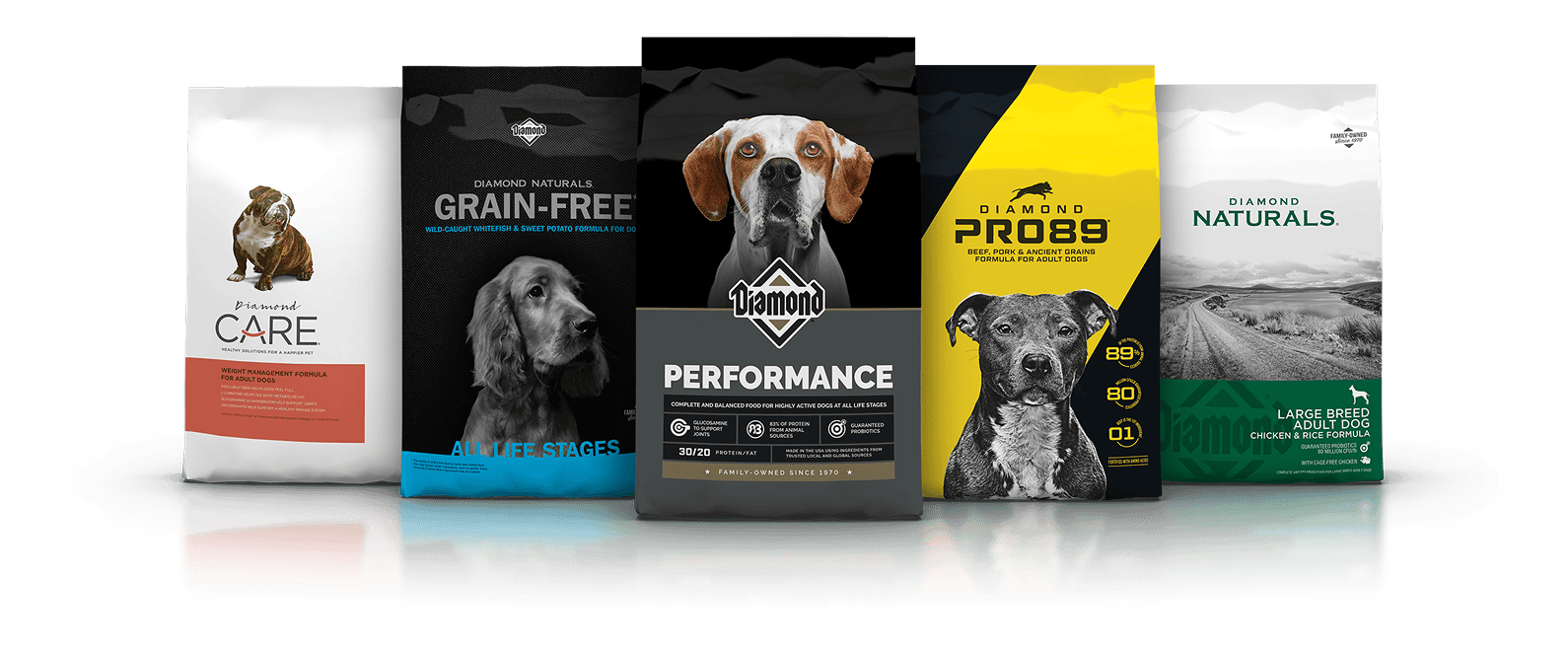
In this review… The Dog Food Advisor takes a critical look at Diamond Dog Food… and its five most important sub-brands.
We’ll also reveal…
- Is Diamond Dog Food made in the United States?
- Has Diamond been recalled?
- Which flavors and recipes get our highest ratings?
But first…
Which Diamond Sub-Brand Is Right for You?
Here are Diamond’s five most popular sub-brands. In the following section, we’ll show you what makes each different. So you can choose the food that’s best for your dog.
Diamond Dog Food
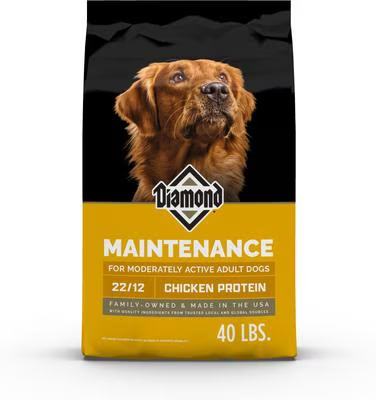
This is Diamond’s economy kibble. It’s a “no-frills” dry dog food at a very low price.
- Grain-inclusive (corn, wheat, rice)
- Notable meat content
- 6 recipes (ratings vary)
Diamond Naturals
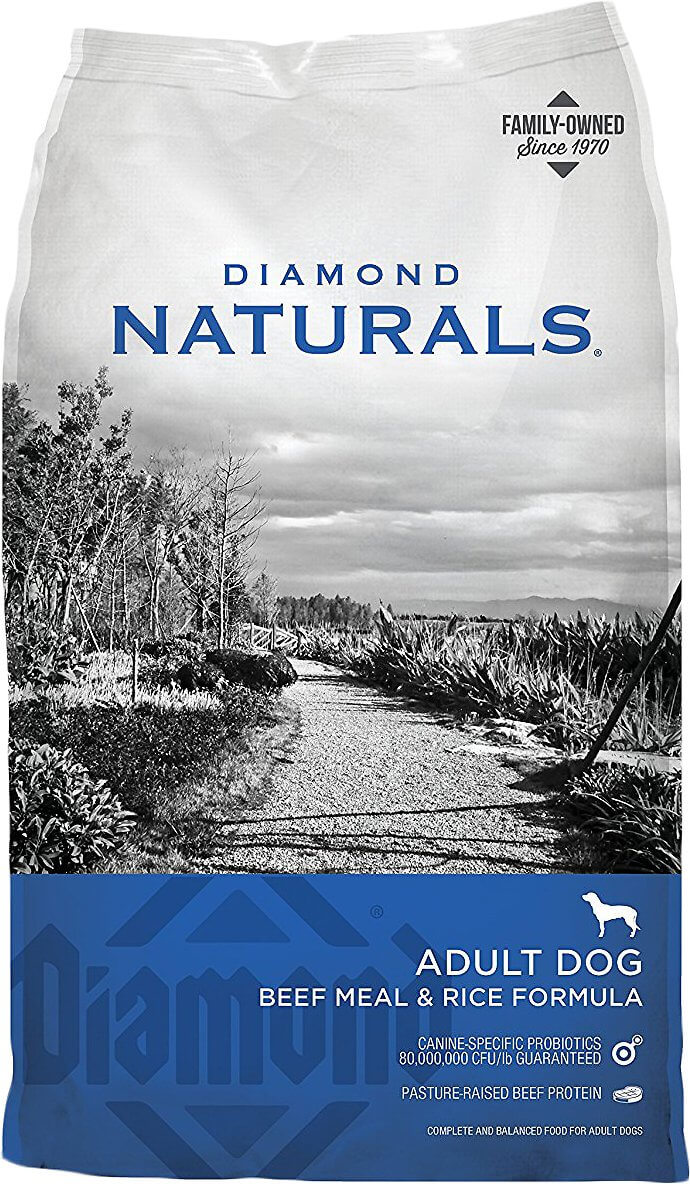
Diamond Naturals is a premium dry dog food. It contains more meat, better ingredients… and offers a significant upgrade over the standard Diamond product (above).
- Above-average protein. Moderate fat.
- Chelated minerals for superior nutrition
- 13 recipes (ratings vary)

Diamond Naturals Grain-Free
This sub-brand includes the grain-free version of Diamond Naturals (above). The protein in this recipe appears to be derived from both plant and animal sources.
- Beef, chicken or whitefish protein
- Contains fresh, beta-carotene-rich sweet potato. No corn, wheat or barley
- 3 recipes (ratings vary)
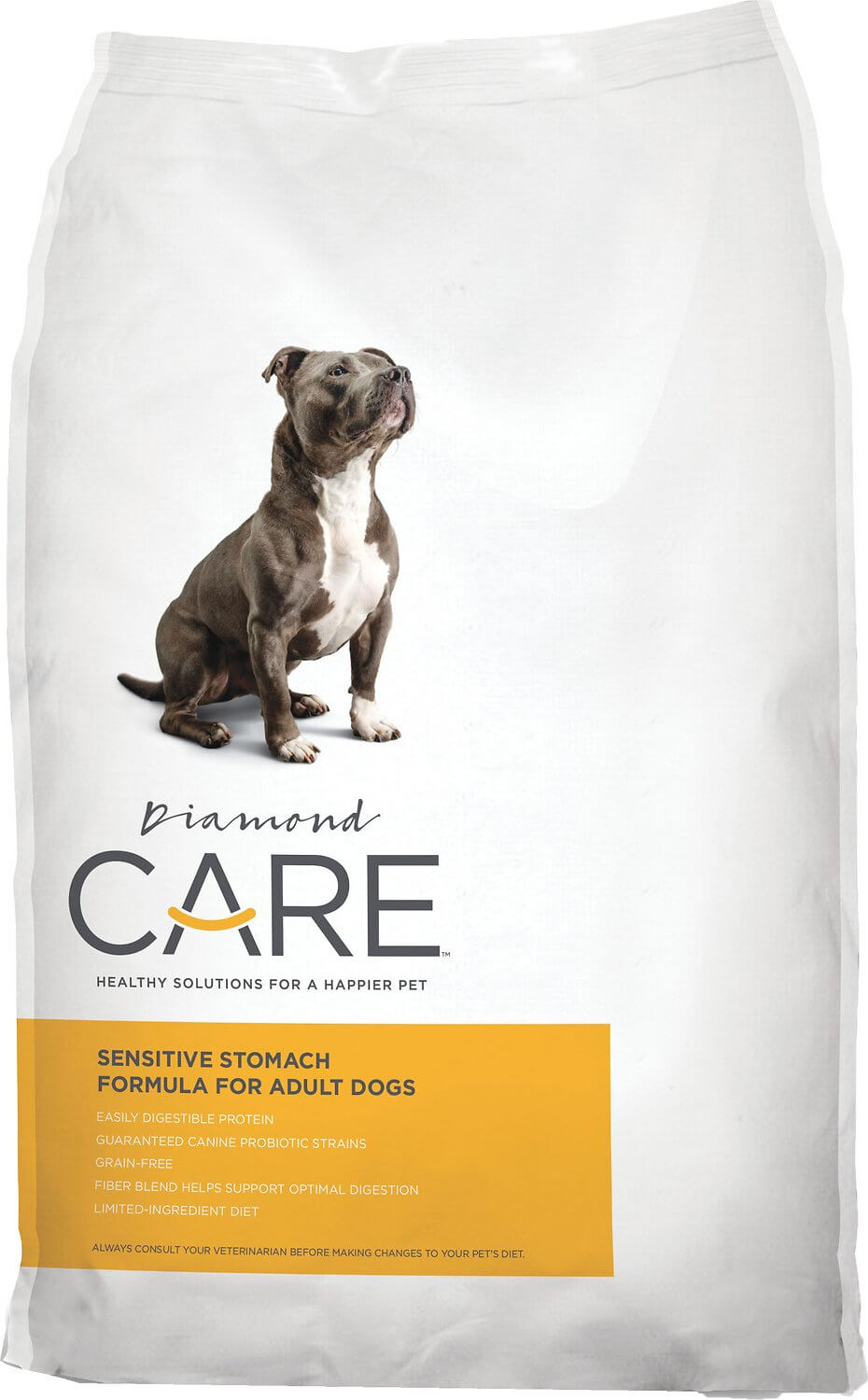
Diamond Care
Diamond Care includes 4 dry recipes… each designed by vets for dogs with specific health issues.
- 100% grain-free formula. No corn, wheat or rice.
- Omega-3 and omega-6 fats for healthy skin and coat
- 4 recipes (ratings vary)
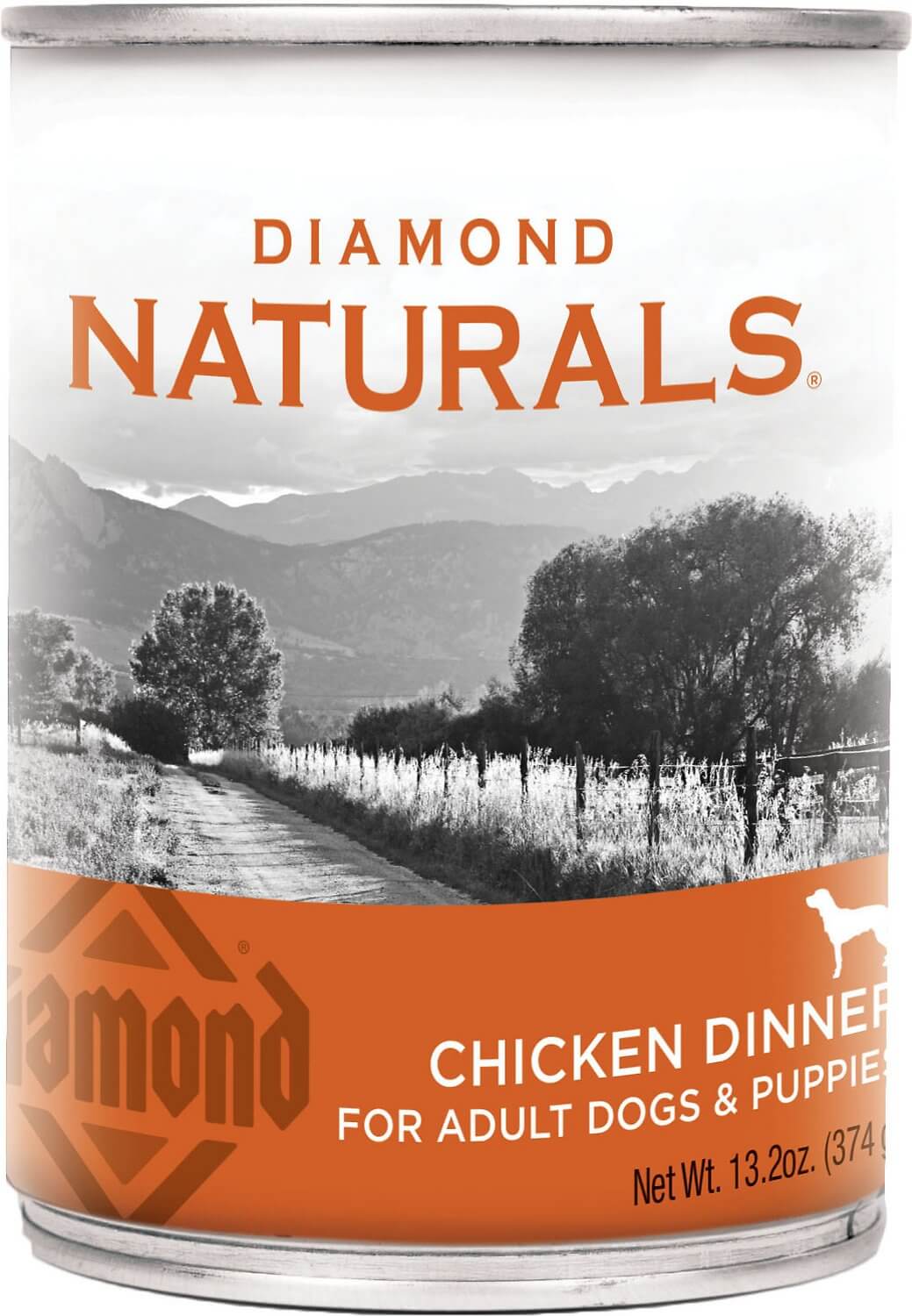
Diamond Naturals Wet
Diamond Original canned formula is for those who prefer a wet food that’s made with grain (rice).
- Complete nutrition for puppies or adults
- Can be fed as a balanced meal or as a tasty topper for dry kibble
- 3 recipes (ratings vary)
Is Diamond a Good Dog Food?
Diamond Dry Dog Food product range consists of six recipes with ratings varying from 2.5 to 4.5 stars. The average rating of the whole range is 3.5 stars.
These recipes are designed for working dogs. The high-energy formula is deliberately formulated with a high fat-to-protein ratio to deliver high energy, but this would make it less suitable for inactive pet dogs.
There is a combination of high-quality functional ingredients and some with a poor reputation, but generally we think this range is above average.
Pros
- Affordable
- Commitment to product safety
- Added probiotics
Cons
- Contains controversial ingredients
Which Diamond Recipes Get Our Best Ratings?
The table below shows each recipe in this range including our rating and the AAFCO nutrient profile: Growth (puppy), Maintenance (adult), All Life Stages, Supplemental or Unspecified.
| Product line | Rating | AAFCO |
|---|---|---|
| Diamond Maintenance | 3 | M |
| Diamond Original | 2.5 | M |
| Diamond High Energy | 2.5 | M |
| Diamond Performance | 4.5 | A |
| Diamond Premium | 4 | A |
| Diamond Puppy Formula | 4 | A |
Recipe and Label Analysis
Diamond Maintenance was selected to represent the other products in the line for detailed recipe and nutrient analysis.
Diamond Maintenance
Estimated Dry Matter Nutrient Content
Protein
Fat
CarbsCarbohydrates
Chicken by-product meal (a source of glucosamine), wheat flour, whole grain ground corn, rice bran, grain sorghum, dried plain beet pulp, chicken fat (preserved with mixed tocopherols), egg product, dried yeast, natural flavor, flaxseed, calcium carbonate, potassium chloride, salt, dl-methionine, choline chloride, dried lactobacillus plantarum fermentation product, dried bacillus subtilis fermentation product, dried lactobacillus acidophilus fermentation product, dried enterococcus faecium fermentation product, dried bifidobacterium animalis fermentation product, vitamin e supplement, iron proteinate, zinc proteinate, copper proteinate, ferrous sulfate, zinc sulfate, manganese sulfate, copper sulfate, potassium iodide, thiamine mononitrate, manganese proteinate, ascorbic acid, vitamin A supplement, biotin, niacin, calcium pantothenate, sodium selenite, pyridoxine hydrochloride, vitamin B12 supplement, riboflavin, vitamin D3 supplement, folic acid
Fiber (estimated dry matter content) = 4%
Red denotes any controversial items
| Estimated Nutrient Content | |||
|---|---|---|---|
| Method | Protein | Fat | Carbs |
| Guaranteed Analysis | 22% | 12% | NA |
| Dry Matter Basis | 24% | 13% | 54% |
| Calorie Weighted Basis | 22% | 29% | 49% |
Ingredients Analysis
The first ingredient in this dog food is chicken by-product meal, a dry rendered product of slaughterhouse waste. It’s made from what’s left of a slaughtered chicken after all the choice cuts have been removed.
In addition to organs, this item can also include feet, beaks, undeveloped eggs and almost anything other than prime skeletal muscle.
On the brighter side, by-product meals are meat concentrates and contain nearly 300% more protein than fresh chicken.
The quality of this ingredient can vary, depending on the caliber of the raw materials obtained by the manufacturer.
The second ingredient is wheat flour, a highly-refined product of wheat milling. Like corn, wheat is an inexpensive and controversial cereal grain of only modest nutritional value to a dog.
For this reason, we do not consider wheat a preferred component in any dog food.
The third ingredient is corn. Corn is another cereal grain and subject to the same issues as wheat (previously discussed).
The next ingredient is rice bran, a healthy by-product of milling whole grain rice. The bran is the fiber-rich outer layer of the grain containing starch, protein, fat as well as vitamins and minerals.
The fifth ingredient is grain sorghum. Sorghum (milo) is a starchy cereal grain with a nutrient profile similar to corn.
Since it is gluten-free and boasts a smoother blood sugar behavior than other grains, sorghum may be considered an acceptable non-meat ingredient.
The sixth ingredient is beet pulp. Beet pulp is a controversial ingredient, a high fiber by-product of sugar beet processing.
Some denounce beet pulp as an inexpensive filler while others cite its outstanding intestinal health and blood sugar benefits.
We only call your attention here to the controversy and believe the inclusion of beet pulp in reasonable amounts in most dog foods is entirely acceptable.
The seventh item on the ingredient list is chicken fat. Chicken fat is obtained from rendering chicken, a process similar to making soup in which the fat itself is skimmed from the surface of the liquid.
Chicken fat is high in linoleic acid, an omega-6 fatty acid essential for life. Although it doesn’t sound very appetizing, chicken fat is actually a quality ingredient.
The eighth ingredient is egg product, an unspecified (wet or dry?) form of shell-free eggs. Quality can vary significantly. Lower-grade egg product can even come from commercial hatcheries – from eggs that have failed to hatch.
In any case, eggs are easy to digest and have an exceptionally high biological value.
The ninth ingredient is dried yeast, which can be a controversial item. Dried yeast contains about 45% protein and is rich in other healthy nutrients.
Fans believe yeast repels fleas and supports the immune system. Critics argue yeast ingredients can be linked to allergies.
This may be true, but (like all allergies) only if your particular dog is allergic to the yeast itself.
In any case, unless your dog is specifically allergic to it, we feel yeast should be considered a positive addition.
Other Notable Ingredients
From here, the list goes on to include a number of other items.
But to be realistic, ingredients located this far down the list (other than nutritional supplements) are not likely to affect the overall rating of this product.
With three notable exceptions…
First, flaxseed is one of the best plant sources of healthy omega-3 fatty acids. Provided they’ve first been ground into a meal, flax seeds are also rich in soluble fiber.
However, flaxseed contains about 19% protein, a factor that must be considered when judging the actual meat content of this dog food.
Next, we note the inclusion of dried fermentation products in this recipe. Fermentation products are typically added to provide enzymes to aid the animal with digestion.
And lastly, this food contains chelated minerals, minerals that have been chemically attached to protein. This makes them easier to absorb. Chelated minerals are usually found in better dog foods.
Nutrient Analysis
Based on its ingredients alone, Diamond Maintenance looks like an above-average dry dog food.
The dashboard displays a dry matter protein reading of 25.5%, a fat level of 14.1% and estimated carbohydrates of about 48%.
As a group, the brand features an average protein content of 30.1% and a mean fat level of 19.6%. Together, these figures suggest a carbohydrate content of 38.6% for the overall product line.
And a fat-to-protein ratio of about 65%.
Near-average protein. Above-average fat. And below-average carbs when compared to other dry dog foods.
Even when you consider the protein-boosting effect of the flaxseed, this looks like the profile of a kibble containing a notable amount of meat.
Diamond Dog Food Recall History
The following automated list (if present) includes all dog food recalls related to Diamond through June 2026.
You can view a complete list of all dog food recalls since 2009 here.
What do pet parents think?
Our Rating of Diamond Dog Food
The Dog Food Advisor finds Diamond dry to be an average grain-inclusive kibble. Each recipe uses at least a moderate amount of named meat meal as its dominant source of animal protein… thus earning the brand 3.5 stars.
Who Makes Diamond Dog Food?
Diamond is made by family-owned Diamond Pet Foods, of Meta, Missouri. All dry foods are produced at the company’s own facilities in South Carolina, California, Arkansas and Missouri. Wet recipes are made by a private-label cannery in the United States.
Diamond also makes top-rated Taste of the Wild and budget-friendly Costco Kirkland dog foods.
What Do Others Say About Diamond Dog Food?
As of the time of this update…
Chewy customers rate Diamond Naturals 4.5 out of 5 stars… and 93% say they would recommend it to others.
Here’s an actual user review…
Sample buyer review… “I am a former pet store employee so I know a little bit about pet nutrition. I was wanting to transition my dogs into a new food that was still a good quality for a lower price. Diamond naturals does both. It has no bad ingredients and had fresh fruit and vegetables which I love. My two dogs seem to really be enjoying their new food!”
Frequently Asked Questions
What Are Diamond's Best Recipes?
Based on a weighted average of popularity and ratings, here are our 5 most recommended Diamond flavors and recipes.
Is Diamond dog food good for itchy skin?
Diamond Care Sensitive Skin Formula is a limited ingredient grain-free diet specifically designed for dogs with food-related skin issues. It’s made with peas and hydrolyzed salmon protein to help prevent adverse skin reactions. For more options, be sure to visit The Advisor’s Best Dog Foods for Allergies page.
Is Diamond a good food for older dogs?
Diamond recipes that contain ample amounts of protein and below-average fat and calorie content can be safe for seniors. But they must meet AAFCO nutrient guidelines for adult maintenance. Diamond Naturals Senior Formula can be a healthy option for older pets. View The Advisor’s best senior dog foods here.
Is Diamond a good dog food for puppies?
Diamond Naturals offers 2 nutritionally complete and balanced dry puppy foods. One is designed just for large breed puppies… and the other is made for smaller breeds. Each is made with grain and rated 5 stars on this website. Visit The Advisor’s best puppy foods page here.
Is Diamond considered a healthy dog food?
Every Diamond recipe meets 100% of the nutrient requirements published by the Association of American Feed Control Officials. Each is considered complete and balanced for the specific life stage printed on the package… based on nutrient standards established by the National Research Council of the National Academies of Science.
Compare Diamond Dog Food
How does Diamond compare with The Dog Food Advisor's most recommended brands?
- Best Dog Foods
- Best Puppy Foods
- Best Dry Dog Food
- Best Wet Dog Foods
- Best Senior Dog Food
- Best Dog Foods for Dogs With Allergies 2026
- Best Grain-Free Dog Foods
- Best Dog Food With Grain
- Best Dog Food for Small Dogs 2026
- Best Budget-Friendly Dog Foods 2026
- Best Dog Food for Shih Tzus
- Best Dog Food for Picky Eaters 2026
A Final Word
The Dog Food Advisor does not accept money, gifts, samples or other incentives in exchange for special consideration in preparing our reviews.
However, we do receive a referral fee from online retailers (like Chewy or Amazon) and from sellers of perishable pet food when readers click over to their websites from ours. This helps cover the cost of operation of our free blog. Thanks for your support.
For more information, please visit our Disclaimer and Disclosure page.