
DogFoodAdvisor is reader supported See how
Dog Food Advisor is 100% impartial and is never paid to promote any brand. But if you buy using links on this page, we may earn a referral fee.
Zero. That’s how many carbohydrates are nutritionally required by a dog to sustain life.
The fact that dog food doesn’t need to contain any “carbs” at all seems hard to believe.
But it’s true.
You see, according to the National Research Council and compared to the other two major nutrients — protein and fat — no carbs are considered essential for a healthy canine diet.1
When it comes to carbs for dogs, they don’t need corn. And they don’t need wheat, barley rice or potatoes, either.
Yet surprisingly, carbs represent the dominant nutrient found in most dry dog foods.
Why Dog Food Companies Love Carbohydrates
Since the early 1950s, dog food manufacturers everywhere have fallen head-over-heels in love with carbs because they’re:
- Abundant
- Durable (long shelf life)
- Essential to the kibble-making process
- Cheaper (per calorie than protein or fat)
Please notice that not one of these reasons has anything to do with nutrition — not one.
Are Carbs Bad for Dogs?
Carbohydrates aren’t bad for dogs. In reasonable amounts, they can actually provide a practical source of energy.
However, the problem lies in their quantity.
Using a dog’s ancestral diet as a model, the total amount of carbs consumed by a dog’s evolutionary predecessor is dramatically less than what’s become the norm for today’s kibbles.
One sensible source estimates natural carbohydrate consumption for a dog’s ancestors at around 14% of total diet.2
Yet on average, today’s dry dog foods contain somewhere between 46 and 74% carbohydrates.3
What are the Best Carbs for Dogs?
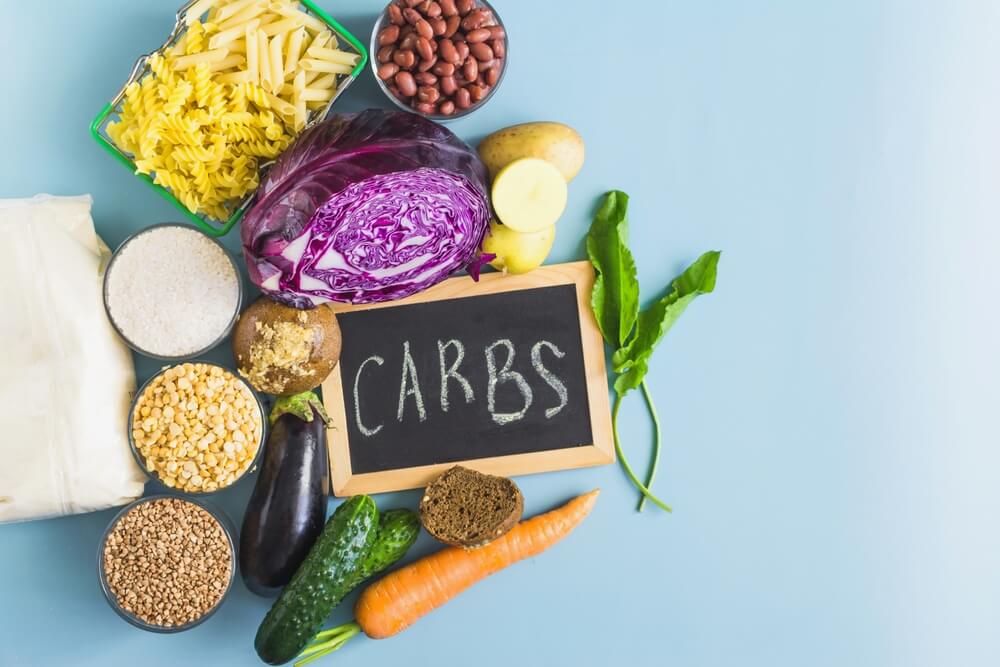
If you want to feed your dog carbs, it’s important to look for high-quality options such as those listed below:
Sweet Potatoes
High in fiber, vitamins A, C, and B6, and low in fat. Sweet potatoes are easily digestible and provide slow-release energy.
Pumpkin
Rich in fiber, vitamin A, and antioxidants. Pumpkin can aid in digestion and help with both diarrhea and constipation.
Brown Rice
A whole grain that provides fiber, vitamins, and minerals. It’s gentle on the stomach and often used in dog foods.
Oats
A great source of fiber, particularly beneficial for dogs with wheat allergies. Oats are also rich in vitamins and minerals.
Quinoa
A high-protein, gluten-free grain that’s easy to digest. Quinoa contains essential amino acids and is a good source of fiber.
Carrots
Low-calorie, high in fiber, and rich in beta-carotene (vitamin A). Carrots are good for dental health and vision.
Peas
Rich in fiber, vitamins, and protein. Peas are a common ingredient in many dog foods and are beneficial for digestion.
Barley
A whole grain that’s high in fiber and vitamins. Barley is also easy to digest and provides slow-release energy.
Butternut Squash
High in fiber, vitamins A and C, and antioxidants. Butternut squash is easy on the stomach and supports digestive health.
Broccoli
Low in calories, high in fiber, and packed with vitamins C and K. Broccoli can support immune health and digestion.
Carbs to Avoid in Dog Food
Lower-quality carbs have a high glycemic index and can lead to a spike in insulin and quick bursts of energy followed by a slump, or crash. These include:
Corn
Corn is often used as a cheap filler in dog food. While not inherently harmful, it’s a common allergen and offers limited nutritional benefits compared to whole grains.
Wheat
Wheat can be hard for some dogs to digest, leading to allergies or sensitivities. It may also contribute to weight gain and other health issues due to its high glycemic index.
Soy
Soy is a controversial ingredient in dog food. It’s a common allergen and can interfere with thyroid function in dogs. It’s also a less bioavailable source of protein compared to animal proteins.
White Rice
White rice has been stripped of most of its nutrients, leaving it with little more than carbohydrates. It’s also high on the glycemic index, which can cause spikes in blood sugar, especially in diabetic dogs.
White Potatoes
Like white rice, white potatoes are high in starch and less nutritious than sweet potatoes or other root vegetables.
Sugars and Sweeteners
Added sugars and artificial sweeteners, like high-fructose corn syrup, can lead to obesity, diabetes, and dental issues in dogs. Some sweeteners, like Xylitol, are highly toxic to dogs and can cause serious health problems.
Maltodextrin
Maltodextrin is a highly processed carbohydrate derived from corn, rice, or wheat. It offers no nutritional value and can cause blood sugar spikes. It’s often used as a thickener or filler in low-quality dog foods.
How to Estimate the Carbohydrate Content of Any Food
When choosing dog food, it’s reasonable to favor products lower in carbohydrates. However, since most dog food manufacturers fail to disclose the percentage of carbohydrates contained in their products, the Dog Food Advisor provides an estimate of this important figure inside every review.
If you’re concerned or your dog’s food is not listed, there are also ways to calculate the carbohydrate content of the food you’re feeding your dog.
All it takes is a simple bit of maths based on the amount of other macronutrients in the food: protein, fat and water/moisture, plus the amount of ash, which has to be between five and and percent (we routinely use eight percent as a benchmark).
Protein + fat + ash + carbohydrate + water must always equal 100 percent of the total pre-cooking weight of any dog food.
Start with 100 percent and subtract the percentage for each of the known macronurients (ignore fiber content as fiber is a type of carbohydrate and would be automatically included in your carbohydrate calculation).
Keep in mind when using a pet food’s “Guaranteed analysis” as a product’s protein and fat content, you’re not using the true percentages of those nutrients. You’re using the minimums — the amount each manufacturer is willing to “guarantee” to be the minimum protein or fat found in the recipe.
The more a company understates a food’s protein or fat content, the more overstated you should expect your estimate of its carbohydrate content to be.
We recommend you look for dog foods rich in meat-based protein and lower in carbs. You could be adding years of better health to your best friend’s life.
For more advice on canine nutrition, see Dog Food Advisor’s range of articles.
Final word
The Dog Food Advisor does not accept money, gifts, samples or other incentives in exchange for special consideration in preparing our reviews.
However, we do receive a referral fee from online retailers (like Chewy or Amazon) and from sellers of perishable pet food when readers click over to their websites from ours. This helps cover the cost of operation of our free blog. Thanks for your support.
For more information, please visit our Disclaimer and Disclosure page.