DogFoodAdvisor is reader supported See how
Dog Food Advisor is 100% impartial and is never paid to promote any brand. But if you buy using links on this page, we may earn a referral fee.
There is a more comprehensive and up-to-date version of this article here.
Are dogs carnivores… or omnivores? The Great Debate goes on. And on.
When it comes to choosing dog food, it’s important to know the answer to that question.
So, if you’ve already been told dogs are indifferent omnivores with no natural preferences…
Or that they’re strict carnivores with an innate aversion to eating fruits and vegetables…
All scientific evidence clearly points to the fact that…
Dogs Have a Natural
Carnivorous Bias
From DNA studies, we know dogs evolved directly from the timber wolf somewhere around 15,000 years ago1.
And, of course, it should come as no surprise. Wolves are clearly carnivores.
So, by their very genetic pedigree, dogs also demonstrate similar and noticeable carnivorous traits. Their teeth, their digestive systems and their behavior clearly confirm this fact.
Yet dogs must also be recognized for their significant omnivorous ability. Their proven ability to digest carbohydrate-based foods has been known for many years.
After all, modern genetic research has proof that ten canine genes play key roles in starch digestion and fat metabolism.2
However, a dog still shows unmistakable evidence that its body is optimized for eating meat.
Dogs Don’t Grind… They Chop
For comparison, think about a typical herbivore… a dairy cow. Picture the way they “chew their cud”.
Cows chew widely from side-to-side. And they have broad, flat back teeth. And flat teeth are ideal for grinding grains and plant material into finer particles.
True omnivores (like humans) share this same combination of boxy back teeth and sideways grinding motion common to herbivores. Think of your own mouth and how you chew.
Dogs, on the other hand, don’t have flat teeth. Like all carnivores, they have narrow pointy back teeth.
Plus dogs can’t chew from side-to-side. Their jaws can only move in an up-and-down, chop-chop motion. It’s the perfect combination for cutting meat into smaller chunks.
No Salivary Amylase
Herbivores and omnivores possess one aid to digestion carnivores typically lack.
Carnivores do not produce amylase in their salivary glands.3
Amylase is a specialized enzyme most herbivores and omnivores produce in their saliva. It helps begin the break down of starchy carbohydrates into simple sugars… before they enter the stomach.
Although dogs do produce amylase, the enzyme is added further down the digestive tract… in the pancreas and small intestine.
Edited4
Digestive Anatomy
Since they consume fewer but larger meals, carnivores have bigger stomachs than their grazing, plant-eating counterparts.
What’s more, meat-eating animals exhibit a higher concentration of stomach acid. This allows faster digestion of animal protein.
And the stronger acid kills the disease-causing bacteria abundant in decaying meat.
What’s more, herbivores have an unusually long gastrointestinal tract… exceeding ten times the animal’s body length. Longer systems like this are needed for consuming a plant-based diet.
What Do Dogs Eat?
In his revealing, 7-part series, Dr. Conor Brady explains why dogs should be fed as carnivores. Although the video is technologically dated, its content is noteworthy and fully referenced.
Welcome to the Age of Choice
In spite of their natural carnivorous design, dogs have still managed to evolve over thousands of years… surviving on the meat and non-meat scraps and leftovers of human existence.
So, over time, dogs have proven to be fully capable of thriving on a variety of foods.
Today, the dog food marketplace has become a living, breathing witness to the animal’s adaptive ability… and is abounding with an astonishing array of product designs.
Some favor meat. Some feature vegetables. And others are made almost entirely of cereal grains and beans.
So, how do you choose the right one for your pet?
The Bottom Line
Knowing that dogs are optimized for eating meat can make it easier to recognize better dog foods.
Even though dogs do demonstrate a notable omnivorous capacity, we believe it’s important to give preference to meat-based products. That’s because…
Whether you believe they’re carnivores or omnivores, dog’s possess an undeniable carnivorous bias
Meat-based dog foods are closer to a dog’s natural ancestral diet. They’re more like the real thing.
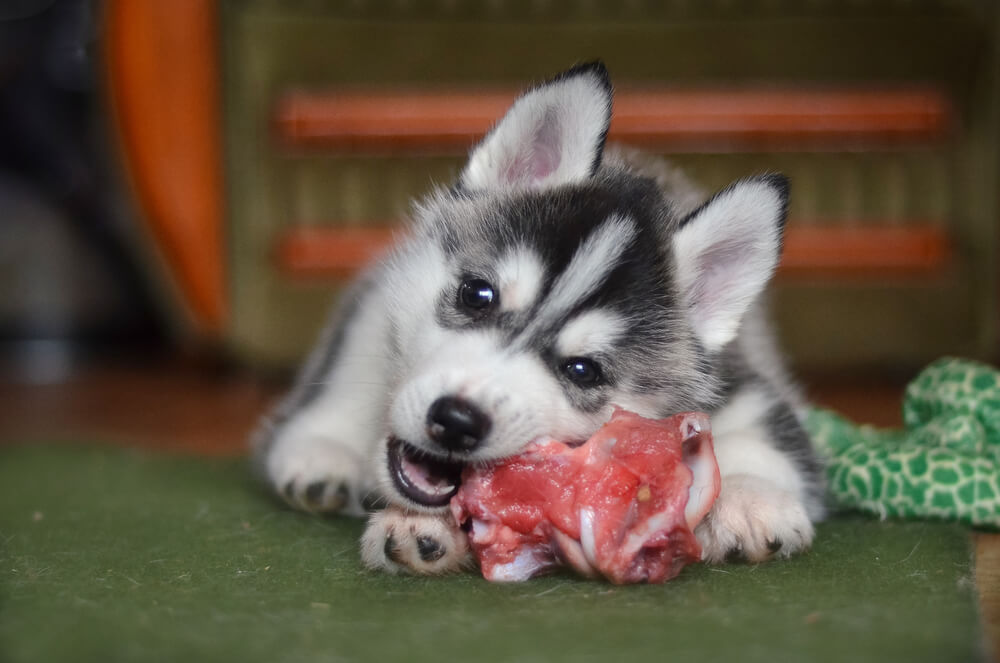
Final word
The Dog Food Advisor does not accept money, gifts, samples or other incentives in exchange for special consideration in preparing our reviews.
However, we do receive a referral fee from online retailers (like Chewy or Amazon) and from sellers of perishable pet food when readers click over to their websites from ours. This helps cover the cost of operation of our free blog. Thanks for your support.
For more information, please visit our Disclaimer and Disclosure page.