
Highly Recommended

DogFoodAdvisor is reader supported See how
All reviews are 100% impartial but if you buy using links on this page, we may earn a referral fee.
Our Verdict
Instinct Frozen FreshRaw Meals product range consists of 10 recipes with ratings varying from 4.5 to 5 stars. The average rating of the whole range is 5 stars.
FreshRaw Meals are nutrient dense recipes made with real meat, fruit and vegetables formulated to support immune health, gut function and skin & coat health.
Pros
- 100% raw and frozen to preserve nutrients
- 1st ingredient is responsibly sourced meat raised without antibiotics or added hormones
- Made without grain, corn, wheat, soy, legumes, artificial colors or preservatives
Cons
- Expensive
The table below shows each recipe in this range including our rating and the AAFCO nutrient profile: Growth (puppy), Maintenance (adult), All Life Stages, Supplemental or Unspecified.
| Product line | Rating | AAFCO |
|---|---|---|
| Instinct Frozen FreshRaw Bites Cage-Free Chicken Recipe for Puppies | 5 | G |
| Instinct Frozen FreshRaw Bites Grass-Fed Lamb Recipe | 5 | M |
| Instinct Frozen FreshRaw Bites Grass-Fed Beef Recipe | 5 | M |
| Instinct Frozen FreshRaw Bites Cage-Free Chicken Recipe | 4.5 | M |
| Instinct Frozen FreshRaw Bites Wild-Caught Alaskan Pollock Recipe | 5 | M |
| Instinct Frozen FreshRaw Patties Cage-Free Chicken Recipe | 4.5 | M |
| Instinct Frozen FreshRaw Patties Grass-Fed Beef Recipe | 5 | M |
| Instinct Frozen FreshRaw Medallions Grass-Fed Beef Recipe | 5 | M |
| Instinct Frozen FreshRaw Medallions Cage-Free Chicken Recipe | 5 | M |
| Instinct Frozen FreshRaw Medallions Cage-Free Turkey Recipe | 5 | M |
Recipe and Label Analysis
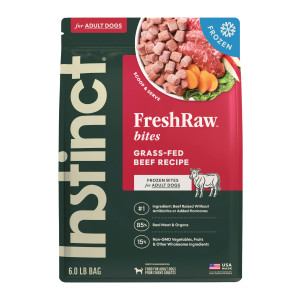
Instinct Frozen FreshRaw Bites Grass-Fed Beef Recipe was selected to represent the other products in the line for detailed recipe and nutrient analysis.
Instinct Frozen FreshRaw Bites Grass-Fed Beef Recipe
Estimated Dry Matter Nutrient Content
Protein
Fat
CarbsCarbohydrates
Beef, beef liver, beef kidney, beef spleen, carrots, apples, sweet potatoes, butternut squash, ground miscanthus grass, montmorillonite clay, ground flaxseed, salmon oil, vitamins (vitamin E supplement, thiamine mononitrate, vitamin D3 supplement), salt, tricalcium phosphate, potassium chloride, minerals (zinc proteinate, copper proteinate, manganese proteinate, calcium iodate), blueberries, spinach
Fiber (estimated dry matter content) = 3%
Red denotes any controversial items
| Estimated Nutrient Content | |||
|---|---|---|---|
| Method | Protein | Fat | Carbs |
| Guaranteed Analysis | 12% | 8% | NA |
| Dry Matter Basis | 40% | 27% | 25% |
| Calorie Weighted Basis | 31% | 50% | 19% |
Ingredients Analysis
The first ingredient in this dog food is beef. Beef is defined as “the clean flesh derived from slaughtered cattle” and includes skeletal muscle or the muscle tissues of the tongue, diaphragm, heart or esophagus.1
Beef is naturally rich in all 10 essential amino acids required by a dog to sustain life.
The second ingredient is beef liver. This is an organ meat sourced from a named animal and thus considered a beneficial component.
The third item is beef kidney, an organ meat low in fat and rich in protein and essential minerals.
The next ingredient is beef spleen, an additional organ meat sourced from a named animal and thus considered a positive addition to this recipe.
The fifth ingredient includes carrots. Carrots are rich in beta-carotene, minerals and dietary fiber.
The sixth ingredient is apple, a nutrient-rich fruit that’s also high in fiber.
The seventh ingredient is sweet potato, which is a gluten-free source of complex carbohydrates in dog food. They are naturally rich in dietary fiber and beta carotene.
The eighth ingredient is butternut squash, a nutritious addition high in complex carbohydrates, vitamins, minerals and dietary fiber.
From here, the list goes on to include a number of other items.
But to be realistic, ingredients located this far down the list (other than nutritional supplements) are not likely to affect the overall rating of this Nature’s Variety product.
With six notable exceptions…
First, montmorillonite clay is a naturally occurring compound rich in many trace minerals. Montmorillonite has been approved for use in USDA Organic Certified products.
Reported benefits include the binding of certain mold-based toxins and even controlling diarrhea and irritable bowel syndrome (IBS).
We also find spinach. Spinach is rich in vitamins A, K, and C, as well as folate, iron, and magnesium. Spinach is a source of fiber. For dogs predisposed to oxalate stones spinach should be avoided, due to it’s high oxalate content.
Next, flaxseed is one of the best plant sources of healthy omega-3 fatty acids. Provided they’ve first been ground into a meal, flax seeds are also rich in soluble fiber.
However, flaxseed contains about 19% protein, a factor that must be considered when judging the actual meat content of this dog food.
In addition, salmon oil is naturally rich in the prized EPA and DHA type of omega-3 fatty acids. These two high quality fats boast the highest bio-availability to dogs and humans.
Depending on its level of freshness and purity, salmon oil should be considered a commendable addition.
Next, miscanthus grass, also known as elephant grass, is a non-GMO source of crude fiber.
And lastly, this food contains chelated minerals, minerals that have been chemically attached to protein. This makes them easier to absorb. Chelated minerals are usually found in better dog foods.
Nutrient Analysis
Based on its ingredient panel, Instinct Frozen FreshRaw Bites Grass-Fed Beef Recipe looks like an above-average product.
The dashboard displays a dry matter protein reading of 40%, a fat level of 26.7% and estimated carbohydrates of about 16.7%.
As a group, the brand features an average protein content of 40.6% and a mean fat level of 27.6%. Together, these figures suggest a carbohydrate content of 14.7% for the overall product line.
And a fat-to-protein ratio of about 69%.
Which means this Instinct product line contains…
Above-average protein. Near-average fat. And near-average carbs when compared to a typical raw dog food.
Even when you consider the protein-boosting effect of the flaxseed, this looks like the profile of a raw product containing a significant of meat.
Instinct Dog Food Recall History
The following automated list (if present) includes all dog food recalls related to Instinct through August 2026.
No recalls noted.
You can view a complete list of all dog food recalls since 2009 here.
What do pet parents think?
Our Rating of Instinct Frozen FreshRaw Meals Dog Food
Instinct Frozen FreshRaw Meals is a grain-free frozen dog food using a significant amount of named meats and organs as its dominant source of animal protein, thus earning the brand 5 stars.
Instinct is a sustainable, environmentally-responsible company that sources its ingredients from trusted partners, prioritizing ingredients from the U.S. before branching out globally. They partner with veterinary experts on raw pet food research.
About
Instinct is owned by Natures Variety of Lincoln, Nebraska. All Instinct recipes are made at the company’s own facilities in Lincoln.
Each Instinct dog food is formulated by the company’s on-staff professionals. This includes a veterinarian who is board-certified in both veterinary nutrition and integrative medicine.
Compare Instinct Frozen FreshRaw Meals Dog Food
How does Instinct Frozen FreshRaw Meals compare with The Dog Food Advisor's most recommended brands?
- Best Dog Foods
- Best Puppy Foods
- Best Dry Dog Food
- Best Wet Dog Foods
- Best Senior Dog Food
- Best Dog Foods for Dogs With Allergies 2026
- Best Grain-Free Dog Foods
- Best Dog Food With Grain
- Best Dog Food for Small Dogs 2026
- Best Budget-Friendly Dog Foods 2026
- Best Dog Food for Shih Tzus
- Best Dog Food for Picky Eaters 2026
A Final Word
The Dog Food Advisor does not accept money, gifts, samples or other incentives in exchange for special consideration in preparing our reviews.
However, we do receive a referral fee from online retailers (like Chewy or Amazon) and from sellers of perishable pet food when readers click over to their websites from ours. This helps cover the cost of operation of our free blog. Thanks for your support.
For more information, please visit our Disclaimer and Disclosure page.