
Highly Recommended


DogFoodAdvisor is reader supported See how
All reviews are 100% impartial but if you buy using links on this page, we may earn a referral fee.
Our Verdict
The Go! Solutions Sensitivities product range is made up of two recipes with ratings varying from 4 to 5 stars. The average rating of the whole range is 4.5 stars.
Both recipes in this sensitivity range have around 10 ingredients (excluding vitamin and mineral supplements), with a premium protein as the top ingredient, paired with antioxidant-rich fruits and vegetables.
Pros
- Single source protein
- No artificial preservatives, flavors, colors or by-product meals
- High-quality ingredients
Cons
- Expensive
The table below shows each recipe in this range including our rating and the AAFCO nutrient profile: Growth (puppy), Maintenance (adult), All Life Stages, Supplemental or Unspecified.
| Product line | Rating | AAFCO |
|---|---|---|
| Go! Solutions Sensitivities Limited Ingredient Grain-free Duck Pâté | 4 | A |
| Go! Solutions Sensitivities Limited Ingredient Grain-free Shredded Turkey Recipe | 5 | A |
Recipe and Label Analysis
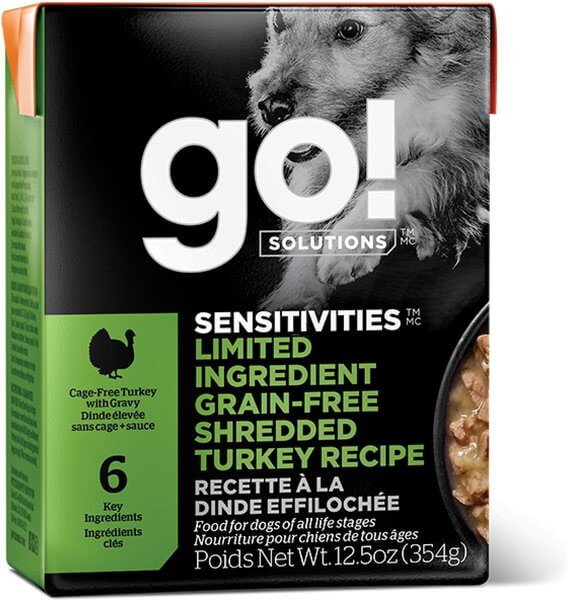
Go! Solutions Sensitivities Limited Ingredient Grain-free Shredded Turkey Recipe was selected to represent both products in the line for detailed recipe and nutrient analysis.
Go! Solutions Sensitivities Limited Ingredient Grain-free Shredded Turkey Recipe
Estimated Dry Matter Nutrient Content
Protein
Fat
CarbsCarbohydrates
Turkey, turkey broth, tapioca, pork plasma, cranberries, pumpkin, sodium tripolyphosphate, salmon oil, cassia gum, guar gum, potassium chloride, vitamins (vitamin A supplement, vitamin D3 supplement, vitamin E supplement, niacin, d-calcium pantothenate, thiamine mononitrate, riboflavin, pyridoxine hydrochloride, folic acid, biotin, vitamin B12 supplement), minerals (zinc proteinate, iron proteinate, copper proteinate, manganese proteinate, calcium iodate, selenium yeast), magnesium sulphate, salt, taurine
Fiber (estimated dry matter content) = 1%
Red denotes any controversial items
| Estimated Nutrient Content | |||
|---|---|---|---|
| Method | Protein | Fat | Carbs |
| Guaranteed Analysis | 9% | 6% | NA |
| Dry Matter Basis | 47% | 31% | 14% |
| Calorie Weighted Basis | 35% | 55% | 11% |
Ingredients Analysis
The first ingredient in this dog food is turkey. Turkey is considered “the clean combination of flesh and skin… derived from the parts or whole carcasses of turkey”.1
Turkey is naturally rich in the 10 essential amino acids required by a dog to sustain life.
The second ingredient is turkey broth. Broths are of only modest nutritional value. Yet because they add both flavor and moisture to a dog food, they are a common component in many wet products.
The third ingredient is tapioca, a gluten-free, starchy carbohydrate extract made from the root of the cassava plant.
The fourth ingredient is pork plasma. Plasma is what remains of blood after the blood cells themselves have been removed. Plasma can be considered a nutritious addition.
The fifth ingredient lists cranberries, which are a nutrient-rich fruit that are also high in fiber.
The sixth ingredient is pumpkin. Pumpkin is a nutritious addition high in complex carbohydrates, beta-carotene and dietary fiber.
After the sodium tripolyphospate, we find salmon oil. Salmon oil is naturally rich in the prized EPA and DHA type of omega-3 fatty acids. These two high quality fats boast the highest bio-availability to dogs and humans.
Depending on its level of freshness and purity, salmon oil should be considered a commendable addition.
From here, the list goes on to include a number of other items.
But to be realistic, ingredients located this far down the list (other than nutritional supplements) are not likely to affect the overall rating of this Petcurean product.
With three notable exceptions…
First, this food contains chelated minerals, minerals that have been chemically attached to protein. This makes them easier to absorb. Chelated minerals are usually found in better dog foods.
Next, we note the use of selenium yeast. Unlike the more common inorganic form of selenium (sodium selenite), this natural yeast supplement is considered a safer anti-cancer alternative.
And lastly, this food includes taurine, an important amino acid associated with the healthy function of heart muscle. Although taurine is not typically considered essential in canines, some dogs have been shown to be deficient in this critical nutrient.
Since taurine deficiency appears to be more common in pets consuming grain-free diets, we view its presence in this recipe as a positive addition.
Nutrient Analysis
Based on its ingredients alone, Go! Solutions Sensitivities Limited Ingredient Grain-free Shredded Turkey Recipe wet dog food looks like an above-average product.
The dashboard displays a dry matter protein reading of 45%, a fat level of 30% and estimated carbohydrates of about 20%.
As a group, the brand features an average protein content of 40.7% and a mean fat level of 28.6%. Together, these figures suggest a carbohydrate content of 24.8% for the overall product line.
And a fat-to-protein ratio of about 71%.
Near-average protein. Above-average fat. And above-average carbs when compared to a typical wet dog food.
Free of any plant-based protein boosters, this looks like the profile of a wet product containing a notable amount of meat.
Go! Solutions Dog Food Recall History
The following automated list (if present) includes all dog food recalls related to Go! Solutions through September 2026.
No recalls noted.
You can view a complete list of all dog food recalls since 2009 here.
What do pet parents think?
Our Rating of Go! Solutions Sensitivities Grain-Free Dog Food
Go! Solutions Sensitivities is a grain-free wet dog food using a notable amount of named meats as its dominant source of animal protein, thus earning the brand 4.5 stars.
About
The Go! Solutions brand is owned by Petcurean, a family-owned Canadian company which was founded in 1999.
Petcurean sources ingredients from North America with a focus on products grown or raised near its production facilities. Exceptions to this rule include lamb and venison from Australia and New Zealand.
Go! Solutions cat food is produced in multiple facilities in the United States and Canada. All Go! kibble is manufactured in Ontario, Canada, while canned food production is divided between Ontario and New Jersey. Go!’s Tetra Pak products are manufactured in the United States and their Meal Mixers are manufactured in British Columbia.
Compare Go! Solutions Sensitivities Dog Food
How does Go! Solutions Sensitivities compare with The Dog Food Advisor's most recommended brands?
- Best Dog Foods
- Best Puppy Foods
- Best Dry Dog Food
- Best Wet Dog Foods
- Best Senior Dog Food
- Best Dog Foods for Dogs With Allergies 2026
- Best Grain-Free Dog Foods
- Best Dog Food With Grain
- Best Dog Food for Small Dogs 2026
- Best Budget-Friendly Dog Foods 2026
- Best Dog Food for Shih Tzus
- Best Dog Food for Picky Eaters 2026
Sources
A Final Word
The Dog Food Advisor does not accept money, gifts, samples or other incentives in exchange for special consideration in preparing our reviews.
However, we do receive a referral fee from online retailers (like Chewy or Amazon) and from sellers of perishable pet food when readers click over to their websites from ours. This helps cover the cost of operation of our free blog. Thanks for your support.
For more information, please visit our Disclaimer and Disclosure page.