
Highly Recommended


DogFoodAdvisor is reader supported See how
All reviews are 100% impartial but if you buy using links on this page, we may earn a referral fee.
Our Verdict
Eukanuba Dog Food product range is made up of 14 recipes with ratings varying from 4 to 4.5 stars. The average rating of the whole range is 4.5 stars.
The table below shows each recipe in this range including our rating and the AAFCO nutrient profile: Growth (puppy), Maintenance (adult), All Life Stages, Supplemental or Unspecified.
| Product line | Rating | AAFCO |
|---|---|---|
| Eukanuba Adult - Lamb 1st Ingredient | 4 | M |
| Eukanuba Adult Large Breed - Lamb 1st Ingredient | 4 | M |
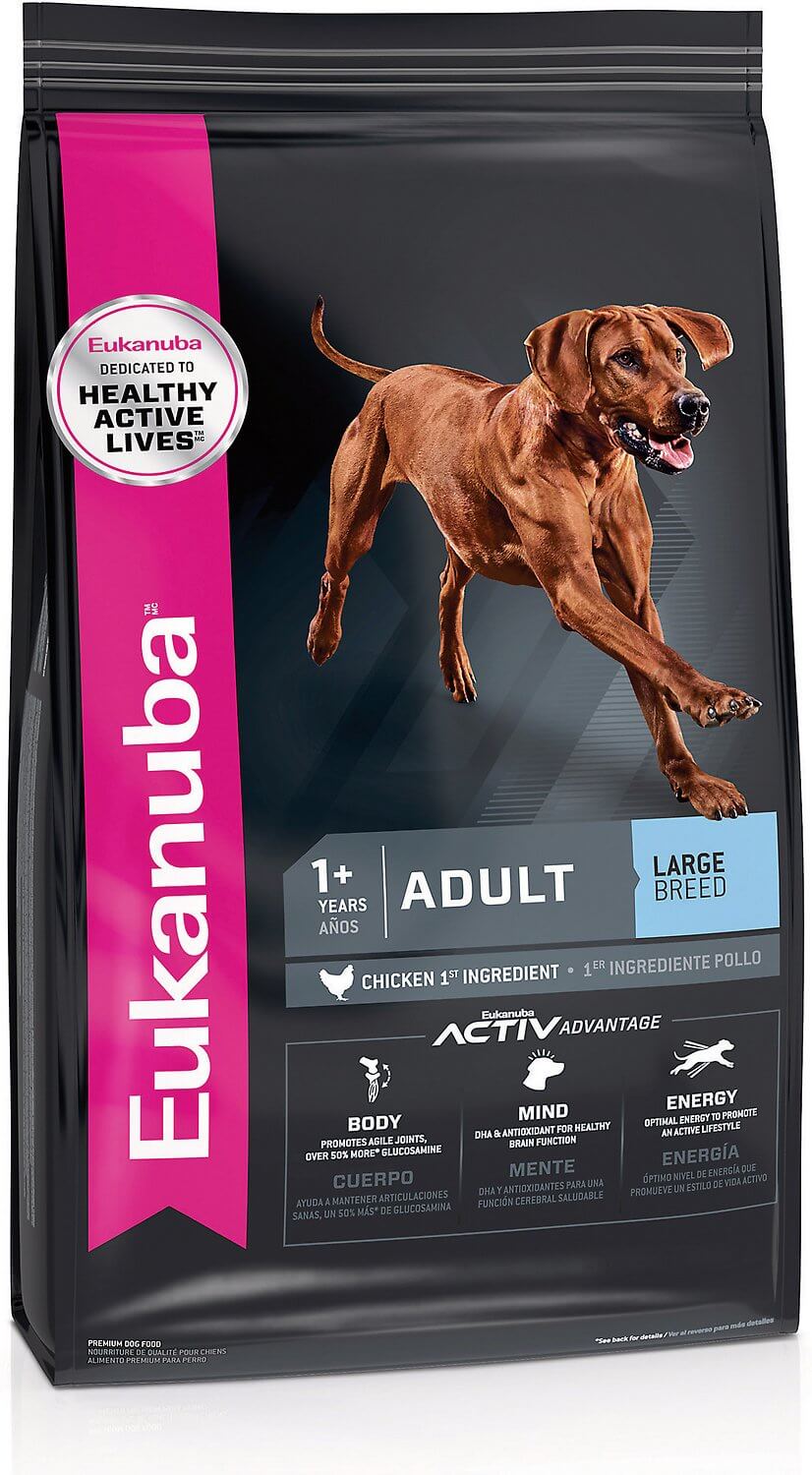
| Eukanuba Adult Large Breed - Chicken 1st Ingredient | 4 | M |
| Eukanuba Small Bites - Chicken 1st Ingredient | 4.5 | M |
| Eukanuba Adult Small Breed - Chicken 1st Ingredient | 4.5 | M |
| Eukanuba Adult Medium Breed - Chicken 1st Ingredient | 4.5 | M |
| Eukanuba Senior - Lamb 1st Ingredient | 4.5 | M |
| Eukanuba Senior Large Breed - Lamb 1st Ingredient | 4.5 | M |
| Eukanuba Puppy - Lamb 1st Ingredient | 4.5 | G |
| Eukanuba Large Breed Puppy - Chicken 1st Ingredient | 4.5 | G |
| Eukanuba Puppy Medium Breed - Chicken 1st Ingredient | 4.5 | G |
| Eukanuba Puppy Small Breed - Chicken 1st Ingredient | 4.5 | G |
| Eukanuba Senior Medium Breed - Chicken 1st Ingredient | 4.5 | M |
| Eukanuba Senior Small Breed - Chicken 1st Ingredient | 4.5 | M |
Recipe and Label Analysis
Eukanuba Adult Large Breed – Chicken 1st Ingredient was selected to represent the other products in the line for detailed recipe and nutrient analysis.
Eukanuba Adult Large Breed - Chicken 1st Ingredient
Estimated Dry Matter Nutrient Content
Protein
Fat
CarbsCarbohydrates
Chicken, corn, chicken by-product meal, wheat, ground grain sorghum, chicken fat, natural flavors, dried plain beet pulp, egg product, potassium chloride, calcium carbonate, sodium hexametaphosphate, salt, fructooligosaccharides, fish oil, choline chloride, vitamins [dl-alpha tocopherol acetate (source of vitamin E), biotin, d-calcium pantothenate, vitamin A acetate, niacin supplement, pyridoxine hydrochloride (vitamin B6), thiamine mononitrate (vitamin B1), vitamin B12 supplement, riboflavin supplement, vitamin D3 supplement, folic acid], dl-methionine, glucosamine hydrochloride, trace minerals [zinc oxide, ferrous sulfate, copper sulfate, sodium selenite, calcium iodate], manganous oxide, chondroitin sulfate, rosemary extract, preserved with mixed tocopherols and citric acid
Fiber (estimated dry matter content) = 3.9%
Red denotes any controversial items
| Estimated Nutrient Content | |||
|---|---|---|---|
| Method | Protein | Fat | Carbs |
| Guaranteed Analysis | 23% | 13% | NA |
| Dry Matter Basis | 26% | 14% | 52% |
| Calorie Weighted Basis | 23% | 31% | 46% |
Ingredients Analysis
The first ingredient in this dog food is chicken. Although it is a quality item, raw chicken contains up to 73% water. After cooking, most of that moisture is lost, reducing the meat content to just a fraction of its original weight.
After processing, this item would probably account for a smaller part of the total content of the finished product.
The second ingredient is corn. Corn is an inexpensive and controversial cereal grain. And aside from its energy content, this grain is of only modest nutritional value to a dog.
The third ingredient is chicken by-product meal, a dry rendered product of slaughterhouse waste. It’s made from what’s left of a slaughtered chicken after all the choice cuts have been removed.
On the brighter side, by-product meals are meat concentrates and contain nearly 300% more protein than fresh chicken.
The quality of this ingredient can vary, depending on the caliber of the raw materials obtained by the manufacturer.
The next ingredient is wheat. Wheat is another cereal grain and subject to the same issues as corn (previously discussed).
The fifth ingredient is sorghum. Sorghum (milo) is a starchy cereal grain with a nutrient profile similar to corn.
Since it is gluten-free and boasts a smoother blood sugar behavior than other grains, sorghum may be considered an acceptable non-meat ingredient.
The sixth ingredient is chicken fat. This item is obtained from rendering chicken, a process similar to making soup in which the fat itself is skimmed from the surface of the liquid.
Chicken fat is high in linoleic acid, an omega-6 fatty acid essential for life. Although it doesn’t sound very appetizing, chicken fat is actually a quality ingredient.
After the natural flavors, we find beet pulp. Beet pulp is a controversial ingredient, a high fiber by-product of sugar beet processing.
Some denounce beet pulp as an inexpensive filler while others cite its outstanding intestinal health and blood sugar benefits.
We only call your attention here to the controversy and believe the inclusion of beet pulp in reasonable amounts in most dog foods is entirely acceptable.
The ninth ingredient is egg product, an unspecified (wet or dry?) form of shell-free eggs. Quality can vary significantly. Lower grade egg product can even come from commercial hatcheries — from eggs that have failed to hatch.
In any case, eggs are easy to digest and have an exceptionally high biological value.
From here, the list goes on to include a number of other items.
But to be realistic, ingredients located this far down the list (other than nutritional supplements) are not likely to affect the overall rating of this Eukanuba product.
With five notable exceptions…
First, fish oil is naturally rich in the prized EPA and DHA type of omega-3 fatty acids. These two high quality fats boast the highest bio-availability to dogs and humans.
Depending on its level of freshness and purity, fish oil should be considered a commendable addition.
Next, we note the use of sodium hexametaphosphate, a man-made industrial polymer with no known nutritive value.
HMP is used in making soap, detergents, water treatment, metal finishing and most likely here to decrease tartar build-up on the teeth.
Although some might disagree, we’re of the opinion that food is not the place for tartar control chemicals or any other non-nutritive substances.
In addition, we find fructooligosaccharide, an alternative sweetener1 probably used here as a prebiotic. Prebiotics function to support the growth of healthy bacteria in the large intestine.
Next, the minerals listed here do not appear to be chelated. And that can make them more difficult to absorb. Chelated minerals are usually associated with higher quality dog foods.
And lastly, this recipe contains sodium selenite, a controversial form of the mineral selenium. Sodium selenite appears to be nutritionally inferior to the more natural source of selenium found in selenium yeast.
Nutrient Analysis
Based on its ingredients alone, Eukanuba Adult Large Breed – Chicken 1st Ingredient looks like an above-average dry product.
The dashboard displays a dry matter protein reading of 26.6%, a fat level of 15.2% and estimated carbohydrates of about 46%.
As a group, the brand features an average protein content of 30.3% and a mean fat level of 17.4%. Together, these figures suggest a carbohydrate content of 40.4% for the overall product line.
And a fat-to-protein ratio of about 57%.
Which means this Eukanuba product line contains…
Near-average protein. Near-average fat. And below-average carbs when compared to a typical dry kibble.
Free of any plant-based protein boosters, this looks like the profile of a kibble containing a significant amount of meat.
Eukanuba Dog Food Recall History
The following automated list (if present) includes all dog food recalls related to Eukanuba through October 2026.
You can view a complete list of all dog food recalls since 2009 here.
What do pet parents think?
Our Rating of Eukanuba Grain Inclusive Dog Food
Eukanuba is a grain-inclusive dry dog food using a significant amount of named by-product meal as its dominant source of animal protein, thus receiving 4.5 stars.
Compare Eukanuba Dog Food
How does Eukanuba compare with The Dog Food Advisor's most recommended brands?
- Best Dog Foods
- Best Puppy Foods
- Best Dry Dog Food
- Best Wet Dog Foods
- Best Senior Dog Food
- Best Dog Foods for Dogs With Allergies 2026
- Best Grain-Free Dog Foods
- Best Dog Food With Grain
- Best Dog Food for Small Dogs 2026
- Best Budget-Friendly Dog Foods 2026
- Best Dog Food for Shih Tzus
- Best Dog Food for Picky Eaters 2026
A Final Word
The Dog Food Advisor does not accept money, gifts, samples or other incentives in exchange for special consideration in preparing our reviews.
However, we do receive a referral fee from online retailers (like Chewy or Amazon) and from sellers of perishable pet food when readers click over to their websites from ours. This helps cover the cost of operation of our free blog. Thanks for your support.
For more information, please visit our Disclaimer and Disclosure page.