Dog food grains. Dog food allergies. Could they be related?
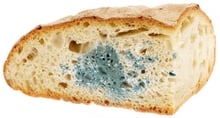
As nasty as it looks, bread mold seems pretty harmless. Right?
But mold and other contaminants sometimes found in the grains used to make dog food can cause serious illness… even death.
That’s just one of the reasons why it’s no exaggeration to call cereal grains some of the most problematic ingredients in commercial dog food.
Grains Can Conceal Hidden Contaminants
After grains are harvested… they must be stored. And that’s where the trouble begins. The longer the storage period, the greater the risk of contamination by one or more of these nasty pollutants…
- Insects
- Mites
- Mold
What’s worse, many dog food companies are famous for using the cheapest grains they can find… usually by-products and rejects of the human food industry… cereal grain leftovers classified as “unfit for human consumption”.
Low quality ingredients like these have always been fertile breeding grounds for some of the nastiest contaminants in dog food.
How Insects (and Their Droppings) End Up
Getting Into Your Dog’s Food
Insects and their droppings can almost always be found in cheap, low-quality grains.1
The most common insect contaminants include…

- Red flour beetles
- Saw-toothed grain beetles
- Indian meal moths
- Granary weevils
- Rice weevils
- Meal worms
- Flat grain beetles
Grain infestations are so common that damage done by insects after crops are harvested is sometimes greater than the damage done during the growing season itself2.
That’s how the carcasses of dead grain insects can so easily end up in commercial dog food. These common dog food pollutants should be considered prime suspects in any attempt to prevent canine allergies.
Grain Mites Quickly Multiply Out of Control
So, what do you get when you mix a low-quality feed grain with plenty of moisture… and then store them together… over a period of time?
Mites. Grain mites… and lots of them.
This tiny eight-legged creature is a close relative of the dust mite… that infamous household menace that might just be one of the most common causes of allergies in the human population.
And can they ever multiply! One female mite alone can lay up to eight hundred eggs… in as little as just nine days3.
Some of these juvenile mites morph into a stage known as the hypopus. During that phase their bodies harden and the mites develop numerous small suckers on their underbellies.
These tiny arthropods then use their suckers to attach themselves to the bodies of grain weevils, beetles and other insects.
So, with a little help from their newly-found “friends” they quickly spread throughout an entire bin of feed grain.
Within days, the stored commodity can become completely infested with disease-causing grain mites.
A Likely Cause of Chronic Allergies
Atopic dermatitis can be an agonizing condition for dogs. It can go completely undiagnosed for years. Yet it is remarkably common.

The disease is a chronic and allergic skin reaction to specific pollutants (called allergens) found in a dog’s environment.
The symptoms can be so common that it’s easy to overlook the everyday signs of the disease…
- Chronic itching
- Excessive licking or chewing of the paws, abdomen and groin
- Deep pink, reddened or oozing ears
- Balding areas (known as “alopecia”)
- Black pigmentation of the skin around the groin (in later years)
- Secondary yeast or bacterial infections (especially in the ears)
So, what are these “specific pollutants” that cause this miserable disease?
Well, it’s been known for years that atopic dermatitis can be caused by common household dust mites. You know… the kind you find in your home’s carpets.
The same kind of mites that cause allergies in humans.
So, could mite-contaminated dog food have anything to do with canine skin allergies?
Of course, it could. And here’s proof…
Recent Research Points an Accusing Finger
A recent study of atopic dermatitis conducted at Wright State University has concluded, “storage mite sensitivity in dogs may be as important, if not more important, than dust mite sensitivity”.4
In other words, the consumption of grain storage mites and their carcasses must be considered a major cause of atopic dermatitis in dogs.
That finding clearly implicates grain-based dog food as a prime suspect and a likely cause for this far-too-common disease.
Wouldn’t you agree?
In Part 2, I’ll cover a much more dangerous problem with the grains used to make dog food… deadly toxins.
- Extension Entomologists, North Central States, Federal Extension Service, U.S. Department of Agriculture ↩
- Peairs FB, “Insect Damage to Farm-Stored Grain”, Colorado State University Extension, Number 5.545 ↩
- “Flour or Grain Mites”, Entomological Notes, College of Agricultural Sciences, Penn State University ↩
- Arlian AG et al, Serum immunoglobulin E against storage mites in dogs with atopic dermatitis, American Journal of Veterinary Research, 2003 January, 64 (1):32-6 ↩


{ 21 comments… read them below or add one }
Hi my dog has been diagnosed with Atopic dermititis and has had positive results with storage mite and dust mite allergies. She shows all the symptons you state ie itching ear infection etc and is on daily medication. Can you recomend a dog food that doesnt contain storage mites?
Hi Kate… Sorry about your dog. Why not try a grain-free dog food. No grain, no mites. If you still want your dog to have grain, only serve better quality food. Be sure to check out Part 2 of this article for 3 solid suggestions.
I opened up a bag of dog food and did not pay attention before it was to late i found out that my dog ate a bowl of dog food with mealworms in it.Do i hav eto worry about it?
Hi Simone… Common meal worms are actually the larva stage of the Indian meal moth. Most consider these creepy creatures relatively harmless to a dog. So, your dog is probably OK. However, I’m not a veterinarian so it would probably be a good idea for you to consult with your dog’s doctor to be sure. In the future, you can minimize the risk of buying products like this by (1) choosing better quality dog foods and (2) paying closer attention to the date on the package. I intend to publish an article about how to interpret dog food product dates in the near future. So, stay tuned. And thanks for your interesting question.
I bought a box of Max mini bones which my dog loves as a treat.
Later when I went to take the box out of the bag in my kitchen, there were tiny hard black specks the size of a pinhead in the bag, and on the box under the plastic seal. When I touched the specks they moved, so I sprayed with insect killer and put them out. They are not fleas or ticks. I will tell the store as they obviously have an infestation. What are these mites / insects and what is the best means of extermination?
Maggie… bug infestations can be a far-to-common problem. Unfortunately, it’s not easy to identify these tiny, speck-like creatures without proper magnification. Most of the time these mysterious bad guys are simply grain mites. I commend you for noticing the issue and for taking the defective product back to the store you purchased it from. Most good retailers want to know about these products so they can keep these costly infestations from spreading to adjacent stock.
Further to Maggie Ryan’s finding little black insects in the dog food,i’m wondering if the little beetle like creatures just found in the small dog biscuits are the same,up close they appear brown. shell like covering rear of body and i beleive can fly.Looking like wood worm infested bisuits thrown out,area thoroughly dinfected any advice to destroy these weevils ?
Hi Richard… Sorry about your experience. Unfortunately, I don’t feel properly qualified to recommend a “safe” pesticide. Using extreme caution when choosing one of these potentially hazardous chemicals is always a good idea. Of course, it goes without saying… never use one of these toxic products anywhere near any pet (or human) food.
Hi I feed my dogs top quality grainfree food and have been tested for allergies. Their allergic storage mites. I am thinking of switching to canned. Can they still get mites if its grain free?
Hi Trish… thanks for your excellent question. Actually, storage mites are far-less likely to be found in any grain-free dog food… dry or canned. But I would think it’s not impossible. Storage contamination of any dry kibble can occur AFTER manufacture, too.
A grain-free canned product might be a better way to go. But it’s almost always much more expensive… plus you have to be sure to choose a nutritionally “balanced” dog food. Just read the label and (as a shortcut) look for the product’s AAFCO statement.
By the way… storage mites are very closely related to dust mites. And almost all homes (especially carpeted homes) can be contaminated with these mites, too. If your dogs are still showing signs of allergy, the source of their problems may not be their dog food!
My dog has just been diagnosed with lymphoma and has had one chemo injection. He will get one more next week.
His vet and I haven’t discussed diet yet. But I’m wondering if I should change it. He’s on Science Hill K-9 because he has had seizures and the vet recommended this.
I’m wondering if I will be adding fish oil or changing the food. Any comments would be appreciated.
Also the dog will soon be 12 years old and is border collie mix. I was told this breed is prone to seizures.
Thank you
Hi Judy… Sorry to hear about your dog’s diagnosis. One of the best resources I’ve found for pets recovering from cancer treatment is a website created and managed by Rene Agredano called http://www.tripawds.com. Admittedly, this site is devoted to pets who have lost a leg due to cancer… and not for dogs with canine lymphoma.
But it’s filled with plenty of support and information. Rene devotes a lot of time to her site and I’m sure you’ll find her pages helpful.
So far, the only dog food I’ve reviewed that’s designed for canine patients undergoing cancer surgery and/or chemotherapy is Hill’s Prescription Diet N/D. I’m not usually a big fan of Hill’s products… but (as I explain in this review), the special dog food has certain features you may find useful.
In any case, be sure to run your food choice by your vet for his/her opinion. Hope this helps.
Today I found tiny black bugs in my dogs food. They have been eating it (reluctantly) for two weeks. The food was Purina’s shredded blend. The pet store took my name and number, but my question is will this harm my dog(s) and should I take them to the vet. They haven’t had any stomach upset, but their appetites were very diminished. I changed to Wellness because the bag appeared to be sealed well. I feel bad because they didn’t want to eat it.
Also, what fresh foods/vegetables/fruits can I incorporate into my dog(s) diet?
Hi Teresa… unfortunately, the unwelcome situation you experienced can be rather common. In most cases, these crawling creatures are most likely grain mites… and are usually not a serious problem for most otherwise healthy pets. But without closer examination (under a microscope) it’s difficult to determine their real identity.
Your dogs are probably safe… but just to be sure, you’ll probably want to contact your vet to see if you need to take any action.
As to what foods (meats, veggies and fruits) are nutritionally helpful for your dog, stay tuned for upcoming articles on our website. We’ve already published a few (look under the tab “Helpful Articles”). Currently, we’re working extra hard preparing the product reviews.
Good luck with your dogs… and in the future, (1) keep your bags tightly sealed after you open them and (2) pay close attention to the “Good Until” dates printed on most dog food packaging. Hope this helps.
My husband and I just adopted a dog about 1 month ago, she is a 1 year old Lab. She just had her first vet appointment this past weekend and when the vet called about her fecal sample results he said she has “wood worms”. Have you ever heard of this? I could be mistaken due to it was an answering machine recording. We we first time dog owners and want to do best for her. We would love some more information on these worms if possible so we can determine if she had them when she came or not… . Thanks for your help!!
Hi Elizabeth… I’d love to help you with your problem but I’m not a veterinarian. Most vets are willing (and able) to help you get control of and eliminate your pet’s parasites.
Hi Mike,
I just wanted to ask you, i stopped feeding my dogs any food with grain in it. How long does it take to see if my dog was allergice to the grain mites. does it take a while or should i see results right away? Thank You
Hi Diane… Since I’m not a veterinarian, I’m not sure of the answer to your question. However, I’d assume some symptoms would begin to clear up within a few days whereas others (like hair loss and yeast infections) would take quite a while longer.
Hi everyone.I have the answer to all these problems.STOP FEEDING THEM DOG FOOD PLEASE.My 2 goldens 11 and 12 have only ever had home made food.My vet told me many times that if I could do then to keep on doing it.We have never even had an ear infection ever.So make them good stews with real chicken or real beef,lots of veggies and oatmeal and barley.Fifty years ago dogs lived much longer and healthier because there was no dog foods.Then someone thought what are we going to do with all this crap leftover,,,,,,,,thats when dog food was first made.
Okay Marla, I hear you. Please give recipes for home made dog food. I too purchased dog biscuits from a store who specialized in all natural products. Well I have these bugs in the dog biscuits. I am almost sure they are the usual grain bugs. I put bay leaf and mint in the tupperware container and put the container in the fridge. Hope that will take care of them. Recipes for biscuits also please.
Hi Bonita… My recommendation would be to discard the contaminated food. It contains not just the dead insects but their droppings, too. You certainly wouldn’t want to feed this awful stuff to your dog.