Why Is There Ash in Your Dog’s Food?

Share

Is This the Ash You Find in Dog Food?

Do they really add ash to dog food?

You know, after reading hundreds of dog food packages, I thought I’d seen it all. But there it was, printed right there on the label.

Crude ash.

Ash? You mean the same stuff you find in a fireplace? Why would a manufacturer add ash to a dog food?

What Is Ash?

In dog food, ash is not like it sounds. Contrary to what you may have heard, it’s not a filler deliberately used to dilute a recipe. 

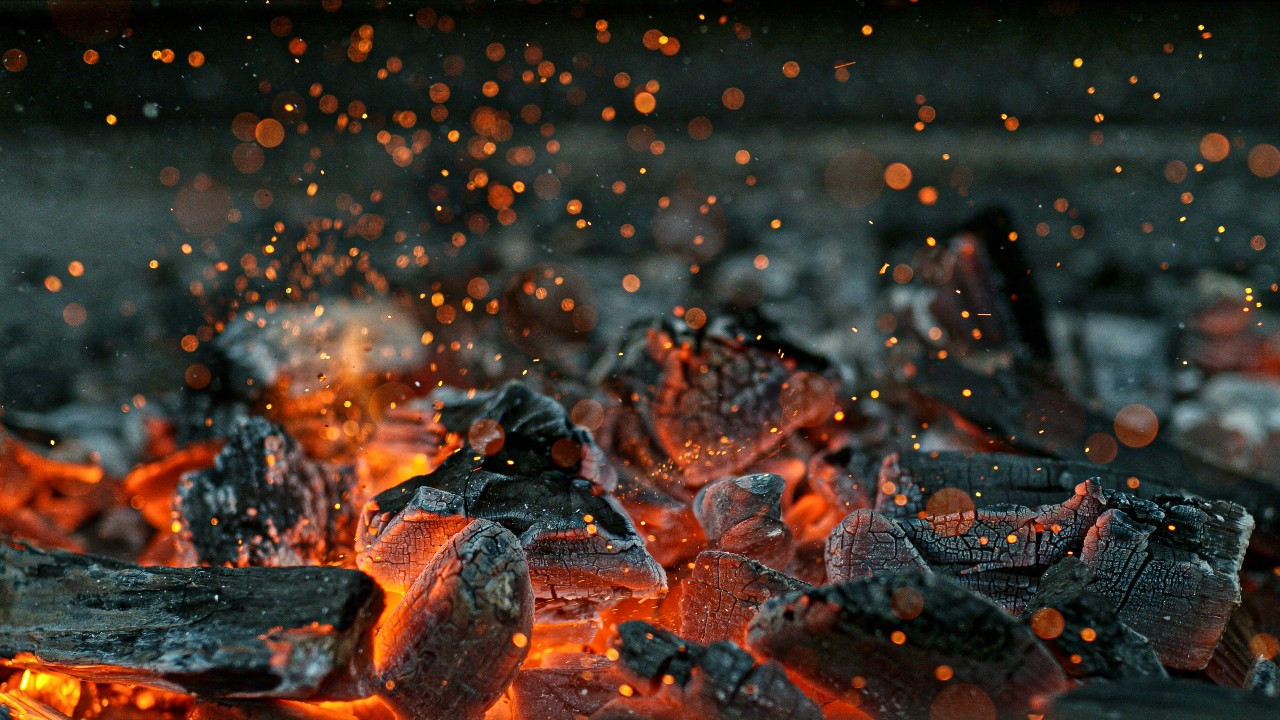
Ash is what’s left over after any food has been completely incinerated. It’s the final product of food combustion.

In other words, if you were to completely incinerate a can of dog food, all three major nutrients (protein, fat and carbohydrates) would burn away, leaving just the food’s minerals behind.

Mineral nutrients (like calcium, phosphorous, zinc, iron, etc.) make up ash, the ultimate residue of food combustion.

Ash is also more commonly known as funeral ash. It’s simply what remains of any animal after cremation.

Why Ash Can Be Important

The ash reported on a label represents the cumulative total of all the minerals found in that food.

Although a smaller amount can come from plant-based ingredients, most ash comes from the bone content and minerals additives in a product.

And much of those minerals include calcium and phosphorus.

In any case, the ash number by itself is not very revealing. Knowing the actual amount of each mineral included in the total ash figure would be much more useful.

And it can be especially important when feeding…

  • Growing large breed puppies
  • Dogs suffering from kidney disease

What’s ‘Normal” for Dog Food Ash?

The amount of ash varies from product to product.

In general, the average ash content of most commercial dog foods appears to be somewhere around 5-8 percent1.

Since most companies don’t typically report ash content on their labels, The Dog Food Advisor arbitrarily uses an 8 percent for all dashboard calculations.

  1. Brown S., Taylor B., “See Spot Live Longer”, 2007 Creekobear Press, Eugene, OR USA, p 55
Dog Food Advisor IconThe Dog Food Advisor publishes independent reviews to help pet owners make better choices when shopping for dog food.


  • http://DogFoodAdvisor.com/ Mike Sagman

    Hi Klaas,

    That’s an excellent question. But unfortunately, the answer depends on how much ash and specifically which minerals you’re talking about.

    Minerals (ash) in normal amounts are absolutely vital to the health of our dogs. However, in excessive amounts, they can be toxic.

    For example, excess calcium and phosphorus can have a negative impact on renal (kidney) function. And they can be particularly detrimental to large breed puppies.

    There are other minerals, too. And the exact amounts that are considered toxic can be unique to each one.

    Hope this helps.

  • http://www.dfwpugs.com/ sandy

    My dogs eat raw foods with bones.  They’re output is solid and will turn ashy in a couple hours.  The higher bone content and ash seems to firm up their stools.

  • Klaas Wentzel

    Your article about WHY IS THERE ASH IN YOUR DOG’S FOOD was really informative – thanks. What negative affects do a to high level of ash in petfood have on an dog ? Can the animal suffer from diarree , vomiting , etc.

  • http://DogFoodAdvisor.com/ Mike Sagman

    Hi Meagan,

    Sure, it’s quite likely the company would know the breakdown (of the minerals) that make up what we know as ash.

    Minerals are a necessity. But in excessive amounts, especially certain ones like phosphorus can cause excessive load on the kidneys.

    Unfortunately, there’s a lot of variability in what some would classify as excessive (and even toxic).

    I’ll defer the answer to those details to another poster.

  • Meagan

    Would the company know the breakdown? Or is that impossible to know?
    Thanks!

  • http://DogFoodAdvisor.com/ Mike Sagman

    Hi Meagan,

    Since dog food manufacturers rarely post ash content on their labels, we have chosen to use 8% as our own fixed figure when estimating carbohydrate percentages on our “dashboard”.

    That said, this 12% figure appears to be on the high side.

    Without knowing the breakdown of that ash figure, it would be inappropriate for me to deduce any definitive conclusions for you.

    Wish I could be more help.

  • Meagan

    I decided to email Earthborn and ask what the ash % is for the Primitive Natural formula. It is 12% maximum. I am not sure if I will continue to feed it to Patches after this bag is gone. Bummer I thought it was a great food.
    What would your thoughts be Mike?

  • Pingback: Acceptable percentage of ash in kibble

  • Amy Phillips

    Mike, thanks for the interesting and informative information on ASH. I work at a petstore where a good 70% of our customers have dogs and cats with “special” nutritional needs whether its simple food allergies to dogs with cancer or other disease issues. I am asked about ash frequently and therefore I am on the internet searching for informative information to relay to my concerned pet parents. Too often, the pet parents are misinformed about pet nutrition. I try to leave each pet parent with some good education and teach them how to read and understand the dog food labels and what to look for or avoid so they can make good educated decisions for themselves and not feel like I am just a used car salesman trying to push off the next “HOT” brand trending in the dog food market.

  • Nick

    I was shocked to find that my dogs food contained ash. Thanks for highlighting this important issue!

  • J Smith

    a further point is the 100g of liver had also 6.5 g of fat, a very high energy nutriient dense food. Please note, gererally speaking natural fat, be it animal or plant, no ash remains. Carohydrates in plants, and depending on the types of sugars-starch present have the greatest amount of ash present. That is why conventional bagged dog food has such high ash content-High carbs poor nutrition w high ash. High protein yields high nutrition same or less ash. Too many Carbs can also cause kidney and other organs/joint problems.

  • J Smith

    Howdy, commenting on protein vs carbs ash content in foods. Great site here, I came across it seaching for ash after reading about how the western natives would add ash to their food called “succotash”at http://www.associatedcontent.com/article/5448904/health_benefits_from_around_the_world_pg2.html?cat=5
    Ash percentage of foods with regards to protein vs carbs is not that great. Do query the USDA website at http://www.nal.usda.gov/fnic/foodcomp/search/ for the nutrient contents of varied whole foods, ash is amongst many nutrients listed. eg; 100g chicken liver simmered has Prot 24.5g-and Ash is only 1.36g, however 100g of raw Banana has 1g of Prot and .82g of Ash however it does have 23g ofCarbs. The statement of protein having much more ash then carbs seems mute within this example.

  • http://DogFoodAdvisor.com Mike Sagman

    Hi JammyJ… Actually, I wasn’t intending to give the impression that ash isn’t important. Because, in fact, it can be. Excessive ash (mineral) content can be unhealthy for a dog, particularly a growing puppy. High ash content can be suggestive of the presence of too much bone or mineral supplement. Future upgrades to our dashboard may include a closer analysis of this figure (when reported). For the record, we use 8% as a default to help compute a reasonable carbohydrate content. Hope this helps.

  • Jonathan

    Not really, Jammyj. The amount of ash can tell us a lot about the possible quality of the meals used. Higher ash usually means more bones and such in the meal, and higher phosphorus levels, I believe…

  • jammyj

    So I guess ‘Ash’ is really rendering jargon that probably means more to someone in the dog food business than it does to the rest of us…

  • Leah

    Hi there, this article is so interesting. I had a dog for 14 years. He ended up with an intolerance to protein at 10. A protein free diet kept him alive another four years. When we got Lil I decided to look into the components of the dog food and was AMAZED at what I found. I know manufacturers need to keep costs low but some of the fillers they use are just nausea inducing. When I saw ash I thought it was another filler product and I was disgusted. However, after reading your article I realise that everything that is natural contains ash – thanks for clearing that up for me! Whites dog food has a 5% ash content, that’s below the 10% that you recommend as healthy. I’m delighted I found your article, otherwise I would have dismissed a perfectly good dog food for having a filler when it doesn’t.

  • http://DogFoodAdvisor.com Mike Sagman

    Ed… Where do you come up with “99% of the dogs out there should be on a food with 22-25% protein”? Your figures are subjective and arbitrary. And not based on science.

    Ash is not bad… unless it is excessive. After all, you and your dog both contain ash. You are meat (to a grizzly bear). As this article explains, ash is simply minerals.

    You are correct in suggesting caution when buying high protein dog food. Excessive ash content can be a problem and is usually associated with recipes containing high levels of bone.

    However, dog foods contain varying amounts of meat. For example, boneless ingredients are quite low in ash. Even meatless vegan dog foods contains ash. Without knowing the exact amount, sweeping claims that high protein dog foods are bad for dogs are baseless and can be misleading to our readers.

    Bottom line? High protein dog foods are not automatically high in ash. But low protein dog foods (like you recommend) are nearly always too high in carbohydrates.

  • http://DogFoodAdvisor.com Mike Sagman

    Hi Vicki… Since the largest majority of manufacturers do not provide ash statistics, we use 8% (close to average) as the default value in our computations. The 2% difference in the case of the dog food you mention, would estimated carb (not protein or fat) content by 2%. Hope this helps.

  • ed

    High ash is one of the reasons that you should be careful feeding high proteins foods. 99% of the dogs out there should be on a food with 22 – 25% protein.

    With protein, especially muscle meat, comes ash. The answer to your question is no.

  • Vicki

    Ash is quoted at 10% on the Advance dog food as part of the product analysis. Wouldn’t this then make the protein content only 20% NOT 30% as quoted?

  • http://DogFoodAdvisor.com Mike Sagman

    Hi Karen… All foods (even human and homemade) contain ash. Ash actually represents all the minerals present in any food. For without minerals, we (and our dogs) would all perish. There are a number of high quality low ash dog foods out there. Unfortunately, most (but not all) manufacturers do not disclose the ash content of their products. Sometime in the future, we’d love to publish a list of low ash dog foods. Thanks for your comment and hope things work out well for your dog.

  • Karen

    According to my vet the ash is probably the reason my dog had a bladder stone. The high ash in the food. He is cooked for now and is doing great. He had to have surgery for the stone and his new vet wanted to put him back on the same food he had been on for three years that showed no improvement in him for 3 years! He gets all kinds of veg., meat and brown rice , oats and barley. He is 11 years old and will never be fed dog food again. My 1 year old pom is being fed the same and is doing great.

  • http://DogFoodAdvisor.com Mike Sagman

    Hi Christy… most dog food manufacturers do not disclose the ash content of their foods… which makes it almost impossible to find the information you’re looking for.

    By the way, ash is the mineral residue left after “burning” all the protein, fat and carbohydrates from a food. You’ll probably not find an ash content much lower than what you’ve already found. Until pet food companies are required to publish the ash content of their products, it’s impossible to provide you with a reliable answer to your question.

  • christy

    Hi. My 11 year old boston terrier had a kidney stone and blood in the urine. The vet had me feed her a low ash dog food and antibiotics. They sell the science diet c/d at the vets, but I was trying to find one at Petsmart where its easier to go. The only brand i found was Authority Senior that had a ash content labeled at 2 %. Most of the brands had none listed. Plus none of the employees knew anything about what ash is. Do you know of any other brands that are low ash? Tilly seems not to be liking this brand as much. Thank you!

  • leb

    Wow! I never really understood the concept of ash before. I thought it was a very bad thing. I did not realize that it isn’t an added ingredient. I thought it literally was burnt ash that was added as a filler, which is a disgusting idea. I didn’t realize that it is mainly mineral content. Thanks so much for clarifying this matter for me!

  • http://DogFoodAdvisor.com Mike Sagman

    HI Cindy… ash is most frequently associated with high protein dog foods. It should be considered a normal finding in most all food products. Yet when excessive, ash can be linked to various disease states… for example, kidney dysfunction. Although there’s some disagreement as to the exact point of concern, ash should probably be kept under 10 percent. Check with your vet.

    Ash content is one of those things I wish manufacturers would include on their product labels. Unfortunately, very few actually do.

  • cindy

    What is the downside of ash in dog food?

  • http://DogFoodAdvisor.com Mike Sagman

    Hi Carol… the main reason I wrote that article is because I noticed many people falsely believed dog food companies actually add “ash” to their dog food. As you know, the truth is that ash is what’s left when you burn away the protein, fat and carbohydrates from organic compounds (like food). Ash is nothing more than non-combustible minerals… the same ash remaining after any animal (including us humans) has been cremated.

  • Carol

    Hi Mike, if wondering why folks ask about ‘ash content’ it’s not unreasonable to guess they also may have a cat. Ash content in cat food can be a major problem in the long term for their health. I’ve not heard that the amounts in dog food bother dogs in the same way.

  • http://DogFoodAdvisor.com Mike Sagman

    Jeff… you’re absolutely right. Ash is not an ingredient.

  • Jeff White

    The point that many seem to have trouble grasping is that ash is not something that is added to the food, and it does not appear in the ingredients list of the vast majority of dog foods. If it’s found at all on the package, it’s in the Guaranteed Analysis section, along with the protein, moisture, and fat content, etc.

  • http://DogFoodAdvisor.com Mike Sagman

    Hi Kathy… the kind of ash I’m referring to in my article is the ash left over after burning food. It’s the stuff that can’t be burned… mostly the minerals. Ash is what’s left of us after we’ve been cremated (sorry for this grisly example). I’m not a vet and am not aware of that habit with any other dog. Tobacco ashes probably aren’t very nutritious for your dog. So I’d make an extra effort to keep the ashtrays around your house spotlessly clean. Thanks for your interesting story.

  • Kathy

    I have a small terrier mix and if anyone leaves a used ash tray around she licks it clean, or she looks for ashes on the ground of the patio. She usually does this when she’s not eating. I asked the Vet about it and he said he never heard of such a thing.She does not eat the cig butts just ashes. I feed them a natural food I get at the vets.

  • http://DogFoodAdvisor.com Mike Sagman

    Hi Jan… your comments about smoked meats and charcoal being linked to cancer are certainly something to be concerned about. But my point of this article is that manufacturers don’t normally add ash to dog food. No, ash is what’s left of ANY organic compound… trees or dog food (or even people food)… after you burn it. It’s the stuff that can’t be burned… the minerals (zinc, iron, etc.).

  • jan

    Anything smoked like smoked salmon, haddock, ham, cheese, sausage is carcinogenic. When we make toast benzopyrene is produced. The darker the toast the more benzopyrene you get. It is a very potent carcinogen used to induce tumours in lab rats. Carcinogenic Acrylamides are formed when you brown any starchy food. Anything burnt is not good for you it is harder for the body to digest. Charcoal is made by burning things to a cinder. Acivated charcoal is made to be very porous and is used in fuel storage, gas purification, chemical purification. air and water filters, treatment for poisoning and colon cleansing. Some say it reduces cholesterol. So I guess it has its good points and bad points like everything else. So while charcoal might clean out your dogs colon and reduce his cholesterol it might well give him cancer.

  • http://c2cheshire@gmail.com Laura

    Well, this is very interesting. I never saw it this way or understood the Ash idea. I thought Ash listed in a product meant that it was in fact “really” added into the food… or else why list it? Funny. So, what that tells you is what the Ash content *would be* *if* the product was incinerated? Why is this an important aspect of pet food and not human food? We don’t see Ash content listed on our food products.

  • http://DogFoodAdvisor.com Mike Sagman

    Hi Laura… You’re right about the fact that raw food isn’t burned BEFORE it goes into the animal. Yet neither are store-bought dog food products. Yes, processed foods are cooked… but they’re not burned (combusted). However, in the science of nutrition, ash isn’t considered something the animal eats but rather the residue that would be left over after all the macronutrients (protein, fats, carbohydrates) have been completely combusted. It’s the stuff that can’t be burned up. It’s all those non-combustible minerals (like calcium, iron, magnesium, potassium, etc.) naturally present in all foods. I hate to be too graphic here, but it’s what’s left after any animal has been cremated. For humans, it’s what we refer to as “our ashes”. By the way, since minerals are usually added to almost all processed foods I would expect the ash rating to be notably higher than with raw food. Thanks for your interesting question.

  • http://c2cheshire@gmail.com Laura

    Hi Mike!
    I’m not sure how Ash is part of a raw food diet? Ash being the byproduct of incinerated or “food combustion” and raw by definition isn’t cooked or burned in any way. ??? Unless you are referring to the feed that is fed to the animal that is slaughtered then later fed to humans or animals (our dogs)? I’d be interested in knowing how ash is incorporated in a raw diet, sincerely.

    I realize most people choose commercial pet food because of convenience. But, if a person spends the time up front researching and learning about a BARF diet for their pets – in the end it’s not any less convenient and in some cases it’s cheaper and it’s a healthier way to feed. Not to mention having more control over what your dogs eat! :-) I hate the idea of not knowing what goes on in those pet food processing plants and all the machinery the food goes through. There’s been enough in the news about all the contamination – that alone would be enough to change me, although, my switch to raw feeding wasn’t a result of something so big. ;-)

  • http://DogFoodAdvisor.com Mike Sagman

    Laura… good point. But many well-meaning dog owners know little about BARF diets and choose convenience over science. By the way, ash is a natural part of all raw and whole food diets, too.

  • Laura

    Yes… but, it’s so much better for your dog to consume food that is processed as little as possible. Just the same as it is for humans… processed foods only complicate things and your overall health. Generally speaking.

    BARF. Period. But, I’m biased.