
Somewhat Recommended


DogFoodAdvisor is reader supported See how
All reviews are 100% impartial but if you buy using links on this page, we may earn a referral fee.
Our Verdict
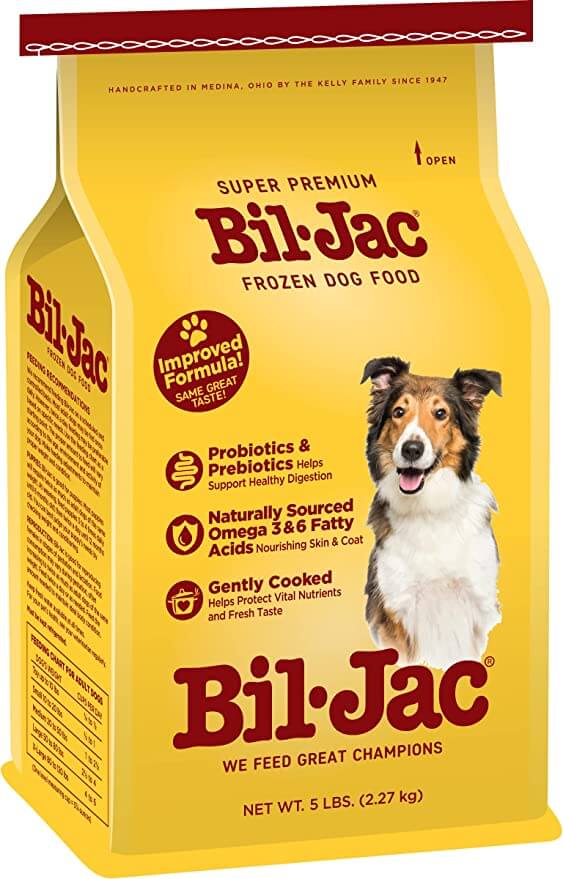
The Bil-Jac product line includes one frozen dog food, a recipe claimed to meet AAFCO nutrient profiles for all life stages.
Bil-Jac Frozen is suitable for dogs of all ages and sizes. Made with fresh chicken that is gently cooked and frozen at its peak of freshness to help retain essential nutrients, along with probiotics and prebiotics that support a healthy gut.
Pros
- Meat is the first ingredient
- Slow-cooked to preserve nutrients
- Added probiotics
Cons
- Only one recipe
Bil-Jac Frozen Dog Food
Estimated Dry Matter Nutrient Content
Protein
Fat
CarbsCarbohydrates
Chicken, wheat flour, beef tripe, chicken meal, beef liver, chicken liver, dried beet pulp, cane molasses, brewers dried yeast, phosphoric acid, choline chloride, fish oil, cellulose gum, dl-methionine, l-lysine monohydrochloride, citric acid and calcium propionate (preservatives), potassium chloride, eggs, dried lactobacillus acidophilus fermentation product, dried lactobacillus casei fermentation product, dried bifidobacterium animalis fermentation product, dried lactobacillus reuteri fermentation product, fructooligosaccharide, zinc proteinate, vitamin E supplement, l-ascorbyl-2-polyphosphate (source of vitamin C), manganese proteinate, zinc sulfate, ferrous sulfate, iron proteinate, inositol, niacin supplement, copper proteinate, sodium selenite, d-calcium pantothenate, copper sulfate, riboflavin supplement, vitamin A acetate, biotin, thiamine mononitrate, pyridoxine hydrochloride, vitamin B12 supplement, manganous oxide, cobalt proteinate, vitamin D3 supplement, cobalt carbonate, calcium iodate, folic acid
Fiber (estimated dry matter content) = 2.5%
Red denotes any controversial items
| Estimated Nutrient Content | |||
|---|---|---|---|
| Method | Protein | Fat | Carbs |
| Guaranteed Analysis | 18% | 8% | NA |
| Dry Matter Basis | 33% | 15% | 45% |
| Calorie Weighted Basis | 29% | 31% | 40% |
Ingredients Analysis
The first ingredient in this dog food is chicken. Chicken is considered “the clean combination of flesh and skin… derived from the parts or whole carcasses of chicken”.1
Chicken is naturally rich in the 10 essential amino acids required by a dog to sustain life.
The second ingredient is wheat flour, a highly-refined product of wheat milling. Like corn, wheat is an inexpensive and controversial cereal grain of only modest nutritional value to a dog.
For this reason, we do not consider wheat a preferred component in any dog food.
The third ingredient is beef tripe. Tripe usually consists of the first three chambers of a cud-chewing animal’s stomach. As unappetizing as it may seem to us humans, tripe is favored by dogs and sometimes even includes the stomach’s contents, too.
The fourth ingredient is chicken meal. Chicken meal is considered a meat concentrate and contains nearly 300% more protein than fresh chicken.
The next two items are beef liver and chicken liver. These are organ meats sourced from named animals and thus considered beneficial components.
The seventh ingredient is beet pulp. Beet pulp is a controversial ingredient, a high fiber by-product of sugar beet processing.
Some denounce beet pulp as an inexpensive filler while others cite its outstanding intestinal health and blood sugar benefits.
We only call your attention here to the controversy and believe the inclusion of beet pulp in reasonable amounts in most dog foods is entirely acceptable.
The eighth ingredient is molasses, which can be rich in minerals. However, it’s also a less refined form of sugar with a glycemic index in humans similar to maple syrup.
Like table sugar (and in excessive amounts), molasses has the potential to raise a dog’s blood sugar.
From here, the list goes on to include a number of other items.
But to be realistic, ingredients located this far down the list (other than nutritional supplements) are not likely to affect the overall rating of this Bil-Jac product.
With four notable exceptions…
First, we note the inclusion of dried fermentation products in this recipe. Fermentation products are typically added as probiotics to aid with digestion.
Next, fish oil. Fish oil is naturally rich in the prized EPA and DHA type of omega-3 fatty acids. These two high quality fats boast the highest bio-availability to dogs and humans.
Depending on its level of freshness and purity, fish oil should be considered a commendable addition.
In addition, eggs are easy to digest and have an exceptionally high biological value.
And lastly, this recipe includes chelated minerals, minerals that have been chemically attached to protein. This makes them easier to absorb. Chelated minerals are usually found in better dog foods.
Nutrient Analysis
Based on its ingredients alone, Bil-Jac Frozen Dog Food looks like an average product.
The dashboard displays a dry matter protein reading of 33.1%, a fat level of 15.3% and estimated carbohydrates of about 45.3%.
And a fat-to-protein ratio of about 46%.
Which means this Bil-Jac product contains…
Near-average protein. Below-average fat. And above-average carbs when compared to a typical moist dog food.
Even when you consider the protein-boosting effect of the brewers dried yeast, this still looks like the profile of a frozen product containing a moderate amount of meat.
Bil-Jac Dog Food Recall History
The following automated list (if present) includes all dog food recalls related to Bil-Jac through March 2026.
You can view a complete list of all dog food recalls since 2009 here.
Our Rating of Bil-Jac Dog Food
Bil-Jac is a grain-inclusive pasteurized-then-frozen dog food using a moderate amount of named meat and meat meal as its dominant source of animal protein. The brand has unfortunately added preservatives and cane molasses to the ingredients, thus earning the recipe 2.5 stars.
About
Bil-Jac was established in 1947 with the original recipe — Bil-Jac Frozen Dog Food. The recipe and its manufacturing process were revolutionary at the time, and they secured the first dog food patent in the United States in 1951.
Today Bil-Jac’s is still a family-owned company.
Compare Bil-Jac Dog Food
How does Bil-Jac compare with The Dog Food Advisor's most recommended brands?
A Final Word
The Dog Food Advisor does not accept money, gifts, samples or other incentives in exchange for special consideration in preparing our reviews.
However, we do receive a referral fee from online retailers (like Chewy or Amazon) and from sellers of perishable pet food when readers click over to their websites from ours. This helps cover the cost of operation of our free blog. Thanks for your support.
For more information, please visit our Disclaimer and Disclosure page.