
Highly Recommended


DogFoodAdvisor is reader supported See how
All reviews are 100% impartial but if you buy using links on this page, we may earn a referral fee.
Our Verdict
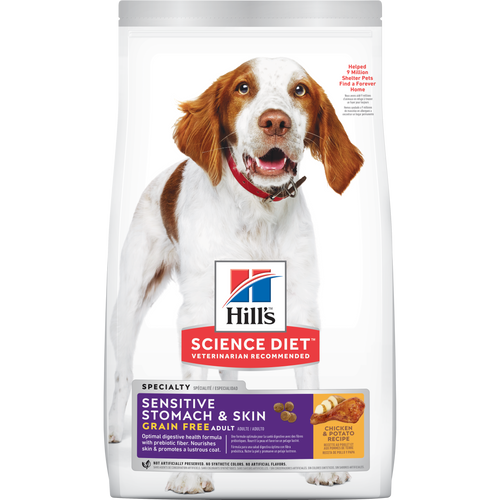
Hill’s Science Diet Adult Sensitive Stomach and Skin Grain Free Dry Dog Food receives the Dog Food Advisor’s rating of 4 stars. The recipe is claimed to meet AAFCO nutrient guidelines for maintenance.
Pros
- Budget-friendly
- Added vitamins & minerals
- Chicken as the first ingredient
Cons
- Adult only recipe
Science Diet Grain Free Sensitive Stomach and Skin
Estimated Dry Matter Nutrient Content
Protein
Fat
CarbsCarbohydrates
Chicken, yellow peas, potatoes, potato starch, chicken meal, chicken fat, pea protein, chicken liver flavor, dried beet pulp, soybean oil, flaxseed, egg product, lactic acid, powdered cellulose, pork flavor, calcium sulfate, choline chloride, iodized salt, potassium chloride, green peas, vitamins (vitamin E supplement, l-ascorbyl-2-polyphosphate (source of vitamin C), niacin supplement, thiamine mononitrate, vitamin A supplement, calcium pantothenate, riboflavin supplement, biotin, vitamin B12 supplement, pyridoxine hydrochloride, folic acid, vitamin D3 supplement), apples, cranberries, carrots, minerals (ferrous sulfate, zinc oxide, copper sulfate, manganous oxide, calcium iodate, sodium selenite), broccoli, mixed tocopherols for freshness, taurine, natural flavors, beta-carotene
Fiber (estimated dry matter content) = 2.5%
Red denotes any controversial items
| Estimated Nutrient Content | |||
|---|---|---|---|
| Method | Protein | Fat | Carbs |
| Guaranteed Analysis | 25% | 18% | NA |
| Dry Matter Basis | 25% | 18% | 49% |
| Calorie Weighted Basis | 21% | 37% | 42% |
Ingredients Analysis
The first ingredient in this dog food is chicken. Although it is a quality item, raw chicken contains up to 73% water. After cooking, most of that moisture is lost, reducing the meat content to just a fraction of its original weight.
After processing, this item would probably account for a smaller part of the total content of the finished product.
The second ingredient includes yellow peas. Peas are a quality source of carbohydrates. And like all legumes, they’re rich in natural fiber.
However, peas contain about 25% protein, a factor that must be considered when judging the meat content of this dog food.
The third ingredient is potato. Potatoes can be considered a gluten-free source of digestible carbohydrates. Yet with the exception of perhaps their caloric content, potatoes are of only modest nutritional value to a dog.
The fourth ingredient is potato starch, a gluten-free carbohydrate of only modest nutritional value to a dog.
The fifth item is chicken meal. Chicken meal is considered a meat concentrate and contains nearly 300% more protein than fresh chicken.
The sixth ingredient is chicken fat. This item is obtained from rendering chicken, a process similar to making soup in which the fat itself is skimmed from the surface of the liquid.
Chicken fat is high in linoleic acid, an omega-6 fatty acid essential for life. Although it doesn’t sound very appetizing, chicken fat is actually a quality ingredient.
The seventh ingredient is pea protein, what remains of a pea after removing the starchy part of the vegetable.
Even though it contains over 80% protein, this ingredient would be expected to have a lower biological value than meat.
And less costly plant-based products like this can notably boost the total protein reported on the label – a factor that must be considered when judging the meat content of this dog food.
After the chicken liver flavor, we find beet pulp. Beet pulp is a controversial ingredient, a high fiber by-product of sugar beet processing.
Some denounce beet pulp as an inexpensive filler while others cite its outstanding intestinal health and blood sugar benefits.
We only call your attention here to the controversy and believe the inclusion of beet pulp in reasonable amounts in most dog foods is entirely acceptable.
From here, the list goes on to include a number of other items.
But to be realistic, ingredients located this far down the list (other than nutritional supplements) are not likely to affect the overall rating of this Hill’s product.
With five notable exceptions…
First, flaxseed is one of the best plant sources of healthy omega-3 fatty acids. Provided they’ve first been ground into a meal, flax seeds are also rich in soluble fiber.
However, flaxseed contains about 19% protein, a factor that must be considered when judging the actual meat content of this dog food.
Next, soybean oil is red flagged here only due to its rumored (yet unlikely) link to canine food allergies.
However, since soybean oil is high in omega-6 fatty acids and contains no omega-3’s, it’s considered less nutritious than flaxseed oil or a named animal fat.
Next, we find no mention of probiotics, friendly bacteria applied to the surface of the kibble after processing to help with digestion.
We also find taurine in this food. Taurine is an important amino acid associated with the healthy function of heart muscle. Although taurine is not typically considered essential in canines, some dogs have been shown to be deficient in this critical nutrient.
Since taurine deficiency appears to be more common in pets consuming grain-free diets, we view its presence in this recipe as a positive addition.
And lastly, the minerals listed here do not appear to be chelated. And that can make them more difficult to absorb. Chelated minerals are usually associated with higher quality dog foods.
Nutrient Analysis
Based on its ingredients alone, Hill’s Science Diet Grain Free Dog Food looks like an average dry product.
The dashboard displays a dry matter protein reading of 24.9%, a fat level of 18.1% and estimated carbohydrates of about 46.5%.
And a fat-to-protein ratio of about 73%.
Near-average protein. Above-average fat. And near-average carbs when compared to a typical dry dog food.
When you consider the protein-boosting effect of the peas, pea protein and flaxseed, this looks like the profile of a kibble containing a moderate amount of meat.
However, with 37% of the total calories in our example coming from fat versus just 21% from protein, this recipe may not be suitable for dogs on a low fat diet.
Hill's Dog Food Recall History
The following automated list (if present) includes all dog food recalls related to Hill's through October 2026.
No recalls noted.
You can view a complete list of all dog food recalls since 2009 here.
Our Rating of Hill's Science Diet Grain Free Dog Food
Hill’s Science Diet Grain Free is a dry dog food using a moderate amount of named meat meal as its main source of animal protein, thus earning the brand 4 stars.
About
Hill’s Pet Nutrition is an international pet food brand that’s known for selling scientifically developed foods.
In 1948, Hill’s officially went into business. Dr. Mark Morris Sr. teamed up with Topeka-based Hill Packing Company to can his recipe, Canine k/d, and produce new pet food formulas.
In 1968, Hill’s launched its Science Diet range under the guidance of Mark Morris Jr. In 1976, Colgate-Palmolive Co. purchased Hill’s Pet
Nutrition. Today, Hill’s products are available in 86 countries worldwide.
It now employs a team of more than 220 veterinarians, nutritionists, technicians, and food scientists to develop pet foods in the Hill research facility that’s still located in Topeka.
Compare Hill's Science Diet Grain Free Dog Food
How does Hill's Science Diet Grain Free compare with The Dog Food Advisor's most recommended brands?
- Best Dog Foods
- Best Puppy Foods
- Best Dry Dog Food
- Best Wet Dog Foods
- Best Senior Dog Food
- Best Dog Foods for Dogs With Allergies 2026
- Best Grain-Free Dog Foods
- Best Dog Food With Grain
- Best Dog Food for Small Dogs 2026
- Best Budget-Friendly Dog Foods 2026
- Best Dog Food for Shih Tzus
- Best Dog Food for Picky Eaters 2026
A Final Word
The Dog Food Advisor does not accept money, gifts, samples or other incentives in exchange for special consideration in preparing our reviews.
However, we do receive a referral fee from online retailers (like Chewy or Amazon) and from sellers of perishable pet food when readers click over to their websites from ours. This helps cover the cost of operation of our free blog. Thanks for your support.
For more information, please visit our Disclaimer and Disclosure page.