DogFoodAdvisor is reader supported See how
Dog Food Advisor is 100% impartial and is never paid to promote any brand. But if you buy using links on this page, we may earn a referral fee.
Thanks to their rod-dominated retinas, dogs can already see well at night. This is due to the photoreceptor cells being designed to see better in the dark rather than in the daylight.
So in terms of carrots helping dogs see in the dark, the benefits would be negligible.
However, in terms of benefits for dogs’ health in general, carrots tick many boxes.
The main box they tick is that, yes, dogs can eat carrots. In fact, experts recommend feeding carrots to your dog. They are totally safe and non-toxic, and provide multiple health benefits including vitamins and nutrients.
We’ll look at these benefits in more detail below:
What are the benefits of carrots for dogs?
- Vitamins and minerals
Carrots contain a range of nutrients. These include vitamin K to aid blood-clotting, vitamin C and other beneficial compounds that support overall health. They are also rich in potassium and vitamin B6.
- Beta-carotene
Carrots contain high amounts of beta-carotene, which is thought to boost immune function.
- Fiber
The soluble in carrots helps with digestion and regular bowel movements. This can be of particular benefit to dogs with digestive sensitivities or if you’re dog’s passing loose stools in terms of adding bulk.
Carrots contain a combination of soluble and insoluble fibers which support digestive health. Soluble fibers help support the gut microbiome, while insoluble fibers add bulk to the stool.
Carrots are so well-known for their digestive benefits that in Europe you see “carrot soup” type products designed to support dog digestion.
In addition, like many other vegetables, carrots don’t contain many calories, making them an ideal healthy treat for dogs, especially those who are watching their weight.
Their crunchy texture also serves as nature’s toothbrush, helping to scrape plaque and tartar off your dog’s teeth, promoting better oral health. Many dogs love this crunchy texture, and although the vegetable may help support dental health in some cases, it depends on the dog, how they eat the carrots and how small the carrots are served. The veg shouldn’t be relied on as the only means of cleaning teeth.

What are the risks of feeding carrots to dogs?
The main risks when feeding carrots to your dog is choking – the root vegetable can be a choking hazard if you don’t cut them up small enough. If you give your dog a whole carrot to gnaw on, ensure you supervise them as they eat.
Another risk with carrots is overfeeding — carrots contain sugar, and too many could possibly result in weight gain, so dogs with diabetes should watch their intake.
In addition, as with any food, carrots may cause stomach upset or an allergic reaction in certain dogs.
There are a number of safe ways to prepare carrots to give to your dog:
Puréed
A great way to feed carrots to puppies or senior dogs with digestive issues, puréed carrot is easy to consume and the perfect vehicle in which to hide medication if needed.
Steamed or boiled
As the veg is softened via the cooking process, this is a good option for senior dogs or dogs lacking teeth. If over-cooked, though, you may lose some of the nutritional benefits. Refrain from adding any extras such as salt, seasoning or butter.
Raw
As mentioned above, raw carrots are great due to their abrasive teeth-cleaning properties. Just ensure you chop them into small pieces before serving to your pup.
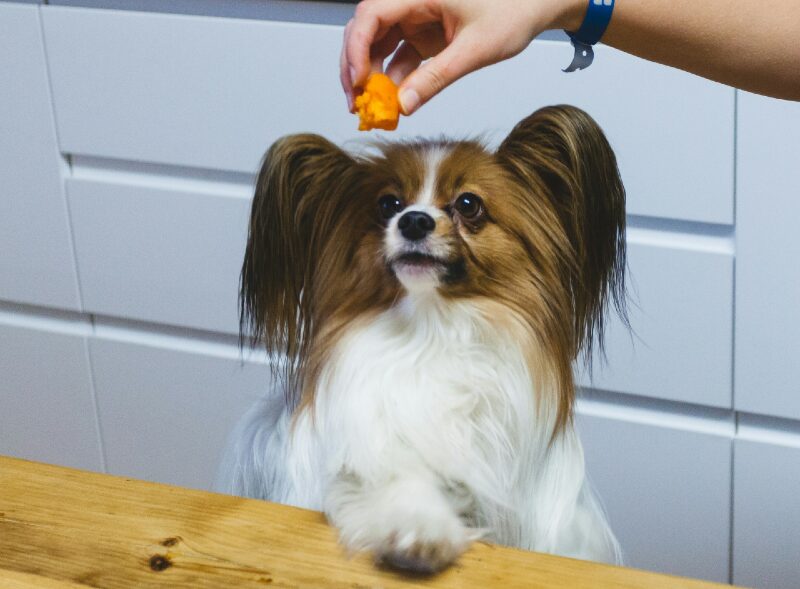
You can use carrots as healthy training treats or rewards, as well as adding to meals as a topper.
Final word
The Dog Food Advisor does not accept money, gifts, samples or other incentives in exchange for special consideration in preparing our reviews.
However, we do receive a referral fee from online retailers (like Chewy or Amazon) and from sellers of perishable pet food when readers click over to their websites from ours. This helps cover the cost of operation of our free blog. Thanks for your support.
For more information, please visit our Disclaimer and Disclosure page.