The Complete Guide to Freeze-Dried Raw Dog Food: Benefits, Safety, & Feeding Tips


Verified by Andrew Dickens

DogFoodAdvisor is reader supported See how
Dog Food Advisor is 100% impartial and is never paid to promote any brand. But if you buy using links on this page, we may earn a referral fee.
To say freeze-dried raw dog food is having a moment would be an understatement. Offering the nutritional benefits of a raw meat diet but in an easier-to-feed and store format, freeze-dried dog food is becoming an increasingly popular option for pet parents.
It’s still a relatively new type of dog food, however. If you’re introducing it to your pet you’ll have a few questions to ask — about how it differs to other types, how it can be stored and fed, and how safe it is, given that it’s raw meat.
Dog Food Advisor has put together a guide to freeze-dried raw dog food, covering the basics — and also spoken to Dr. Richard Patton, a PhD Animal Nutritionist with five decades of experience, to include his expert insight. Dr. Patton developed 5-star-rated freeze-dried dog food Maxbone, so he know what he’s talking about.
What Is Freeze-Dried Raw Dog Food?
It won’t come as a huge surprise to learn that freeze-dried raw dog food is raw food that’s been freeze-dried. But what does this mean, exactly?
Well, freeze-drying is the process the raw food has gone through. The food is frozen before being put into a vacuum chamber. This turns any ice in the food into vapor, removing most of the moisture — freeze-drying can remove as much as 99% of the moisture. The end result is a freeze-dried raw food that has retained its structure, and the majority of its nutrients — and is sealed in airtight packaging, ready for use.
“Freeze-dried is a bit of a misleading name,” says Dr. Patton. “It would probably be more accurate to call it vacuum-dried. It’s been around for quite some time; the technique was developed during WWII trying to perfect food for troops in the field. In this regard, it goes back quite some way.
“The man-on-the-street description of the technique is that you put a vacuum on the food and when you lower the pressure enough the water will evaporate. It’s possible to also use a little heat at the same time; it can be room temperature up to about 70°F. In any event, the heat applied is essentially nil, and so the moisture is removed by virtue of the fact that it’s a vacuum.”
“Unopened, freeze-dried raw dog food can potentially have a shelf life of years; because bacteria and microorganisms need water to thrive and survive, the reduced moisture content can significantly reduce bacteria levels. “They found food in Antarctica from explorations that were 40 years ago and it’s still perfectly edible,” says Dr. Patton. “Shelf life is not an issue with freeze-dried dog food. Even if you forget it for a year you can still use it.”
Freeze-dried dog food isn’t the same as dehydrated dog food or air-dried dog food. Both these types are processed using heat — albeit at low levels — so the food isn’t raw. There’s nothing wrong with that, of course, as dehydrated and air-dried dog food still retain lots of nutrients but if you are committed to a raw diet for your dog, freeze-dried food is a better option. Kibble goes through a higher heat extrusion process which retains fewer nutrients, though dry dog food remains economical and popular with a vast range of choice on the market.
Dr. Patton explains these differences further: “Air-dried may or may not entail heat, but let’s say we put wet kibble into a drier and blow hot air at it. It eventually dries. That’s air-dried. The fact remains that it was dried in a hot wind. With dehydrated dog food, the water has been removed. It’s been dehydrated with a blast of hot air. If you dehydrate it with just a blast of air, room temperature air, you’re going to have a little bit of a better result.
“Dehydrated or air-dried is inferior compared to freeze-dried. The heat denatures things and there’s no heat in freeze-drying or vacuum drying. Whatever nutrition is there to begin with, freeze-drying — vacuum drying — is the best way of preserving it. A hot air drying oven, typically with kibble, is the worst way of preserving nutrition.”
If you want your dog to benefit from a raw food diet, why not just feed raw food? Absolutely, you can — and many pet parents do. Some may choose freeze-dried raw dog food initially as an introduction to raw food before transitioning over fully to raw food. But, freeze-dried dog food is more convenient, needing little to no preparation before serving, compared to fresh raw food.
Benefits of Freeze-Dried Raw Dog Food
Freeze-dried raw dog food is growing in popularity for a reason. It can provide plenty of dietary benefits for your dog — and be user-friendly for pet parents, too. While fresh raw food also delivers a host of goodness — improved digestion, healthier skin and coat included — it can be time-consuming and not practical to prepare for meals once or twice daily.
Compared to that, freeze-dried is a convenient option. It can just be added to your dog’s bowl, whenever you need it. There’s no mess, no fuss, and for those pet parents who don’t like handling raw meat, that’s a big advantage. There’s no compromise on nutritional value. Freeze-dried raw food still retains the same nutrients and vitamins of the raw ingredients. It’s still just as tasty and it’s minimally processed, with little to no preservatives or chemicals.
“The benefits are mainly derived from the fact that it’s so gentle and non-invasive that the integrity from a standpoint of nutrition is virtually assured and preserved,” explains Dr. Patton.
“I’m a big fan of freeze-dried because it has all the flavor,” he continues. “When someone’s pondering the purchase of dog food, they consider three things – economy, convenience and nutrition.
“Obviously with kibble, that’s kind of the benchmark for economy. And kibble, of course, is convenient – you just scoop it and go. But kibble, as we know, is pretty woeful when it comes to the nutrition part. It requires a specific level of starch and sugar, so that they can get the expansion out of the extruder machine. And so, when you look at these three buying motivations – economy, convenience and nutrition – you can pick any two. You cannot have all three.
“I happen to like the freeze-dried, because it’s convenient, and it nails the nutrition perfectly.”
It’s also easy to store freeze-dried raw dog food. It doesn’t need to be kept in a freezer, unlike frozen raw food, and doesn’t need to be refrigerated, either. Provided it’s kept in its original sealable bag or a sealed container, freeze-dried food can be stored in a cupboard or anywhere that’s cool and dry, and away from direct sunlight. That makes it portable, too. If you’re away for a weekend or on the road with your dog for the day, you can take the food with you, easily enough.
There’s another likely benefit, too — weight control. A freeze-dried raw diet can help your dog to lose weight, if your pet is overweight or obese, because it doesn’t contain starch or sugar.
“Half of all pets are obese, just like half of all people,” says Dr. Patton. “Everybody gets that if you exercise, you’re addressing this issue of obesity. Furthermore, everybody seems to understand that if you apply portion control you’re doing good things to deal with obesity.
“But there’s a third leg to this stool, and that’s called nutrition. Nobody understands that. They understand exercise and they understand portion control, they don’t understand nutrition. The fact of the matter is, if you get that primal diet that’s devoid of starch or sugar, you’re going to lose weight and you can eat all you want. You can eat as much as often as you want — if it’s devoid of starch and sugar, you’ll automatically lose weight.
“We rate foods on the basis of what’s called the glycemic index. How quickly they raise blood sugar. Table sugar is only a point or two ahead of starch. Starch raises blood sugar as fast as regular table sugar.
“If you have a fat dog and you switch it to a good freeze-dried raw diet, you can feed it all you want, and your dog will lose weight. If it’s a reputable diet from a reputable company, and it’s freeze-dried, you’re in the safest place to be.”
Potential Drawbacks & Safety Concerns
We’ve extolled the benefits of freeze-dried raw dog food — and there are lots of those. But it’s only right that we discuss some of the potential drawbacks and safety concerns, too. With every type of dog food, there are pros and cons to weigh up, and freeze-dried raw food is no different.
With freeze-dried raw dog food, the drawbacks are minimal. Cost is one. Though prices obviously vary across brands and recipes, buying freeze-dried raw dog food is typically more expensive than dry kibble.
“Well yes it is, at first blush,” admits Dr. Patton. “But when you consider the fact that if you feed freeze-dried, your dog’s going to live 2-3 years longer and there’s actually a publication substantiating this. And furthermore, in the last two years of life on kibble, you have about $3,000 a year on vet bills, which was also tracked in this publication. So, I think when you opt for freeze-dried you’re not really taking that big a hit on economy in the long term. Your pet lives longer and is healthier for longer.”
Safety is a talking point — it can’t be completely overlooked that while freeze-dried, this is still raw meat. That means taking proper precautions when handling the food. Ensure hands are cleaned thoroughly afterwards and surfaces that come into contact with the raw meat are also cleaned.
There is a risk of potential pathogen exposure. Raw meat — more so than other types of dog food — can contain harmful bacteria such as Salmonella and E.coli. The freeze-drying process won’t completely eliminate all the pathogens, though it does decrease them.
“Freeze drying is not a considered kill step by the regulatory people,” says Dr. Patton. “But the fact remains that it’s a definitive move in that direction. Because the bacteria that may be in the food, it ends up being a very low concern when it comes to ‘has it been adequately purged of pathogens?
“I think we need to take a moment to talk about this term ‘kill step’,” he continues. “The regulatory people here in the States — AAFCO, the American feed control officials, have what they call a recognised kill step. An example of a recognised kill step would be a canned dog food that is boiled, taken above boiling, and we know this gets rid of all bacteria. And so, when they kill step, they want evidence that you have applied this kill step. Freeze-drying is not a recognised kill step.”
How to Choose the Best Freeze-Dried Raw Dog Food
With an abundance of choice available, it can seem a challenge to know how to select the best freeze-dried raw dog food. It may feel overwhelming, in fact.
To assist you with that, here at Dog Food Advisor we compiled our recommendations for Best Freeze-Dried Dog Food. You’ll find nominations for specific categories, such as best freeze-dried raw dog food for sensitive stomachs, for senior dogs, for large breeds, for dogs with allergies, and more. It should go without saying that if your dog has specific dietary needs — whether that’s grain-free, organic or single-protein, for example — that needs to be taken into consideration.
Generally, it’s good practice to consider recipes with high-quality — or at least, above-average — proteins. Look for poultry, fish and other meats as the main or lead ingredient. Avoid high-risk preservatives, synthetic vitamins and minerals, and high fat content. Avoid recipes with too many starchy ingredients.
As with all types of dog food, check it meets AAFCO certification standards. The guidelines set by the Association of American Feed Control Officials set dog food nutrient profiles. These standards must be met for a brand to be able to label its food as complete and balanced.
“I would take the position, until proven otherwise, that anyone in the market is there because they deserve to be,” adds Dr. Patton. “They’re providing their customers with what they need. And if you can find a reputable freeze-dried raw dog food you can do no better.”
Feeding Freeze-Dried Raw Dog Food
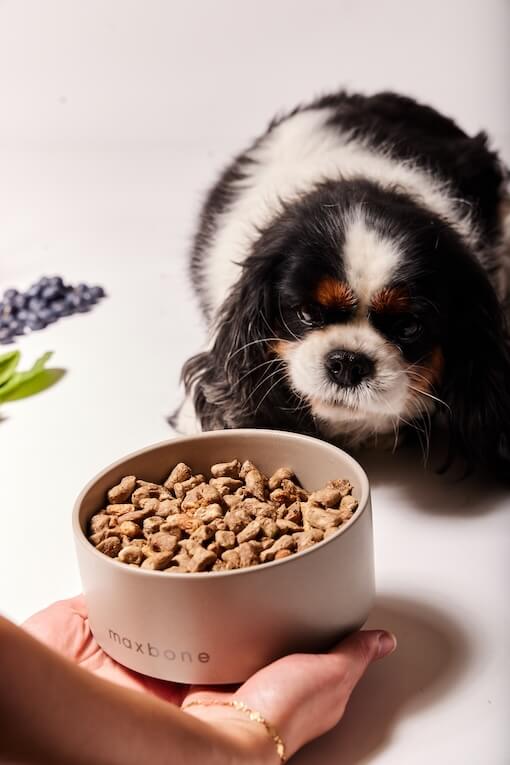
Freeze-fried raw dog food is simple to serve; one of the benefits of feeding it. Serving it is as straightforward as measuring or weighing out the appropriate amount of food for your pup, and popping into his or her bowl for them to scoff down. When the bag of freeze-dried food has been opened, it should be re-sealed. Check the guidelines on your chosen brand to see how long the food can last once it’s opened. It may be a few weeks but the chances are it will all have been consumed by then anyway.
Some freeze-fried raw dog food will need a small amount of water added, to rehydrate it and increase the palatability. You may consider adding a meaty bone broth instead of water, for extra taste. Much can depend on your dog’s preferences, and perhaps the type of food they have previously been used to if switching from a different product. For example, if your pet has previously eaten wet dog food, adding liquid may be suitable. If your dog is more used to dry food, you may decide to just serve the freeze-dried raw food as it comes.
Consider the texture of the food, too. While some freeze-fried raw dog food products may naturally have a softer, wetter, consistency, others are not too dissimilar to dry kibble. This also makes it useful if you’re transitioning your dog from another different food type to freeze-fried raw dog food. You can replicate similar and familiar textures as you gradually introduce the change. We’ve got some food switching tips here.
FAQ: Common Questions About Freeze-Dried Raw Dog Food
Is freeze-dried raw dog food safe?
Yes, freeze-dried raw dog food is considered safe. There is always some caution to be advised when handling and serving raw meat, and it’s true that raw meat can harbour potentially harmful bacteria. But, the process of freeze drying raw food does disable many of these pathogens. It’s advisable to practice good hygiene before and after handling raw meat of any type, and ensure the food is sealed and stored properly. Show common sense with any food; don’t leave an opened packet of freeze-dried raw dog food on the counter for hours or days, for example.
You can always discuss any specific concerns directly with your veterinarian.
How long does freeze-dried raw dog food last?
Freeze-dried raw dog foodhas a long shelf life; the removal of 90%-plus of all moisture helps to extend that as it can prevent bacteria from developing and spoiling the food. When unopened, freeze-dried food can last for a year or longer if it’s stored in the correct conditions. Once opened, providing the bag is resealed properly, the food may still last for a few weeks — but you should consult package instructions for guidance.
Can I mix freeze-dried raw dog food with kibble?
Yes — there’s no reason why you can’t mix freeze-dried raw dog food with kibble if you think your dog will prefer to consume it this way. Some freeze-dried dog foodcan be very kibble-like in size and structure anyway. Other recipes may be softer, but could work as a meal topper with kibble. In fact, in the words of Dr. Patton: “It’s the best topper there is.”
Is freeze-dried raw dog food worth the price?
That’s a question only every pet parent can answer — it depends how much you’re prepared to pay for your dog food. There are certainly cheaper alternatives out there, and freeze-dried food can be among the more expensive options. But, if you’re committed to feeding your dog the best type of food you can afford, it can be an excellent option. Freeze-dried raw dog food provides high quality nutrition which can, in turn, lead to longer term health benefits.
Summary – Pros & Cons of Freeze-Dried Raw Dog Food
There’s always a lot to consider when choosing a type of food for your dog. Freeze-dried raw dog food delivers the nutritional benefits of a fresh raw diet, with fewer preservatives and fillers than other food types, and is easy to store and feed. It also has a long shelf life, but does tend to be at the more expensive end of the dog food price scale.
Final word
The Dog Food Advisor does not accept money, gifts, samples or other incentives in exchange for special consideration in preparing our reviews.
However, we do receive a referral fee from online retailers (like Chewy or Amazon) and from sellers of perishable pet food when readers click over to their websites from ours. This helps cover the cost of operation of our free blog. Thanks for your support.
For more information, please visit our Disclaimer and Disclosure page.
Article reviewed by
Andrew Dickens
Editor
Andrew Dickens is an award-winning writer, editor and broadcaster with 20 years in journalism. He’s created compelling content on film and television, travel, food and drink, physical and mental health, business, sport, technology and politics. And, of course, dog food.