
OC Raw Dog Food Review (Raw Frozen)


Highly Recommended

DogFoodAdvisor is reader supported See how
All reviews are 100% impartial but if you buy using links on this page, we may earn a referral fee.
Review of OC Raw Frozen Dog Food
OC Raw Dog Food receives the Advisor’s top rating of 5 stars.
The OC Raw product line includes the 8 frozen dog foods listed below.
Each recipe includes its AAFCO nutrient profile when available… Growth (puppy), Maintenance (adult), All Life Stages, Supplemental or Unspecified.
Some formulas are available as bulk ground, patties, sliders or meaty rox.
| Product | Rating | AAFCO |
|---|---|---|
| OC Raw Fish and Produce | 5 | A |
| OC Raw Beef and Produce | 5 | A |
| OC Raw Goat and Produce | 5 | A |
| OC Raw Rabbit and Produce | 5 | A |
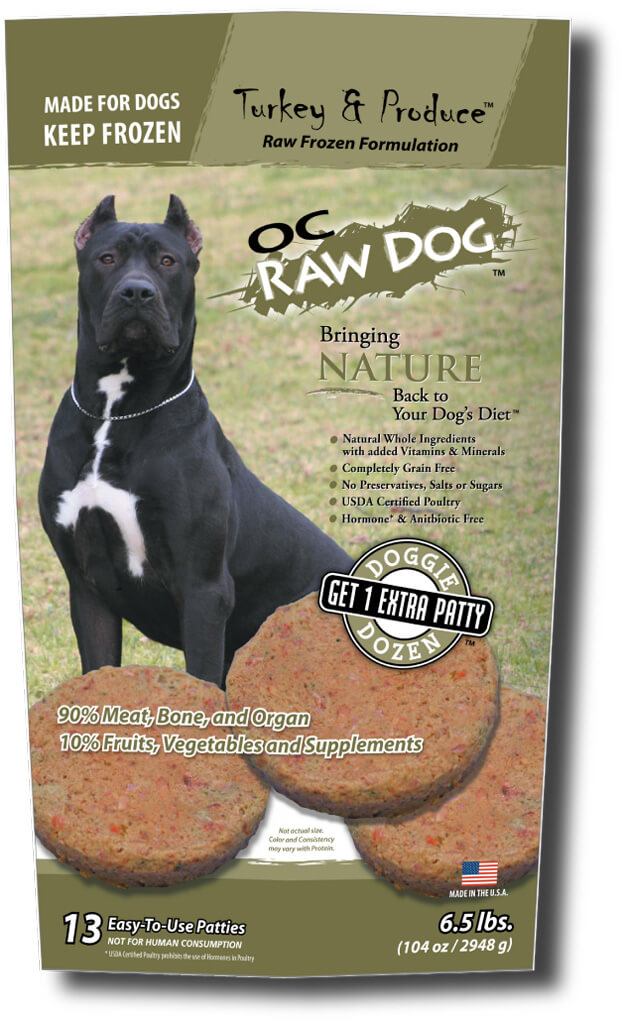
| OC Raw Turkey and Produce | 5 | A |
| OC Raw Chicken and Produce | 5 | A |
| OC Raw Chicken, Fish and Produce | 5 | A |
| OC Raw Lamb and Produce | 4 | A |
| OC Raw Duck and Produce | 5 | A |
Recipe and Label Analysis
OC Raw Turkey and Produce was selected to represent the other products in the line for detailed recipe and nutrient analysis.
Label and nutrient data below are calculated using dry matter basis.
OC Raw Turkey and Produce
Estimated Dry Matter Nutrient Content
Protein
Fat
CarbsCarbohydrates
Turkey, ground turkey bone, turkey gizzard, carrots, apples, broccoli, spinach, acorn squash, beets, cod liver oil, parsley, blueberries, calcium carbonate, kelp powder
Fiber (estimated dry matter content) = 1%
Red denotes any controversial items
Ingredient Analysis
The first ingredient in this dog food is turkey. Turkey is considered “the clean combination of flesh and skin… derived from the parts or whole carcasses of turkey”.1
Turkey is naturally rich in the ten essential amino acids required by a dog to sustain life.
The second ingredient is ground turkey bone, an excellent source of natural calcium.
The third ingredient includes turkey gizzards. The gizzard is a low-fat, meaty organ found in the digestive tract of birds and assists by grinding up consumed food. This item is a favored delicacy to a dog. Yum!
The next eight items include a series of nutrient-rich fruits and vegetables…
- Carrots
- Apples
- Broccoli
- Spinach
- Acorn squash
- Beets
- Parsley
- Blueberries
Carrots are rich in beta-carotene, minerals and dietary fiber.
Broccoli is a healthy green vegetable and a member of the kale family. It’s notably rich in vitamin C and fiber and numerous other nutrients.
Like other cruciferous vegetables, broccoli is believed to provide anti-cancer benefits.
Spinach exhibits a remarkably high nutrient Completeness Score2 of 91 due to its exceptional vitamin and mineral content.
Squash is a nutritious addition high in complex carbohydrates, vitamins, minerals and dietary fiber.
Amongst the fruits and vegetables we find cod liver oil, a fish oil known to be rich in both EPA and DHA omega-3 fatty acids. These two high quality fats boast the highest bio-availability to dogs and humans. Cod liver oil also has vitamins A and D.
After the blueberries, we find calcium carbonate, likely used here as a dietary mineral supplement.
The last ingredient is kelp powder, a dehydrated form of seaweed also known as alginate. Kelp is most likely used here as a thickening or gelling agent.
We find no added vitamins or minerals on the ingredients list. We would assume these essential nutrients are provided by the food ingredients in the recipe.
Nutrient Analysis
Based on its ingredients alone, OC Raw Dog Food looks like an above-average raw product.
The dashboard displays a dry matter protein reading of 68%, a fat level of 23% and estimated carbohydrates of about 2%.
As a group, the brand features an average protein content of 62.1% and a mean fat level of 25.2%. Together, these figures suggest a carbohydrate content of 4.7% for the overall product line.
And a fat-to-protein ratio of about 44%.
Which means OC Raw contains…
Above-average protein. Below-average fat. And below-average carbs when compared to other raw dog foods.
Free of any plant-based protein boosters, this looks like the profile of a raw product containing a remarkable amount of meat.
Our Rating of OC Raw Frozen Dog Food
OC Raw is a grain-free raw dog food using a generous amount of named meats and organs as its dominant source of animal protein, thus earning the brand 5 stars.
Enthusiastically recommended.
Has OC Raw Dog Food Been Recalled?
The following automated list (if present) includes all dog food recalls since 2009 related to OC Raw.
- FDA Issues Warning to OC Raw Dog Food (6/24/2022)
- OC Raw Dog Recalls Dog Food Due to Risk of Listeria (4/21/2018)
- OC Raw Dog Recalls Dog Treats | April 2018 (4/21/2018)
- OC Raw Dog Food Recall of September 2015 (9/27/2015)
- OC Raw Dog Food Recall of May 2015 (5/16/2015)
You can view a complete list of all dog food recalls since 2009 here.
Get Free Recall Alerts
Get free dog food recall alerts sent to you by email. Subscribe to The Advisor’s recall notification list.
Compare This Dog Food
How does this brand compare with The Dog Food Advisor's most recommended brands?
Sources
A Final Word
The Dog Food Advisor does not accept money, gifts, samples or other incentives in exchange for special consideration in preparing our reviews.
However, we do receive a referral fee from online retailers (like Chewy or Amazon) and from sellers of perishable pet food when readers click over to their websites from ours. This helps cover the cost of operation of our free blog. Thanks for your support.
For more information, please visit our Disclaimer and Disclosure page.
