
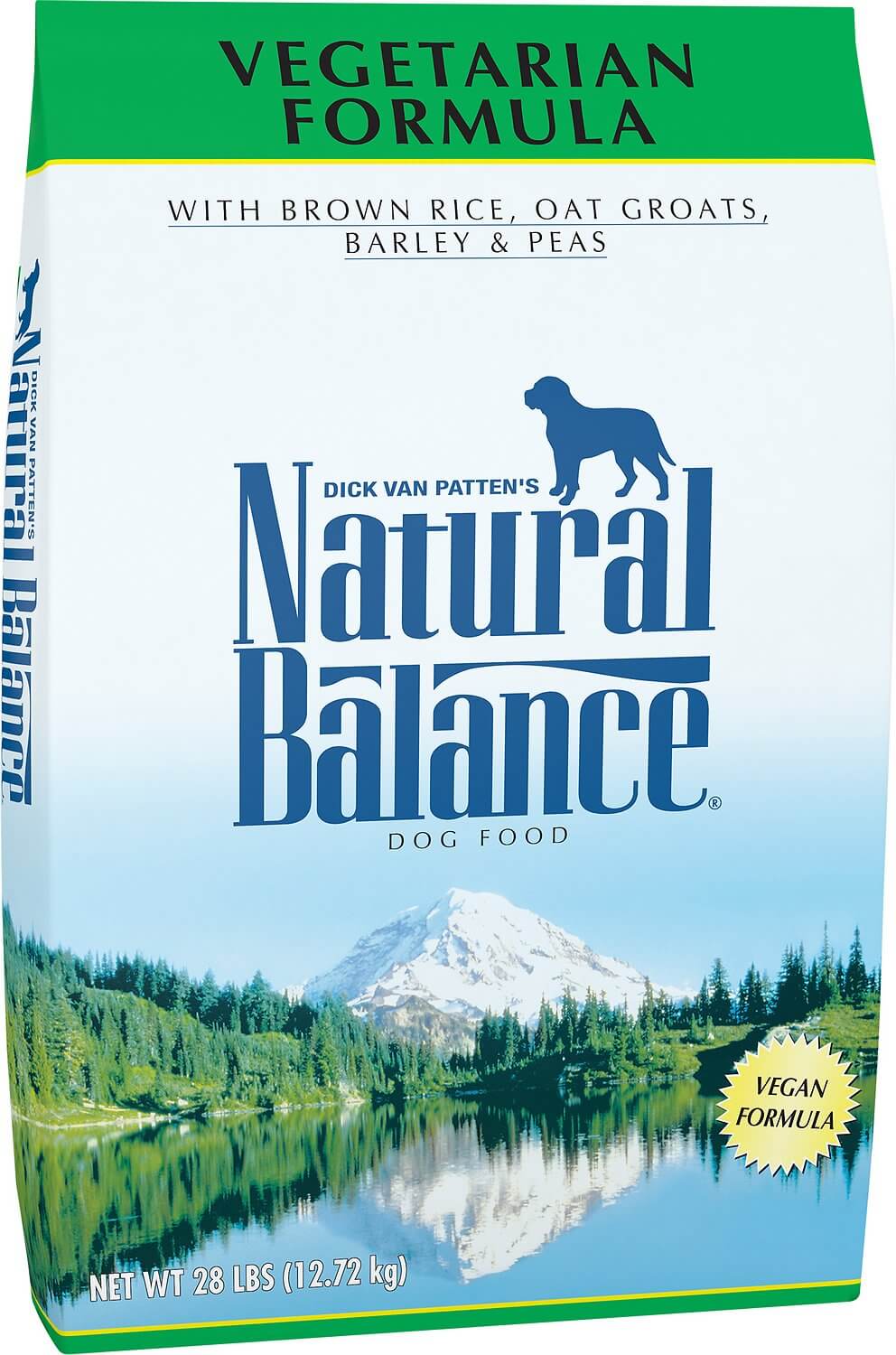
Natural Balance Vegetarian Dog Food Review (Canned)

Somewhat Recommended


DogFoodAdvisor is reader supported See how
All reviews are 100% impartial but if you buy using links on this page, we may earn a referral fee.
Natural Balance Vegetarian canned dog food receives the Advisor’s second-lowest tier rating of 2.5 stars.
The Natural Balance Vegetarian product line includes one canned dog food, a recipe claimed to meet AAFCO nutrient profiles for adult maintenance.
Natural Balance Vegetarian Formula
Estimated Dry Matter Nutrient Content
Protein
Fat
CarbsCarbohydrates
Water for processing, brown rice, barley, oat groats, canola oil (preserved with mixed tocopherols), carrots, potato protein, dried tomato pomace, potatoes, dehydrated potatoes, peas, dicalcium phosphate, natural flavor, calcium carbonate, carrageenan, cassia gum, minerals (zinc proteinate, zinc sulfate, ferrous sulfate, iron proteinate, copper sulfate, copper proteinate, manganese sulfate, manganese proteinate, calcium iodate, sodium selenite), vitamins (vitamin E supplement, niacin, thiamine mononitrate, vitamin A supplement, ascorbic acid (vitamin C), d-calcium pantothenate, pyridoxine hydrochloride, vitamin D2 supplement, riboflavin supplement, folic acid, biotin, vitamin B12 supplement), natural smoke flavor, salt, potassium chloride, choline chloride, taurine, dried spinach, parsley, l-carnitine, rosemary extract
Fiber (estimated dry matter content) = 1.5%
Red denotes any controversial items
| Estimated Nutrient Content | |||
|---|---|---|---|
| Method | Protein | Fat | Carbs |
| Guaranteed Analysis | 5% | 3% | NA |
| Dry Matter Basis | 23% | 14% | 56% |
| Calorie Weighted Basis | 20% | 30% | 50% |
The first ingredient in this dog food is water, which adds nothing but moisture to this food. Water is a routine finding in most canned dog foods.
The second ingredient is brown rice, a complex carbohydrate that (once cooked) can be fairly easy to digest. However, aside from its natural energy content, rice is of only modest nutritional value to a dog.
The third ingredient is barley. Barley is a starchy carbohydrate supplying fiber and other healthy nutrients. However, aside from its energy content, this cereal grain is of only modest nutritional value to a dog.
The fourth ingredient includes oat groats, a whole grain, minimally processed form of oats. With the exception of their caloric content and the fact they’re also gluten free, oat groats can be considered average in nutritional value.
The next ingredient is canola oil. Unfortunately, canola can be a controversial item. That’s because it can sometimes (but not always) be derived from genetically modified rapeseed.
Yet others cite the fact that canola oil can be a significant source of essential omega-3 fatty acids.
In any case, plant-based oils like canola are less biologically available to a dog than fish oil as a source of quality omega-3 fats.
The sixth ingredient includes carrots. Carrots are rich in beta-carotene, minerals and dietary fiber.
The seventh ingredient is potato protein, the dry residue remaining after removing the starchy part of a potato.
Even though it contains over 80% protein, this ingredient would be expected to have a lower biological value than meat.
And less costly plant-based products like this can notably boost the total protein reported on the label — a factor that must be considered when judging the actual meat content of this dog food.
The eighth ingredient is tomato pomace. Tomato pomace is a controversial ingredient, a by-product remaining after processing tomatoes into juice, soup and ketchup.
Many praise tomato pomace for its high fiber and nutrient content, while others scorn it as an inexpensive pet food filler.
Just the same, there’s probably not enough tomato pomace here to make much of a difference.
The ninth ingredient is potato. Potatoes can be considered a gluten-free source of digestible carbohydrates. Yet with the exception of perhaps their caloric content, potatoes are of only modest nutritional value to a dog.
From here, the list goes on to include a number of other items.
But to be realistic, ingredients located this far down the list (other than nutritional supplements) are not likely to affect the overall rating of this product.
With 5 notable exceptions…
First, dehydrated potato is usually made from the by-products of potato processing. In most cases, dried potato can contain about 10% dry matter protein which can affect our estimate of the total meat content of this recipe.
Next, peas are a quality source of carbohydrates. And like all legumes, they’re rich in natural fiber.
However, peas contain about 25% protein, a factor that must be considered when judging the meat content of this dog food.
In addition, carrageenan is a gelatin-like thickening agent extracted from seaweed. Although carrageenan has been used as a food additive for hundreds of years, there appears to be some recent controversy regarding its long term biological safety.
We also note the use of taurine, an important amino acid associated with the healthy function of heart muscle. Although taurine is not typically considered essential in canines, some dogs have been shown to be deficient in this critical nutrient.
And lastly, this food contains chelated minerals, minerals that have been chemically attached to protein. This makes them easier to absorb. Chelated minerals are usually found in better dog foods.
Natural Balance Vegetarian Canned Dog Food Review
Natural Balance Vegetarian canned dog food is — by design — a meatless product.
So, although we recognize the need for some dog owners to feed a meat-free diet, we also respect a dog’s natural carnivorous bias.
That said, and before we assign our final rating, it’s still important to compare the amount of plant-based protein present with other dog foods.
The dashboard displays a dry matter protein reading of 23%, a fat level of 14% and estimated carbohydrates of about 56%.
And a fat-to-protein ratio of about 60%.
Below-average protein. Below-average fat. And above-average carbs when compared to a typical canned dog food.
As you’d expect, this is obviously the profile of a canned dog food containing no meat.
Bottom line?
Natural Balance Vegetarian is a grain-inclusive canned dog food using a moderate amount of potato protein as its main source of protein, thus earning the recipe 2.5 stars.
Not recommended.
Natural Balance Dog Food Recall History
The following list (if present) includes all dog food recalls since 2009 directly related to Natural Balance. If there are no recalls listed in this section, we have not yet reported any events.
- Natural Balance Dog Food Recall 2012 (5/5/2012)
- Natural Balance Dog Food Recall 2010 (6/19/2010)
Notes and Updates
Compare This Dog Food
How does this brand compare with The Dog Food Advisor's most recommended brands?
A Final Word
The Dog Food Advisor does not accept money, gifts, samples or other incentives in exchange for special consideration in preparing our reviews.
However, we do receive a referral fee from online retailers (like Chewy or Amazon) and from sellers of perishable pet food when readers click over to their websites from ours. This helps cover the cost of operation of our free blog. Thanks for your support.
For more information, please visit our Disclaimer and Disclosure page.
